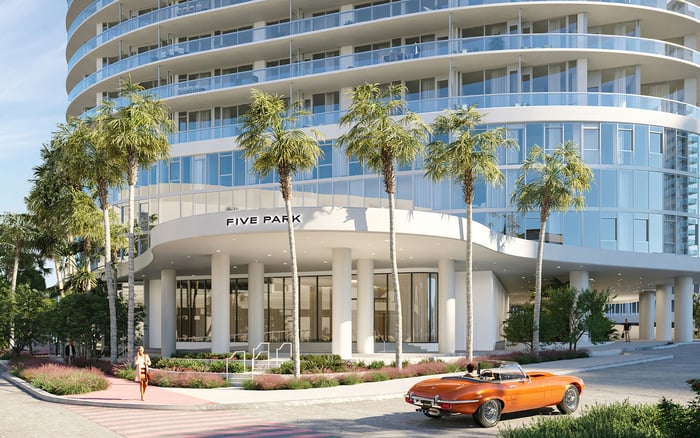
A hurricane-season closing financed against a securities portfolio requires two distinct risk plans. Buyers should align contractual casualty protections with collateral headroom, independent liquidity, effective insurance, and carefully sequenced payoff instructions.

For a South Florida luxury buyer, a securities-backed closing can preserve investment exposure while providing acquisition liquidity. During hurricane season, however, the financing decision deserves the same scrutiny as the residence. Property damage, a market decline, and a closing delay can place overlapping demands on cash, each governed by different terms.
The purchase contract allocates property-casualty risk; the securities-backed credit agreement governs collateral, maintenance calls, and liquidation rights. A remedy under one agreement does not necessarily provide relief under the other. The objective is to preserve the ability to perform without relying on an uninterrupted closing schedule or stable portfolio values.
For a buyer considering Una Residences Brickell, the acquisition question is not simply whether a credit line can cover the price. It is whether the financing remains workable if the property and portfolio need attention at the same time. The project itself implies no particular financing or contract terms.
A securities-backed line of credit, or SBLOC, permits borrowing against eligible securities held in a qualifying account, including stocks, bonds, and mutual funds. The facility’s terms may permit real-estate purchases; purchasing or trading securities generally is not permitted.
Borrowing limits can range from approximately 50% to 95% of eligible collateral value, depending on the assets and lender. That range is not a funding assurance. Eligibility and lending requirements can change, and today’s displayed borrowing capacity should not be treated as a permanent commitment.
Before committing to a draw, ask the lending desk to model three conditions: a decline in pledged asset values, reduced advance rates, and a delayed closing. Then model them together. The useful result is not merely a revised borrowing limit, but the amount of cash or additional eligible collateral needed to support the intended outstanding balance.
Choose a draw that leaves deliberate headroom under those scenarios. Available credit and resilient funding are different measures; maximizing the first can undermine the second.
A maintenance call arises when the pledged portfolio no longer supports the outstanding loan. The response window is typically only two or three days, although the facility agreement controls. Assess that timeline separately from any purchase-contract extension or restoration timetable.
Depending on the facility, a borrower may satisfy the shortfall by depositing cash, adding eligible securities, selling pledged securities, or reducing the loan balance. If the call is not satisfied, the lender may liquidate pledged securities, potentially during unfavorable market conditions.
Before funding, identify who monitors the account, who receives notices, and who has authority to act. Confirm which assets remain unpledged and acceptable to the lender. An asset is not a dependable contingency simply because it appears on a balance sheet; the plan should establish how it can cover the shortfall within the applicable window.
There is no universal cash minimum for this transaction. The reserve should reflect the purchase obligations, portfolio stress test, insurance terms, and anticipated property expenses. Preserve immediately available cash outside the pledged account rather than treating undrawn SBLOC capacity as the entire backup plan.
Separate the reserve into practical categories:
Closing funds and transaction costs.
Insurance premiums and potential deductibles.
Immediate repairs, taxes, and assessments.
A potential collateral shortfall and the costs of a closing delay.
Do not count the same dollars twice. Cash designated for a maintenance call cannot also be assumed available for the closing wire. Likewise, money reserved for immediate repairs should not be redirected to a larger draw repayment without revisiting the property budget.
For a Miami Beach buyer evaluating The Perigon Miami Beach, this separation provides a useful acquisition discipline: establish the property budget and portfolio contingency independently, then test whether both remain funded under stress.
In the standard-contract framework addressed by Section 18(M), Risk of Loss, the seller generally bears the restoration obligation when restoration costs do not exceed 1.5% of the purchase price. If required restoration remains incomplete at closing, that framework contemplates an escrow of 125% of the estimated restoration cost.
When restoration costs exceed the 1.5% threshold, buyer options may include accepting the property with the contractual adjustment or terminating and recovering the deposit. The threshold and escrow percentage are contractual provisions, not universal Florida statutory rules. Counsel should determine whether the executed agreement contains those terms and how any amendments affect them.
For a Coconut Grove purchase involving Park Grove Coconut Grove, the same document-first approach applies: begin with the actual agreement, not assumptions about a standard form. A project name does not establish the buyer’s casualty remedies.
After material storm impact, arrange a reinspection and have counsel evaluate the damage against the contract. Do not assume a right to pause funding, extend closing, or terminate. Any proposed action must satisfy the agreement’s notice and deadline requirements.
Arrange to bind the buyer’s coverage early during storm season, with the policy effective on the closing date. The seller should maintain existing casualty coverage through closing. Reconfirm effective coverage before funds move, particularly if the closing date changes.
Florida Statutes §689.302 requires a seller to provide a flood disclosure to a residential-property purchaser at or before execution of the sales contract. Review that disclosure and the insurance placement separately; completing one does not replace attention to the other.
If the seller has an open insurance claim, ask title counsel whether claim checks are jointly payable to the seller and mortgage servicer. Also ask whether endorsements, payoff arrangements, releases, or escrow instructions need to be resolved before closing. These are coordination questions for the transaction team, not universal requirements for every claim.
Request current payoff figures for obligations being discharged. Check expiration dates and daily interest accruals, and refresh the figures if the timetable changes. Keep the seller’s mortgage payoff, any insurance-claim proceeds, and the buyer’s SBLOC draw or repayment clearly distinguished in the closing instructions.
Coordinate draw timing and retained collateral directly with the SBLOC lending desk. If the plan includes a later repayment, confirm the applicable payoff process and collateral-release arrangements. Do not assume that sending funds immediately restores unrestricted access to the pledged account.
Before authorizing the closing wire, review the decisions together: property condition, effective insurance, contractual deadlines, current payoff amounts, available collateral capacity, and remaining independent cash. Independently verify changed wire instructions using a known telephone number.
The strongest closing plan preserves room to respond without confusing financial caution with contractual permission. Legal, lending, insurance, and title decisions should support one another while remaining subject to their respective governing documents.
Explore South Florida residences with a more considered acquisition perspective at MILLION.
If branded residences are on your mind — as a home or as an allocation — we would be glad to share what we are seeing, privately.
Begin a quiet conversationReal-estate purchases may be permitted under the facility’s terms. SBLOC proceeds generally cannot be used to purchase or trade securities.
Potential borrowing limits range from approximately 50% to 95% of eligible collateral value, depending on the assets and lender. Current capacity can change and is not a permanent commitment.
A maintenance call can occur when pledged securities no longer support the outstanding loan, including after a portfolio decline. The borrower must address the shortfall under the facility agreement.
The typical window is only two or three days, although the facility agreement controls. A purchase-contract extension should not be assumed to extend that deadline.
The lender may liquidate pledged securities, potentially forcing sales during unfavorable market conditions. Available remedies before liquidation depend on the facility.
There is no universal minimum. Reserve separately for closing, transaction costs, insurance, deductibles, repairs, taxes or assessments, and a potential collateral shortfall.
No. They are provisions in the referenced contractual framework, and applicability depends on the executed agreement and any amendments.
Do not assume an automatic right to delay, pause funding, or terminate. Counsel should evaluate the executed contract’s remedies, notices, and deadlines.
Arrange binding coverage early with an effective date matching closing, and reconfirm coverage if that date changes. The seller should maintain existing casualty coverage through closing.
Ask title counsel whether claim checks require the mortgage servicer’s endorsement and whether payoff, release, or escrow coordination is needed. Separately verify payoff expiration dates and daily interest accruals.