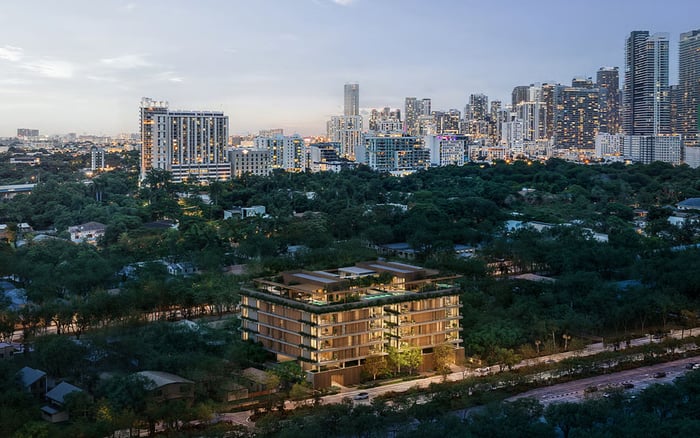
A buyer’s framework for reviewing a Key Biscayne condo’s master insurance, interior coverage responsibilities, hurricane deductibles, and loss-assessment protection before closing.
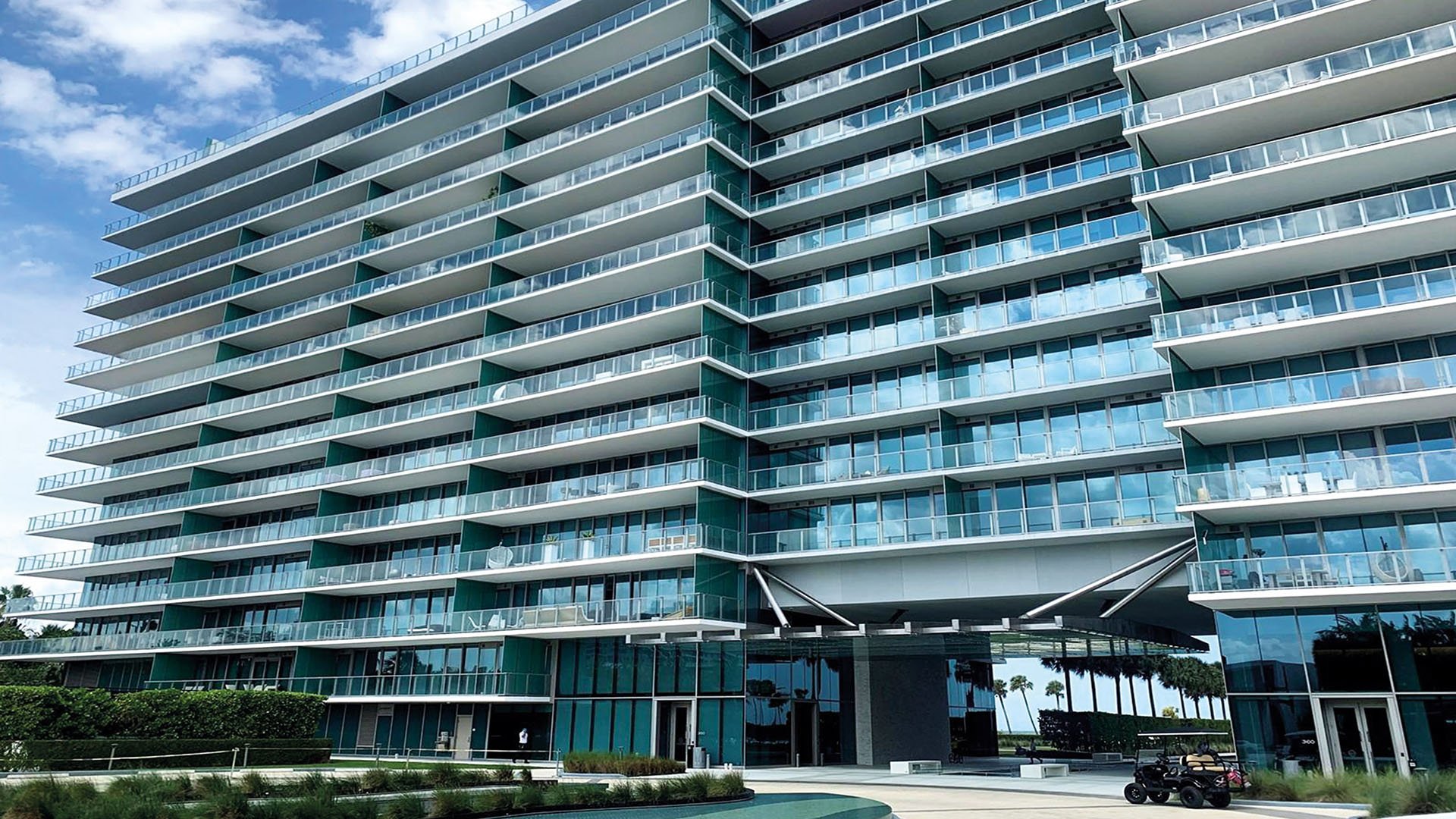
A new Key Biscayne residence draws attention to proportions, finishes, and the relationship between interior space and water. Insurance deserves an equally exacting review. The appeal of new construction should not replace a clear understanding of which policy responds to a loss, which deductible applies, and what the owner may need to fund personally.
The essential distinction is between the association’s master insurance and the owner’s HO-6 policy. Neither should be evaluated in isolation. A generous personal policy limit may still leave an assessment gap; substantial building coverage can coexist with a significant deductible.
For buyers also considering Oceana Key Biscayne, the same document-first discipline applies. This is a framework for evaluating coverage, not a statement about that development’s insurance terms. The purchase decision should rest on the documents governing the particular residence.
Request the master-policy declarations showing the carrier, property limits, wind coverage, and deductibles. Establish whether wind protection is included in the main property policy or provided by a separate wind-only policy, and obtain the relevant documents before selecting personal coverage.
The declarations are the starting point, not the complete answer. Have your insurance adviser review the policy wording and endorsements to establish what is insured and where limitations apply. A shorthand description cannot resolve a specific coverage question.
Your review should establish:
The insured property value and applicable property limits.
Whether windstorm, hurricane, or named-storm deductibles apply.
The value base used to calculate each percentage deductible.
The interior elements covered by the association rather than the owner.
Request a written explanation of unresolved points. The objective is a clear, usable account of coverage-not simply confirmation that the building carries insurance.
Terms such as “walls-in” and “walls-out” are too broad to set a luxury residence’s insurance budget. Nor should “single-entity” and “all-in” be treated as interchangeable promises. The policy wording must determine the boundary between association coverage and the owner’s responsibility.
Review flooring, cabinetry, fixtures, and improvements individually. Establish which are insured under the master policy and which require HO-6 dwelling coverage. Then have your adviser evaluate the proposed dwelling limit against the interior elements you must insure.
If your search extends to Coconut Grove and Vita at Grove Isle, carry over the checklist, not assumptions from another building. Coverage responsibilities require a separate review for each property.
Keep direct damage and assessments distinct. Covered damage inside your residence belongs under the applicable HO-6 property coverage. Loss-assessment protection addresses eligible amounts assessed by the association; it does not replace adequate insurance for the interior.
A percentage deductible is meaningful only when paired with its insured-value base. Locate the applicable storm deductible and ask your adviser to show the calculation in dollars. Do not apply the percentage to your purchase price unless the policy explicitly makes that the relevant base.
Consider a hypothetical building insured for $20 million. If the applicable deductible is 5% of that value, the master-policy deductible is $1 million. Dividing that amount equally among 100 units produces $10,000 per unit.
That last figure is only an illustration-not a Key Biscayne project’s deductible or a guaranteed assessment. Verify the actual allocation method and how the association would fund the deductible before estimating your share.
Your personal HO-6 hurricane deductible is separate. It applies to your own covered property claim, while an association assessment may help fund the master-policy deductible. Reviewing only one can understate the cash exposure from the same storm.
The association must fund its master-policy deductible. If available cash reserves cannot cover it, owners may face an assessment. Request the reserve schedule and funding plan, then ask which funds are available specifically for the hurricane deductible. Do not assume every reserve dollar is available for that purpose.
Deductibles are only one potential shortfall. Review the replacement-cost appraisal and ask whether the insured value adequately reflects rebuilding needs. An outdated appraisal or insufficient insured value can leave a gap that leads to an owner assessment.
Also verify Ordinance or Law coverage. Ask about limits for code upgrades, demolition, and increased construction costs. Inadequate coverage can leave additional rebuilding expenses unfunded.
For a cross-market comparison that includes Una Residences Brickell, apply the same financial questions. Compare documented coverage and available funding rather than treating the premium alone as the measure of protection.
Florida’s statutory baseline requires residential condominium unit-owner policies to include at least $2,000 in property loss-assessment coverage for assessments arising from the same direct loss, with a deductible no greater than $250. If a deductible already applies to other property damage from that same direct loss, the required property loss-assessment coverage has no additional deductible.
That baseline is not a recommendation for adequate protection. Size coverage against the building’s potential owner-level exposure, then verify how the policy would respond to an assessment attributable to the association’s deductible.
An HO-6 policy may reimburse an owner’s share of a master deductible following a covered loss, subject to its terms and limits. The advertised loss-assessment limit, however, may exceed the amount available for that particular type of assessment. Ask specifically about deductible-related sublimits and have your adviser identify the controlling language.
The useful number is not simply the largest limit on the proposal. It is the amount available for the loss and assessment under review.
Loss-assessment coverage does not make every special assessment insurable. Reserve contributions, budget shortfalls, and milestone or structural repairs unrelated to a covered insurance loss generally fall outside HO-6 loss-assessment protection.
Liability-related assessments require a separate review. Some forms can cover eligible assessments arising from liability claims that exceed the association’s master-policy limits. Do not assume the property-loss provisions resolve that question.
Before closing, have your insurance adviser compare the master policy with your proposed HO-6 dwelling limit, personal hurricane deductible, and loss-assessment protection. Keep the deductible calculation in dollars, allocation explanation, reserve funding information, and relevant sublimits together.
The goal is not to eliminate every ownership risk. It is to identify which risks insurance transfers, what the association can fund, and what remains your responsibility before the residence becomes yours.
For a discreet perspective on your South Florida property search, explore MILLION.
If branded residences are on your mind — as a home or as an allocation — we would be glad to share what we are seeing, privately.
Begin a quiet conversationRequest declarations showing the carrier, property limits, wind coverage, and deductibles, along with any separate wind-only policy. Have your adviser review relevant policy wording and endorsements before aligning your HO-6 coverage.
No. Verify responsibility for flooring, cabinetry, fixtures, and improvements individually rather than relying on a shorthand coverage label.
Multiply the applicable percentage by the insured-value base specified in the policy. A hypothetical 5% deductible on a $20 million insured building value equals $1 million.
Do not assume equal allocation. Dividing a hypothetical $1 million deductible among 100 units yields $10,000 each only under an equal-share illustration; the actual allocation must be verified.
The association must fund its master-policy deductible and may assess owners if available reserves cannot cover it. Ask which funds are specifically available for the hurricane deductible.
Residential condominium unit-owner policies must include at least $2,000 for assessments arising from the same direct loss, with a deductible no greater than $250. No additional deductible applies to that required coverage if a deductible already applies to other property damage from the same direct loss.
Not necessarily. Coverage for an assessment attributable to the master-policy deductible may have a separate sublimit and remains subject to the policy’s terms.
Direct unit damage is addressed through applicable HO-6 property coverage, not loss-assessment coverage. Your personal hurricane deductible is distinct from an assessment funding the association’s master deductible.
Reserve contributions, budget shortfalls, and milestone or structural repairs unrelated to a covered insurance loss generally are not covered. An assessment alone does not establish insurance eligibility.
An outdated appraisal or insufficient insured value can create a rebuilding shortfall that leads to an assessment. Inadequate Ordinance or Law coverage can also leave code upgrades, demolition, or increased construction costs unfunded.