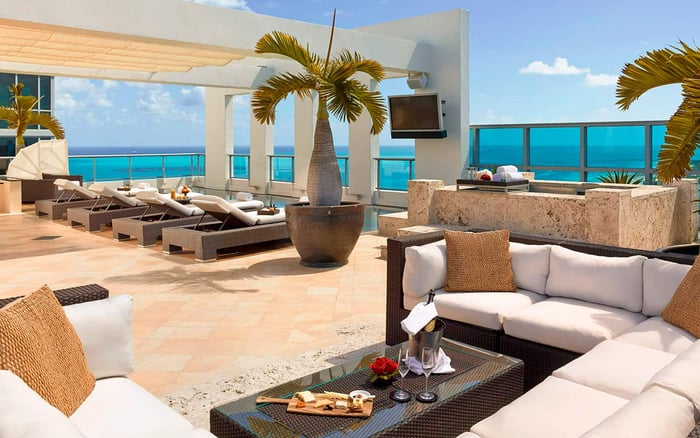
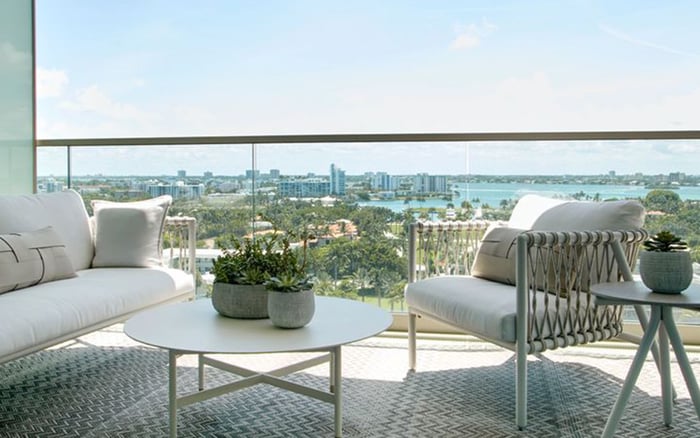
A buyer-focused comparison of two Surfside lifestyle propositions, with emphasis on private dining, entertaining, daily access, fees, and the documents needed to evaluate real-world use.
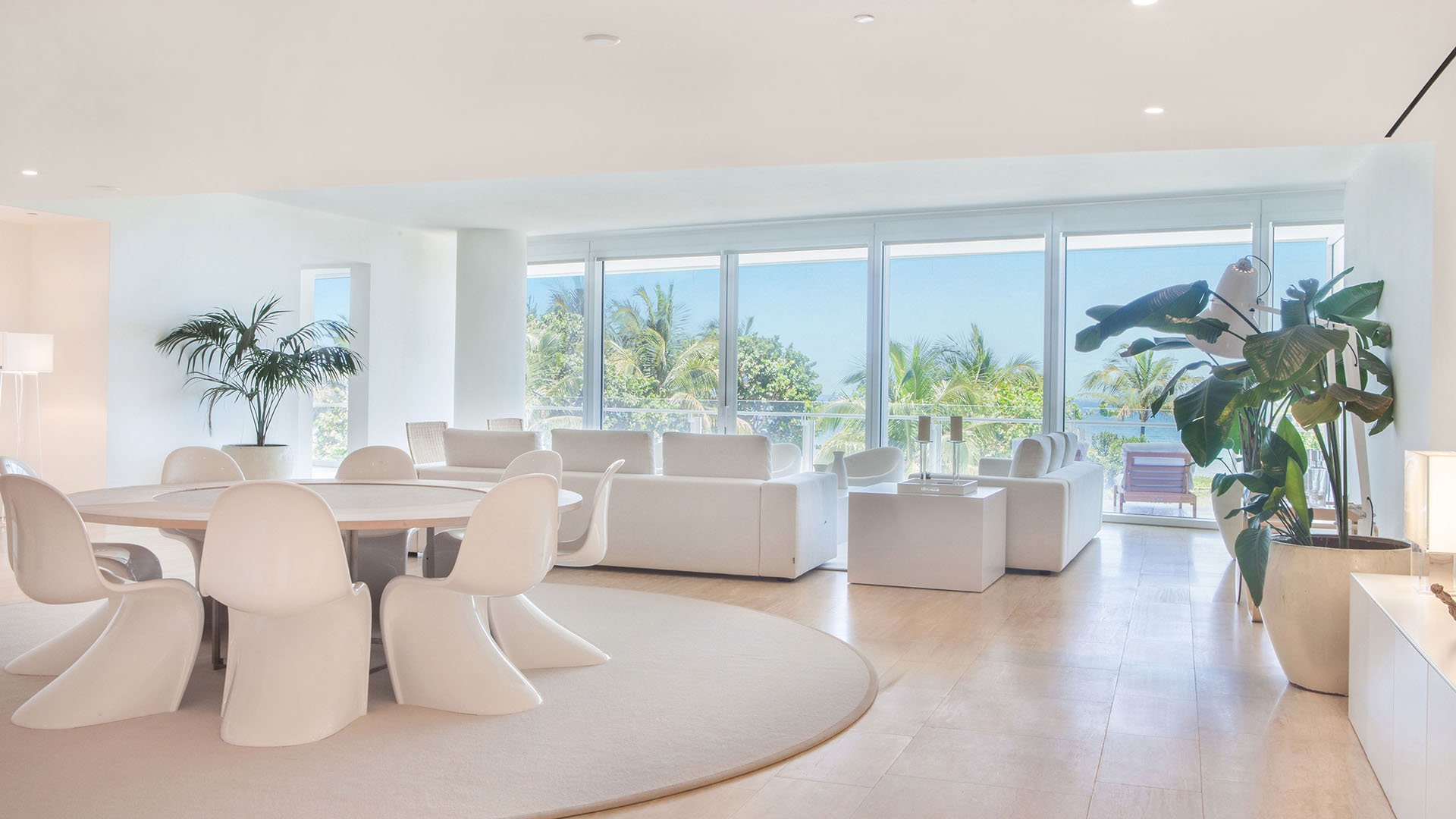
At the highest end of the Surfside market, the comparison extends beyond architecture, frontage, and residence size. Buyers are also choosing an operating culture: how a building welcomes guests, facilitates a spontaneous dinner, manages daily requests, and preserves privacy while delivering attentive service.
The Surf Club Four Seasons Surfside presents the more established hospitality narrative. Its identity pairs the legacy of a historic social club with Four Seasons service, positioning ownership as a continuous hospitality experience. Private dining and entertaining are central to that promise, not secondary conveniences.
The Delmore Surfside is the newer entrant, articulating a club-like residential vision shaped by privacy, food-and-beverage experiences, convenience, and service. The distinction is subtle but consequential. One proposition grows from a club-and-hotel model; the other defines exclusivity primarily through private residential life.
Both reflect the broader evolution of Branded Residences and highly serviced Oceanfront ownership, yet their lifestyle promises are best assessed through daily routines, access rules, and cost structures-not amenity language alone.
Private dining matters because it reveals how service moves between the residence and shared spaces. At The Surf Club, gastronomy is integral to the property’s hospitality identity. Its residential proposition treats entertaining as an experience the wider property can facilitate, not merely an event confined to an owner’s kitchen and dining room.
The Delmore likewise places food-and-beverage experiences within its vision of refined daily life. Its emphasis on privacy raises a different buyer question: can residents enjoy club-like dining and hosting without sacrificing the discretion of a residential environment?
In either case, buyers should translate the promise into specific scenarios: weekday breakfast, dinner with family, cocktails before an evening out, a catered celebration, or a chef-led gathering in a reservable space. For each, establish who may book, how far in advance reservations open, whether guests must be accompanied, what staffing is available, and which charges apply.
The same exercise can sharpen comparisons with nearby properties such as Arte Surfside and Fendi Château Residences Surfside. The objective is not to count dining rooms, but to identify which setting best supports the owner’s actual pattern of entertaining.
A large private home can host beautifully, but shared service infrastructure can reduce the operational burden. The relevant luxury is often not additional space, but the ability to arrange an occasion without turning the residence into a workplace for caterers, servers, delivery teams, and cleanup crews.
The Surf Club’s club-and-hotel character places this capability within a recognizable service culture. Residents are promised convenient access to hotel-level hospitality-an appealing proposition for owners who value continuity between home life and professionally managed entertaining.
The Delmore offers its own interpretation: private, club-like living in which convenience and service are intended to become everyday privileges. For a buyer who wants social capability without the atmosphere of a larger hospitality ecosystem, that positioning may prove compelling.
Neither description, however, resolves every access question. A space may be resident-only, part of a hotel, tied to a separate membership, or available as a paid service. These categories may appear similar in marketing yet function very differently in practice.
The cost of this lifestyle cannot be inferred from the mere existence of an amenity. Buyers should not assume that private dining, event staffing, catering, club privileges, or hotel services are included in condominium assessments.
A disciplined financial review separates recurring ownership costs from optional consumption. The first layer includes condominium assessments and any other mandatory obligations identified in governing documents. A second may encompass club dues, membership charges, or initiation costs where applicable. A third covers actual use, potentially including food and beverage, staffing, setup, delivery, gratuities, cancellation charges, and service fees.
No precise comparison is possible without current documentation. Request the condominium budget, purchase contract, declarations and rules, applicable membership documents, and current fee schedules. Confirm whether food-and-beverage minimums apply, whether gratuity is included, and whether pricing differs among in-residence service, private rooms, and larger events.
The most revealing figure is not necessarily the annual assessment. It is the owner’s all-in cost over a realistic year of use.
Lifestyle acquires value through repetition. A buyer should map an ordinary week, not merely imagine a gala. How readily can coffee or breakfast arrive? Can a resident reserve a dining setting for visiting family? Is service available on the days and at the times the household typically needs it? Who handles special requests, guest arrivals, and last-minute changes?
Friction deserves equal scrutiny. Reservation windows, blackout periods, guest limits, dress expectations, cancellation rules, delivery procedures, and approval requirements can materially shape use. Seasonal owners should ask whether the experience remains consistent during peak periods. Full-time residents should determine whether the service culture feels natural enough for frequent, informal requests.
This is where Lifestyle positioning becomes operational reality. The better choice is not automatically the property with the longer amenity description. It is the one whose rules, staffing model, privacy level, and fee structure align with the household’s habits.
The Surf Club may appeal most strongly to buyers who value a historic social identity, hotel-level service, and a residential experience closely connected to hospitality and gastronomy. Its promise is curated and outwardly capable, particularly for owners who expect the property to support both daily service and polished entertaining.
The Delmore may resonate with buyers seeking a newer expression of ultra-luxury Surfside living, where club-like food-and-beverage experiences coexist with a pronounced emphasis on residential privacy. Its promise is less about replicating a hotel stay than integrating service and convenience into a discreet home environment.
Before choosing, present each sales and management team with the same written questions, then compare the answers side by side. The decisive issue is not which property sounds more luxurious. It is which makes the desired life easiest to live, with costs and access terms understood in advance.
How do the two lifestyle propositions differ? The Surf Club emphasizes a legacy club-and-hotel experience, while The Delmore foregrounds private, club-like residential living.
Is private dining included in condominium assessments? Inclusion should not be assumed. Buyers should verify coverage through current budgets, governing documents, and fee schedules.
Are hotel facilities automatically available to residents? Not necessarily. Hotel facilities, resident amenities, membership privileges, and paid services may have different access rules.
What dining costs should a buyer investigate? Ask about menu charges, staffing, setup, delivery, gratuity, service fees, minimums, cancellations, and private-room costs.
Why do reservation policies matter? Advance-booking windows, peak-period demand, guest limits, and blackout dates determine whether an amenity is useful in practice.
Which property is better for frequent entertaining? The answer depends on preferred privacy, service style, guest policies, available spaces, and the full cost of each event.
What documents are essential before purchase? Review the purchase contract, condominium budget, declarations, rules, membership materials, and current service fee schedules.
Should buyers compare annual assessments alone? No. Model mandatory ownership expenses alongside the household’s likely dining, staffing, membership, and event spending.
How should seasonal owners evaluate daily use? Confirm service availability, reservation access, and operating consistency during the periods when the residence will be occupied.
What is the most useful final comparison? Compare an ordinary week and a realistic year of entertaining at both properties, including access conditions and all anticipated costs.
If you'd like a private walkthrough and a curated shortlist, connect with MILLION.
If branded residences are on your mind — as a home or as an allocation — we would be glad to share what we are seeing, privately.
Begin a quiet conversation