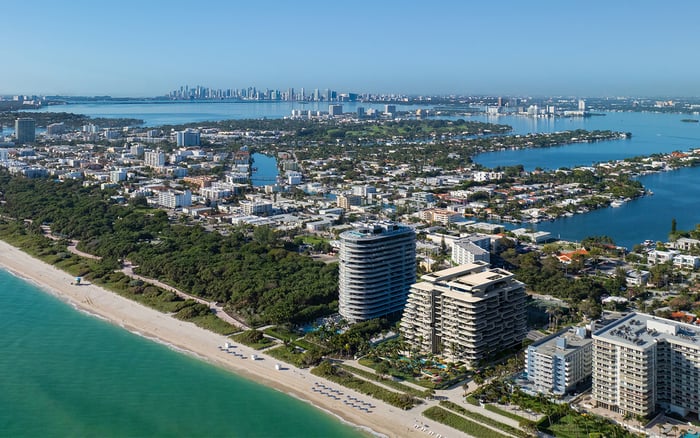
A Surfside acquisition should be selected and diligenced before irreversible funding moves. For Los Angeles buyers using overseas capital, sale proceeds, or exchange funds, the practical deadline for cleared dollars arrives before closing day.

Moving from Los Angeles to Surfside can look like a straightforward substitution of one coastal address for another. The financial mechanics are often more nuanced. A buyer may be selling a California residence, drawing from investments, holding part of the purchase price in a foreign currency, or acquiring a Florida condominium through an ownership structure. Each route creates its own sequence.
The property decision should come first. Define whether the residence will be a primary home, second home, or investment asset. Then compare boutique and full-service formats, review condominium and inspection records, investigate reserves and assessments, and evaluate the strength of the association. Only after understanding the building’s legal and financial condition should the buyer make an irrevocable currency conversion or liquidate a major asset.
Surfside offers a useful comparison set spanning completed and newer residential formats. Buyers might examine Arte Surfside alongside Ocean House Surfside, while treating each building’s documents, governance, and long-term suitability as independently material. Price per square foot is one measure, but it should not displace scrutiny of the association or the home’s intended use.
The practical funding deadline arrives before the contractual closing date.
A clean Surfside luxury condominium purchase is often planned around a 30- to 45-day contract-to-close period. Cash can simplify financing, but it does not eliminate condominium-document review, association approval, estoppel delivery, title work, or title clearance. Cleared dollars address only the funding component.
Florida condominium resale rules can also shape the calendar. When required documents were not delivered more than seven days before signing, a seven-day cancellation period may be available. Reserve or milestone-inspection materials may create longer review or extension rights. Transaction-specific advice is essential because the documents delivered, their timing, and the contract language all matter.
For an oceanfront comparison, Fendi Château Residences Surfside and The Surf Club Four Seasons Surfside can be considered within the same disciplined framework. Buyers should not assume that prestige, service, or available cash will compress statutory or association procedures. The governing documents and closing requirements remain central to the decision.
The most reliable approach is to work backward. Before the contractual closing date, reserve time for the final wire. Before that, allow for bank processing, compliance review, currency conversion, and any transfers between accounts. Earlier still, complete substantive building diligence. This sequence protects the buyer from converting or mobilizing a large balance for a property that later presents unacceptable legal, financial, or operational findings.
Foreign-exchange timing becomes relevant whenever part of the purchase price or closing expenses is held outside US dollars. Even if the buyer lives in Los Angeles, global business income, investment accounts, trusts, or a prior overseas sale may create currency exposure. Exchange-rate movements can materially change the effective dollar cost of both the residence and its expenses.
The aim is not to predict the market. It is to prevent a currency decision from dictating a property decision. Possible risk controls include converting a meaningful tranche when the rate is acceptable, retaining enough dollars for dollar-denominated expenses, and discussing a forward contract or another hedge for a large transfer with a regulated FX provider. The appropriate method depends on timing, liquidity, and personal risk tolerance.
A buyer should identify three dates: the target conversion date, the latest date funds can enter the banking and compliance chain, and the date cleared funds must reach the title company. The middle date is easily overlooked. International transfers, recently deposited money, trusts, companies, and other structures may require additional review, so the contractual closing date should never be treated as the day to begin moving capital.
A persuasive proof-of-funds package demonstrates more than an available balance. It should establish account ownership, the source of funds, and, where relevant, the broader source of wealth. A large sum appearing shortly before closing without a coherent documentary trail can create avoidable questions.
Supporting material may include seasoned bank statements, employment or business records, investment statements, a prior property-sale contract, or inheritance documentation. Names, account ownership, transaction history, and amounts should align throughout the package. Foreign-language records should be translated consistently. Current, passport-grade identification should also be ready for the title or escrow company’s anti-money-laundering review.
A foreign cash buyer generally does not need a US bank account, Social Security number, US credit history, or an LLC merely to purchase US real estate. Overseas funds may be verified where they are held. That flexibility does not diminish the need for acceptable identification, compliant funds, and a transparent transfer history.
Digital assets require the same early planning. They may be documented and converted into dollars for a cash acquisition, but verification, liquidation timing, volatility, and tax implications should be addressed with the closing and tax teams before the contract reaches its final stages.
If the Los Angeles property is a personal residence, a 1031 exchange is not the applicable framework. A 1031 exchange is reserved for qualifying business or investment property, and the replacement asset must satisfy like-kind rules. Buyers considering this route should obtain tax and legal advice before setting either closing date.
For a qualifying exchange, replacement property generally must be identified within 45 days and acquired within 180 days. Exchange proceeds must pass through a qualified intermediary rather than being received directly by the seller. The Surfside contract, vesting, funding instructions, and intermediary process should therefore be aligned before the Los Angeles closing-not afterward.
Even without an exchange, a same-day sale and purchase creates concentration risk. California sale proceeds may need to clear, undergo review, and then be rewired. A delayed sale could jeopardize the Florida closing. Liquidity held apart from the sale, a negotiated closing cushion, or another transaction-specific solution may reduce that dependency, but each option should be evaluated by the buyer’s attorney, tax adviser, title company, and financial team.
The closing team should maintain a single schedule covering document review, association requirements, estoppel, title clearance, identification, compliance, FX execution, and the final wire to the title company. If financing is involved, any lender-required insurance evidence should also be ready. Responsibility for every item should be assigned, with internal deadlines set ahead of contractual ones.
For a Los Angeles buyer, the elegant outcome is not simply a fast close. It is a controlled transition: property diligence is completed before capital becomes difficult to reposition, proof of funds answers foreseeable questions, and every institution knows when it must act. That is the standard that turns a complex Surfside acquisition into a discreet, orderly move.
To coordinate a considered Surfside property search, connect with MILLION.
If branded residences are on your mind — as a home or as an allocation — we would be glad to share what we are seeing, privately.
Begin a quiet conversationA clean luxury-condo purchase is often planned around 30-45 days, even for cash. Document review, association approval, estoppel, and title work can govern timing.
No. Cleared dollars do not remove statutory review rights, association procedures, estoppel requirements, or title clearance.
The decision should follow substantive property diligence and reflect the transfer timeline. Buyers may consider staged conversion or regulated hedging advice rather than relying on closing day.
It should show the available balance, account ownership, source of funds, and, when relevant, broader source of wealth.
Useful records can include seasoned bank statements, business or employment records, investment statements, property-sale contracts, and inheritance documents.
Generally, no. Funds may be verified overseas, but acceptable identification, compliant funds, and anti-money-laundering review are still required.
They may be documented and converted into dollars, but verification, liquidation timing, volatility, and tax considerations should be addressed early.
No. A 1031 exchange applies to qualifying business or investment property, subject to like-kind and other requirements.
Replacement property generally must be identified within 45 days and acquired within 180 days. A qualified intermediary must handle the proceeds.
Closing funds are generally wired to the title company. The buyer should verify instructions securely and allow time for banking and compliance review.