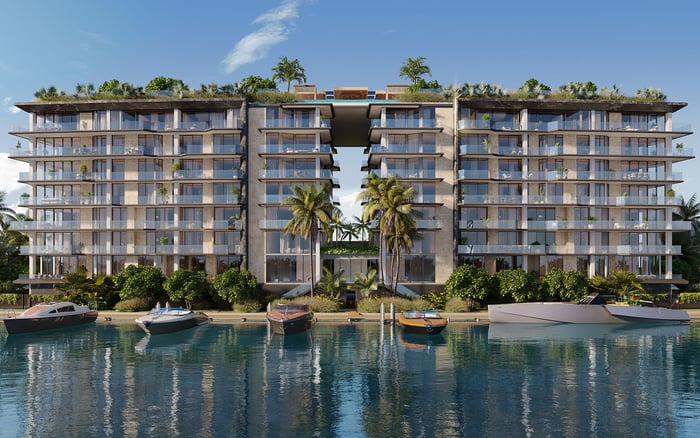
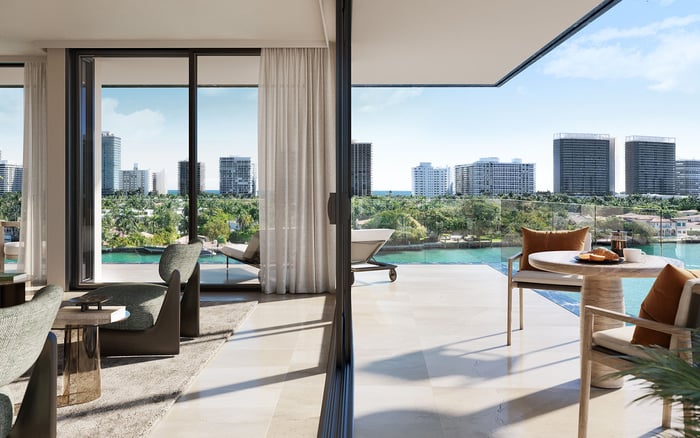
For seasonal buyers in Bay Harbor Islands, evaluating real-life routines, documented club privileges, dining arrangements, and transportation needs can be more useful than comparing amenity lists alone.

For a seasonal owner, a residence must work beyond the arrival experience. Once the luggage is unpacked, practical questions take priority: How easily does the address support coffee runs, meals, errands, beach visits, appointments, and evenings out? Which trips are comfortable on foot, and which require a car or rideshare?
That is why an amenity inventory should be tested against the buyer’s actual routine. A feature may look compelling in a presentation yet contribute little to a short or recurring stay. Conversely, a well-positioned entrance, a straightforward route, or clearly managed service can remove friction from everyday ownership.
Walkability should be assessed from the specific entrance rather than inferred from a neighborhood label. Buyers can compare residences such as La Baia North Bay Harbor Islands and The Well Bay Harbor Islands by walking the routes that would shape their own stays.
A useful route test considers crossings, lighting, shade, weather exposure, carrying distance, mobility needs, and the return trip. It should also account for the time of day when the route will normally be used. A morning walk and an evening return may produce different impressions.
Transportation planning should extend beyond nearby destinations. Buyers should identify the off-island trips they expect to make and decide whether a car, driver, or rideshare fits the intended ownership pattern.
A nearby private club, marina, or dining venue should not be treated as an ownership benefit unless the relevant right is documented. Proximity does not establish membership, admission, guest privileges, transferability, reservations, storage, or slip access.
When evaluating Onda Bay Harbor or another waterfront-oriented choice, buyers should separate the residential offering from independently operated services nearby. Written materials should identify which benefits belong to the residence, which require a separate application or agreement, and which are simply part of the surrounding area.
Any access-based benefit deserves precise questions about eligibility, fees, operating rules, guest use, scheduling, cancellation terms, and seasonal availability. If the answer is important to the purchase decision, it should be verified before contracting.
Private-dining language can describe different arrangements. It may refer to a residents’ room, a reservable entertaining space, catered service, priority booking, or another service model. Buyers should not assume that the phrase guarantees a staffed restaurant or unrestricted meal service.
The diligence process should establish who operates the service, when it is available, how reservations work, whether minimum charges apply, and what limitations govern guests or private events. Buyers should also ask whether the arrangement can change and where its terms are recorded.
The same review applies to services promoted through a club or third-party operator. A sales description can communicate atmosphere, but the governing terms determine access.
A useful comparison begins with a personal seasonal calendar. Buyers can map a typical week that includes groceries, meals, beach time, exercise, social plans, appointments, airport trips, and any family-related travel. The objective is to identify how often the residence simplifies the day and where additional coordination remains necessary.
A residence such as Alana Bay Harbor Islands should therefore be evaluated within the buyer’s own movement pattern rather than solely against another property’s amenity count. Different owners may assign different value to dining convenience, waterfront orientation, quiet, transportation, or service.
Visiting at several relevant times can make the comparison more practical. Buyers should begin at the correct entrance, follow the routes they expect to use, and record the steps that require reservations, transportation, staff assistance, or separate memberships.
Before contracting, request written details for every access-based benefit that matters to the purchase. Confirm whether each offering is included, optional, separately operated, separately charged, or merely nearby. Review reservation procedures, guest permissions, fees, service schedules, cancellation rules, and any stated limitations.
For club or marine access, identify the controlling agreement and the party responsible for approval. For private dining, establish the operating model and booking process. For walkability, test actual routes rather than relying only on marketing language or a map.
The strongest seasonal choice is not necessarily the residence with the longest amenity list. It is the one whose location, documented privileges, service structure, and transportation requirements best match the owner’s intended routine.
How should seasonal buyers evaluate walkability in Bay Harbor Islands? They should walk their expected routes from the specific building entrance and assess each trip at the times they are likely to use it.
Is a neighborhood-level walkability impression enough? No. Entrance location, crossings, weather exposure, carrying distance, and individual mobility needs can affect the practical experience.
Can a buyer assume that a nearby club includes membership? No. Membership and related privileges should be confirmed through written terms from the appropriate party.
What club details should be verified? Buyers should clarify eligibility, application requirements, fees, guest rules, operating terms, and whether any privilege transfers with ownership.
Does proximity to marine facilities establish boat or slip access? No. Slip rights, storage, reservations, priority, and operating arrangements require separate verification.
What can private dining mean in a residence? It can refer to several service models, so buyers should confirm the operator, space, staffing, reservation process, and applicable charges.
Which dining terms deserve close review? Important points include service hours, booking windows, guest limits, minimum charges, cancellation terms, and seasonal availability.
How can buyers compare Bay Harbor Islands projects fairly? They can apply the same personal schedule and diligence checklist to each residence instead of comparing amenity counts alone.
Why should a buyer test routes at different times? The experience may vary with traffic, lighting, weather, and the availability of transportation or building services.
What should guide the final seasonal-home decision? The residence should align with the buyer’s intended routine, documented access rights, service expectations, and transportation plan.
For a confidential assessment and a building-by-building shortlist, connect with MILLION.
If branded residences are on your mind — as a home or as an allocation — we would be glad to share what we are seeing, privately.
Begin a quiet conversation