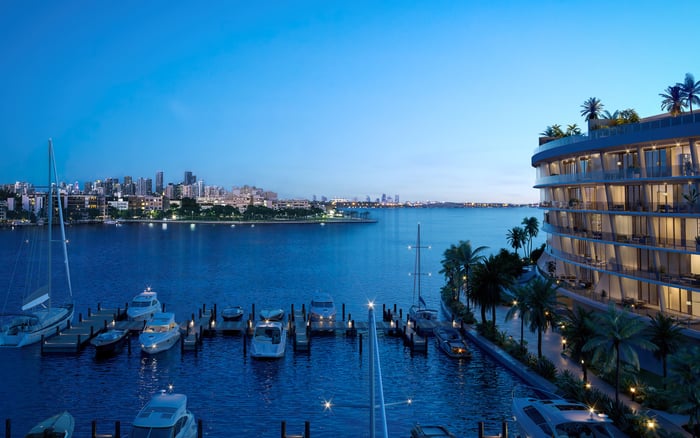
At Vita at Grove Isle, expansive glazing is central to the waterfront experience. Understanding the distinction between impact testing, written warranty coverage and condominium responsibilities is essential to evaluating future window claims.

At Vita at Grove Isle, the windows are integral to the experience: floor-to-ceiling glazing frames panoramic Biscayne Bay views in a private-island setting in Coconut Grove. Developed by Ugo Colombo’s CMC Group, the property comprises 65 waterfront residences. For a buyer, that architectural openness deserves as much attention in the closing documents as it receives during a viewing.
The essential distinction is straightforward: impact performance and warranty coverage answer different questions. One concerns how a glazing system is evaluated under defined conditions. The other concerns what a named party promises to do if a specified problem occurs. Neither is an insurance commitment.
For future claims, the most useful purchase file connects the installed product to its approvals, installation records, written warranties and condominium responsibilities. A description of “impact-resistant windows” is a starting point, not a substitute for that connection.
Vita’s glazing is described as floor-to-ceiling and impact-resistant. Terms used for individual residences include “Clear Impact Glass” and “High Impact Windows”; high-impact doors are also identified as a building feature.
Those phrases describe a marketed feature. They do not identify the installed manufacturer and model, establish an approval number or explain the remedy available for a defect. Even an accurate description of impact resistance does not, by itself, establish coverage for fogging, delamination, leaks or hardware failure.
Request a product schedule identifying the windows and glazed doors serving the residence. Then ask the appropriate project professional to connect those identifiers to the applicable approval documents and installation records. Keep windows and doors distinct in that review rather than assuming every glazed opening carries identical terms.
Miami-Dade and Broward are Florida’s High Velocity Hurricane Zone jurisdictions. HVHZ requirements are therefore relevant to evaluating Vita’s glazing, but the applicable requirements must be established through the project’s permit and approval documentation.
The code framework for wind-borne debris regions requires glazed openings to be impact-resistant or protected by impact-resistant coverings. The opening-protection provisions distinguish glazing within 30 feet of grade from glazing above 30 feet. Height is part of the inquiry, not a reason to assume every opening is evaluated identically.
Three testing references deserve separate attention. TAS 201 addresses impact testing. TAS 202 addresses structural air-pressure performance. TAS 203 addresses cyclic wind-pressure loading. An impact designation is not a complete statement of wind-pressure performance.
The familiar large-missile illustration involves a nine-pound 2×4 traveling at 50 feet per second. That describes a test protocol, not a verified result for Vita’s installed windows. Likewise, general code education does not establish the governing code edition or project-specific compliance.
Request the applicable product approvals, including any relevant Notices of Acceptance, commonly called NOAs. Have a qualified professional confirm that they apply to the installed assemblies and locations. Do not assume an NOA is the only permissible approval route or that different testing standards are automatically interchangeable.
Read the manufacturer warranty and installer workmanship warranty as distinct documents. Each should answer four questions: what component or work is covered, what event triggers coverage, who may claim and what remedy is offered.
In the manufacturer warranty, seek explicit language addressing the conditions that concern you, including fogging, delamination and hardware problems. For workmanship, ask how installation-related complaints are handled. A leak calls for an investigation of its cause, not an immediate assumption that it falls under either warranty.
Read the remedy as carefully as the coverage description. Ask whether it addresses replacement materials, labor, access, removal, reinstallation and associated finishes. These are questions to resolve in the actual documents, not benefits to presume. Establish the commencement date, duration, notice procedure and any registration requirement without importing terms from another building or manufacturer.
If Park Grove Coconut Grove is also on your shortlist, use the same document checklist for both properties. Compare written commitments, not assumed similarities in glazing or coverage.
Before closing, request a coordinated set of documents rather than a warranty brochure alone:
Product identifiers and applicable approvals or NOAs for the installed assemblies.
Manufacturer warranties and installer workmanship warranties.
Installation and inspection records relevant to the residence’s glazing.
Manufacturer maintenance instructions and available service records.
The condominium declaration and provisions allocating maintenance and repair responsibilities.
Where practical, ask for the documents to be organized by the openings they concern. A future reviewer should be able to connect an observed condition to a product and its paperwork without reconstructing the purchase conversation.
If a problem appears, document its location, date and visible condition, and seek appropriate professional assessment. Check the applicable notice and inspection procedures before authorizing non-emergency work. This is a documentation approach, not a representation that any particular condition is covered or that a claim will succeed.
Do not assign window maintenance, replacement responsibility or warranty claim rights to the owner or association by intuition. Request Vita’s declaration and maintenance allocations, then have counsel clarify who must act, who can submit a claim and how costs are allocated.
For a resale purchase, ask whether each warranty transfers, what documents establish any remaining rights and whether the relevant parties have acknowledged the transfer. A warranty available to an original purchaser should not be assumed to follow the residence automatically.
Insurance requires a separate review. An impact-glass description does not establish wind-mitigation credits, storm coverage, deductibles or the consequences of replacing an individual window. Obtain answers from the applicable policy and underwriting documents rather than treating certification as a promise of reimbursement.
The same discipline applies when considering Four Seasons Residences Coconut Grove: evaluate that property’s own documents rather than carrying assumptions from another purchase.
Vita’s expansive windows are central to its waterfront appeal. An informed buyer can examine the paperwork closely without diminishing that appeal. Separate four issues: what was installed, what performance documentation applies, what the warranties promise and who bears responsibility when something needs attention.
A complete file cannot promise a successful future claim. It can give owners and their advisers a firmer basis for evaluating one, without confusing a compelling view with a contractual remedy.
For a discreet perspective on South Florida’s luxury residences and buyer due diligence, explore MILLION.
If branded residences are on your mind — as a home or as an allocation — we would be glad to share what we are seeing, privately.
Begin a quiet conversationFloor-to-ceiling windows frame panoramic Biscayne Bay views and are central to the residences’ design. Buyers should connect that feature to product approvals, installation records and written warranty terms.
No. An impact designation does not establish warranty or insurance coverage for hurricane damage; those questions require the applicable written documents.
Descriptions such as impact-resistant windows do not establish the installed manufacturer, model or written coverage. Request the product schedule and actual warranties before drawing conclusions.
TAS 201 addresses impact testing. It is a separate performance criterion from resistance to wind pressure.
TAS 202 addresses structural air-pressure performance, while TAS 203 addresses cyclic wind-pressure loading. Neither should be reduced to a generic impact-glass label.
The opening-protection provisions discussed distinguish glazing within 30 feet of grade from glazing above 30 feet. The requirements for a particular opening should be confirmed through project documentation.
Buyers should not assume it is the only permissible approval route. Request the applicable product approvals and have a qualified professional confirm their relevance to the installed assemblies.
Coverage for those conditions is not established by the glazing descriptions. Review the actual warranties and obtain an assessment of the condition and its cause.
Responsibility should be determined from Vita’s declaration and maintenance allocations, with legal review where needed. Maintenance duties, claim rights and cost allocations should each be clarified.
Ask whether each warranty transfers and what documentation establishes any remaining rights. Do not assume the original purchaser’s coverage automatically passes to a subsequent owner.