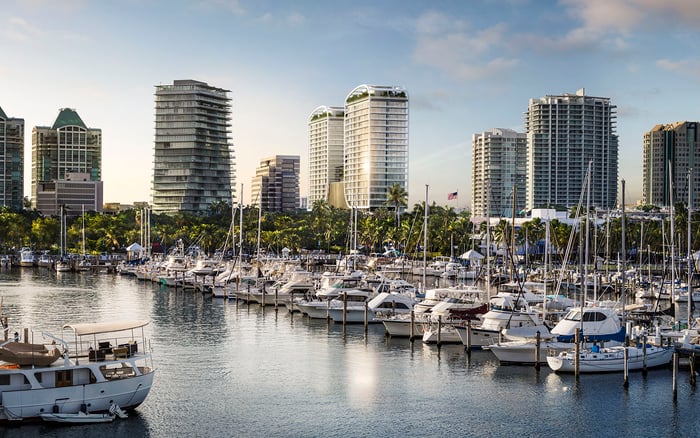
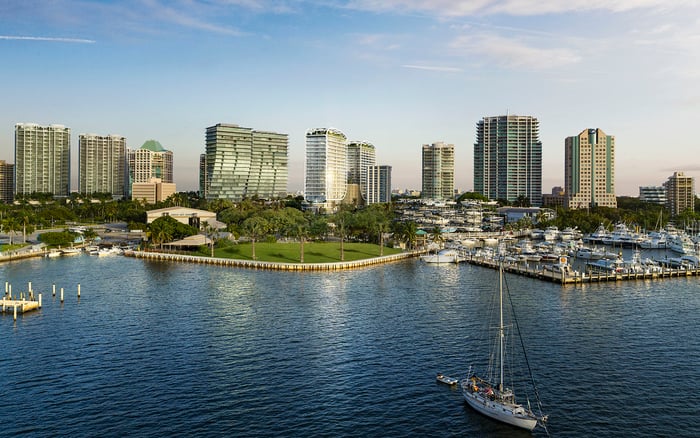
Mr. C Tigertail is a hospitality-branded condominium, not an established hotel-residential hybrid. For buyers, privacy due diligence means verifying access routes, amenity rights, guest rules, and cost-sharing obligations through governing documents and an on-site review.

At Mr. C Tigertail Coconut Grove, the first ownership question is not which elevator hotel guests use. It is whether hotel guests have any right to enter the residential property at all.
Tigertail, at 2678 Tigertail Avenue, and its sister tower, Bayshore, at 2655 S Bayshore Drive, are both luxury waterfront condominiums-not a residential tower paired with a hotel tower. The offering includes full-service Mr. C Hospitality, but hospitality branding does not establish hotel-room inventory or hotel-guest access.
That distinction matters to buyers seeking attentive service without compromising residential privacy. Separate public entrances, elevator zoning, credential controls, and access rights for outside patrons should not be treated as established features. The essential task is to identify who may enter, where they may go, and which document authorizes that access.
Completed in 2024, Tigertail was developed by Terra in partnership with Mr. C, with architecture by Arquitectonica and interiors by Meyer Davis. The 21-story residential development forms part of the two-tower Coconut Grove offering.
Those details establish its design pedigree, not its legal boundaries. A polished, staffed arrival area does not tell a buyer whether the lobby belongs exclusively to one condominium, serves another property, or accommodates visitors under a separate agreement.
The same distinction applies to service. A concierge's assistance is not the same as an owner's enforceable rights. Buyers should ask which services are included, which require separate payment, and whether availability depends on an operating agreement that can change.
Ask management for an access plan distinguishing owners, tenants, invited guests, deliveries, contractors, and any restaurant patrons or hotel guests with authorized access. Including a category in the request does not mean it exists at Tigertail. Management should first confirm which categories apply.
Then walk the relevant routes with a representative who can explain both the physical controls and the written policy:
Arrival and lobby: Identify each entrance, who may use it, and where visitors must register or wait.
Elevators and residential floors: Ask whether credentials restrict destinations, whether visitors require approval, and how temporary access expires.
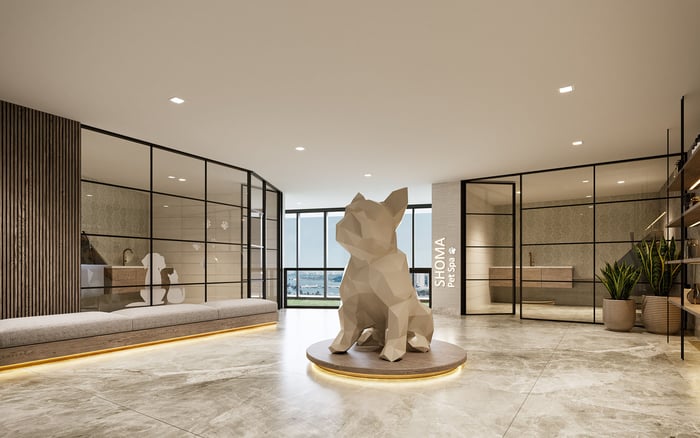
Amenities: Establish who can reserve or enter each facility, whether accompaniment is required, and whether outside bookings are permitted.
Deliveries and service visits: Confirm package handling, contractor registration, and the route used to reach a residence.
Any publicly accessible venue: If one is identified, trace its entrance, circulation, and any connection to residential areas.
Do not assume a restaurant, spa, or event space is public simply because hospitality language appears in the offering. Nor should a staffed threshold be read as proof of owner-exclusive use.
For each route, ask what happens outside normal staffing hours and who can authorize an exception. Distinguish a contractual access right from a practice management currently follows. Written rules should support a reassuring tour; the tour should not replace them.
Begin the ownership review with Tigertail's recorded declaration and exhibits, amendments, bylaws, current rules, management agreement, and budget. Request any shared-facility agreements or reciprocal easements as well.
Have condominium counsel identify the legal status of each material space. A lobby, pool, restaurant, or spa should not be labeled a common element or limited common element without support in the governing documents. Appearance, location, and branding do not establish ownership.
Next, separate three questions: who owns the space, who controls its operation, and who pays for it. Ask counsel to distinguish the parties responsible for access, maintenance, staffing, insurance, and capital work. Request the governing provision behind each material answer.
Two towers under one brand do not establish separate associations, shared amenities, or a particular cost-sharing arrangement. If an agreement gives another property access to a facility, examine its scope, duration, amendment provisions, and expense allocation. If no such arrangement applies, seek written confirmation rather than inferring exclusivity from the tower names.
For a luxury buyer, privacy and financial exposure belong in the same review. Evaluate the right to use a space alongside the obligation to support it.
An owner occupying a residence, a tenant under an approved lease, and a visiting friend may have different access permissions. The current leasing and guest rules should explain those distinctions, including registration, accompaniment, amenity use, and access when the owner is absent.
Do not assume a specific minimum lease term. Ask for the applicable restrictions and approval procedures in writing, including amendments, rather than relying on a listing description or verbal assurance.
Ownership classifications are no substitute for that review. An investment-held residence does not, by itself, establish frequent turnover, short-term rental permission, or hotel-style operation. Likewise, resolve differing unit counts in property listings against the recorded condominium documents; do not treat those differences as evidence about occupancy.
For a second-home purchase, explain the intended use precisely: family visits, unaccompanied guests, household staff, or leasing. Have management address each scenario separately before relying on a general statement that guests are welcome.
A buyer also considering Four Seasons Residences Coconut Grove should apply the same document-first questions to that purchase. A hospitality name is not a standardized legal model. No access arrangement should be carried over from one property to another.
The comparison can extend to Park Grove Coconut Grove without assuming the developments share governance, service, or amenity structures. Ask each property to substantiate its own arrangements.
A useful comparison sheet records residential entry controls, visitor procedures, amenity eligibility, service charges, and amendment authority. Leave unanswered items open until the relevant party provides support. The objective is not to rank the sophistication of the welcome, but to understand the privacy and obligations attached to ownership.
Before committing, assemble a written access summary with the applicable rules and agreement references. Reconcile management's explanation with counsel's document review and the routes observed on site. Where an answer remains unresolved, do not price exclusivity into the purchase as though it were guaranteed.
Tigertail's hospitality identity is clear. The separation of owners, visitors, and any authorized outside users requires a more exacting inquiry. The purchase should rest on documented rights and understood operating practices-not the assumption that service branding answers every privacy question.
For a discreet conversation about your Coconut Grove ownership priorities, connect with MILLION.
If branded residences are on your mind — as a home or as an allocation — we would be glad to share what we are seeing, privately.
Begin a quiet conversationTigertail is a hospitality-branded condominium. Full-service Mr. C Hospitality does not establish hotel-room inventory within the tower.
No. Bayshore and Tigertail are both identified as luxury waterfront condominiums, not a hotel-and-residential tower pair.
Mr. C Tigertail is located at 2678 Tigertail Avenue, Coconut Grove, Miami, FL 33133.
Separate public entrances and owner-only circulation should not be assumed. Request an access plan and walk the applicable routes with management.
Hotel-guest amenity rights are not established. Ask management whether any such rights exist and request the agreement that authorizes them.
Public access to restaurants, spas, or event spaces is not established. Confirm whether any applicable venue admits outside patrons and how its circulation connects to residential areas.
Request the declaration and exhibits, amendments, bylaws, current leasing and guest rules, management agreement, and budget. Also request any shared-facility agreements or reciprocal easements.
A shared brand does not establish shared amenities, association structure, or expense allocations. These arrangements require confirmation in the applicable governing agreements.
No specific minimum lease term is established here. Obtain the current restrictions, amendments, and approval procedures before planning rental use.
No. An investment ownership classification does not establish actual occupancy, leasing frequency, short-term rental permission, or hotel operations.