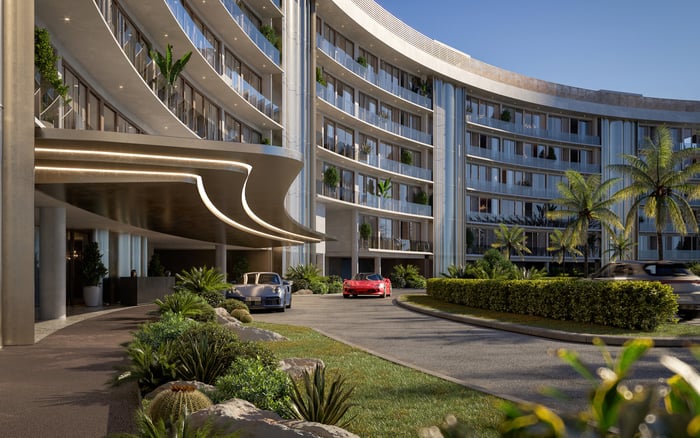
For Vita at Grove Isle buyers, a disciplined review of governance records, dated litigation disclosures and binding agreements can distinguish island-wide disputes from obligations attached to a particular residence.

For buyers considering Vita at Grove Isle, the waterfront setting is only one part of the acquisition. Less visible-but equally important-are the governance decisions, litigation and agreements that determine access, responsibility and cost.
The essential distinction is between a dispute involving the island and an obligation that reaches a Vita purchaser. Board minutes may identify an issue under discussion; litigation disclosures should describe the proceeding; contracts and governing documents must be reviewed to determine who is bound. None should be read in isolation.
Completion and occupancy do not establish that every legal challenge has ended. Nor does the existence of litigation establish a special assessment, an insurance exclusion, a financing restriction or a resale discount.
Vita’s legal history predates its current name. Residents sued in April 2015 to stop redevelopment at 4 Grove Isle Drive amid disputes over existing amenities. Previously marketed as The Markers Grove Isle, the project was rebranded after a favorable appellate decision in 2021.
In May 2021, Florida’s Third District Court of Appeal affirmed approval of a 2020 settlement between the existing condominium association and Grove Isle Associates. Settlement-related amendments received approval from 75% of that association’s membership.
The settlement’s elimination of mandatory club dues concerned owners in the three existing Grove Isle towers accessing the planned restaurant and club. Buyers should not read that arrangement as establishing Vita’s dues, membership obligations or amenity rights.
The settlement was not a universal resolution. Separate litigation involving Save Grove Isle and approximately 20 owners, dismissed in 2019, remained under appeal in 2021. Ask counsel to identify precisely which settlement provisions and recorded amendments, if any, affect the residence being purchased.
A 2022 lawsuit against the City of Miami challenged Vita’s approvals, alleging noncompliance with applicable platting requirements. Tigertail Association and homeowners voluntarily dropped that challenge in October 2022, expressing an intention to refile after permitting was complete. That procedural step was not a merits determination validating or invalidating the approvals.
By April 2024, residents suing the city sought to halt construction, reduce Vita’s size and increase its separation from existing Building 3. In February 2025, Protect Grove Isle, Tigertail Association and Coconut Grove Civic Association were identified as plaintiffs in a refiled action seeking revocation of project permits and city approval.
Neighbors also alleged that Vita brought the island’s residential total to 589 units, above a 575-unit cap in a 1977 covenant. These are litigation allegations, not established violations.
Vita’s completion was announced in December 2025. As of August 24, 2026, residents were moving into the seven-story condominium while litigation challenging the city’s construction approvals continued. At that date, a motion-to-dismiss hearing was scheduled for October 15, 2026, and trial for January 2027. Neither scheduled event establishes an outcome.
Before committing, ask counsel for an updated account of the parties, claims, requested remedies, operative orders and upcoming deadlines. Distinguish a request for an injunction from an injunction actually entered. Confirm whether any proceeding names the relevant association rather than assuming all island litigation does.
Request recent board and membership meeting minutes, the current budget, financial information and written litigation disclosures. Establish which association produced each record and what period it covers. Vita’s records and those of the existing towers are not interchangeable.
Review minutes for references to legal matters, contract approvals, proposed expenditures and unresolved questions. Reconcile each identified item with the budget and applicable agreements. Discussion of potential spending is not an approved expense; an approved expense is not automatically a charge allocated to the purchaser.
Seek written clarification where records appear inconsistent or a material item remains unexplained. Silence in the minutes is no substitute for a current litigation disclosure. These are review priorities, not assertions that Vita’s board has authorized litigation spending or special assessments.
For buyers also considering Park Grove Coconut Grove, apply the same document discipline independently. A Coconut Grove address does not make one condominium’s governance arrangements a proxy for another’s.
Request the declaration and bylaws, applicable club agreements, management contracts and any shared-facility or infrastructure agreements. Have counsel identify the contracting parties and the provisions that bind the purchaser or association. Do not infer contractual rights from an amenity description.
For each applicable agreement, focus on four questions:
Access: What use rights are granted, to whom, and subject to what conditions?
Cost: How are operating expenses, repairs and replacements allocated?
Control: Who can change services, pricing or rules, and what approvals are required?
Exit and disputes: What renewal, termination, indemnity and dispute-resolution provisions apply?
Ask counsel to reconcile these terms with the settlement and amendments affecting the existing association. The objective is to distinguish ownership rights from contractual permissions, and mandatory payments from optional services, without assuming Vita’s arrangements mirror those of neighboring towers.
The same questions warrant a separate review of Four Seasons Residences Coconut Grove if it is on the shortlist. Compare documented rights and responsibilities, not presumed similarities in the residential experience.
Existing residents’ objections have included blocked skyline and waterfront views. Outlook therefore merits distinct consideration, but a neighboring owner’s objection does not establish a protected view right for a Vita purchaser. Ask counsel to examine any relevant restrictions rather than treating a view as a legal guarantee.
For the financial review, request an estoppel certificate and reconcile it with the purchase documents, budget and any assessment disclosures. Request reserve information and ask counsel to confirm the applicable milestone-inspection and structural-integrity-reserve-study status. These requests do not imply that a particular deadline applies or that Vita is noncompliant.
If financing is involved, obtain the lender’s project-specific position. For future resale planning, resist applying an assumed litigation discount: a pending case alone neither quantifies buyer exposure nor establishes a price effect.
Before proceeding, seek a written reconciliation of the current case status, relevant governance decisions and contractual obligations. Ask counsel to explain any material unresolved issue and address appropriate document-review protections and deadlines in the purchase agreement.
The goal is neither to dismiss the island’s legal history nor to let it substitute for a property-specific assessment. A considered purchase rests on knowing which rights accompany the residence, which costs can reach its owner and which questions remain unresolved.
For a discreet conversation about your South Florida residential search, connect with MILLION.
If branded residences are on your mind — as a home or as an allocation — we would be glad to share what we are seeing, privately.
Begin a quiet conversationNo. As of August 24, 2026, residents were moving in while a lawsuit challenging the city’s construction approvals continued.
It affirmed approval of a 2020 settlement between the existing condominium association and Grove Isle Associates. It did not resolve every separate legal challenge.
No. The dues arrangement concerned owners in the three existing towers; Vita purchasers should have their own applicable agreements reviewed.
The claim that Vita brought the island total to 589 units above a 575-unit cap is an allegation, not an established violation.
Request the declaration and bylaws, current budget, written litigation disclosures, estoppel certificate and reserve information. Also seek applicable settlements, amendments and major agreements.
Look for legal matters, contract approvals, proposed expenditures and unresolved questions. Reconcile those entries with budgets and agreements before drawing conclusions about owner obligations.
No. Litigation alone does not establish a Vita-specific special assessment or quantify a purchaser’s financial exposure.
Review access rights, expense allocation, authority to change terms, renewal and termination provisions, and dispute responsibilities. Counsel should determine which provisions bind the purchaser or association.
No. They are due-diligence requests, and counsel should confirm which requirements and deadlines apply to Vita.
A motion-to-dismiss hearing was scheduled for October 15, 2026, and trial for January 2027. Those were scheduling details, not outcomes, and buyers should obtain an updated case status.