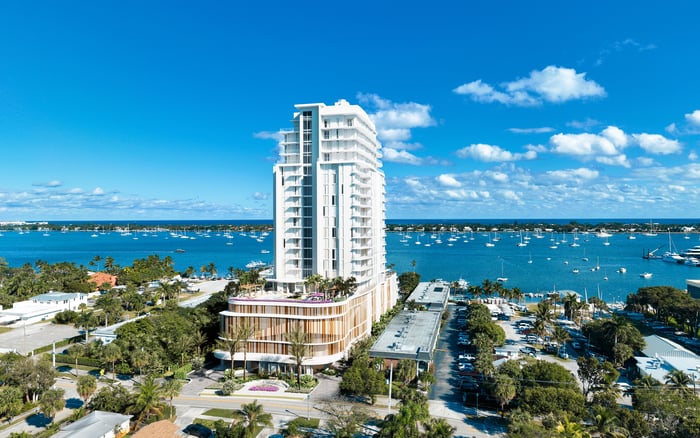
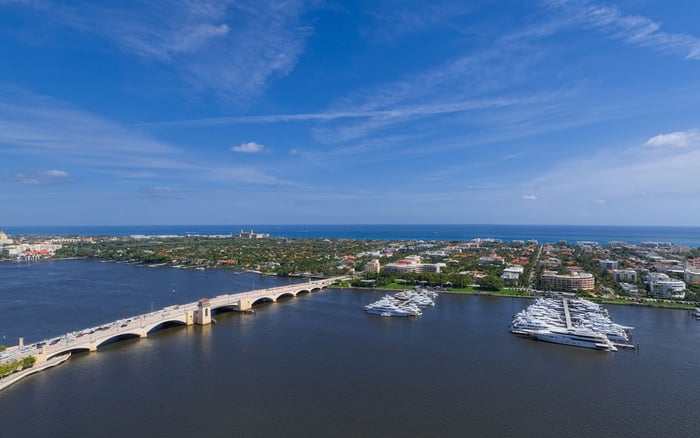
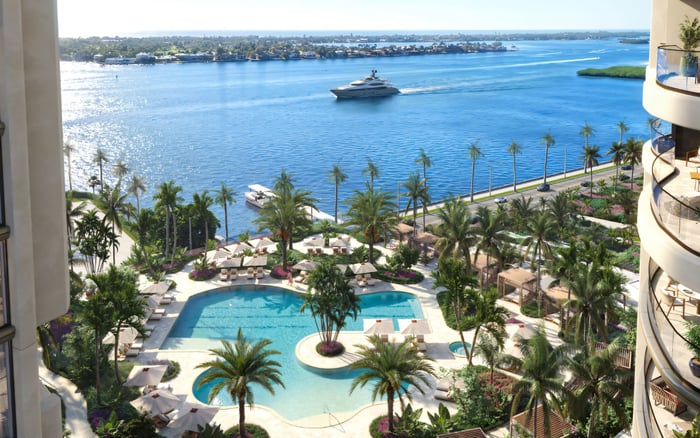
The Bristol’s generous terraces are central to its appeal. For buyers, their long-term stewardship deserves equal attention: waterproofing, protective coatings, reinforcement and railings should be evaluated through building-specific engineering, maintenance records and cost-allocation provisions, not assumptions about coastal exposure.
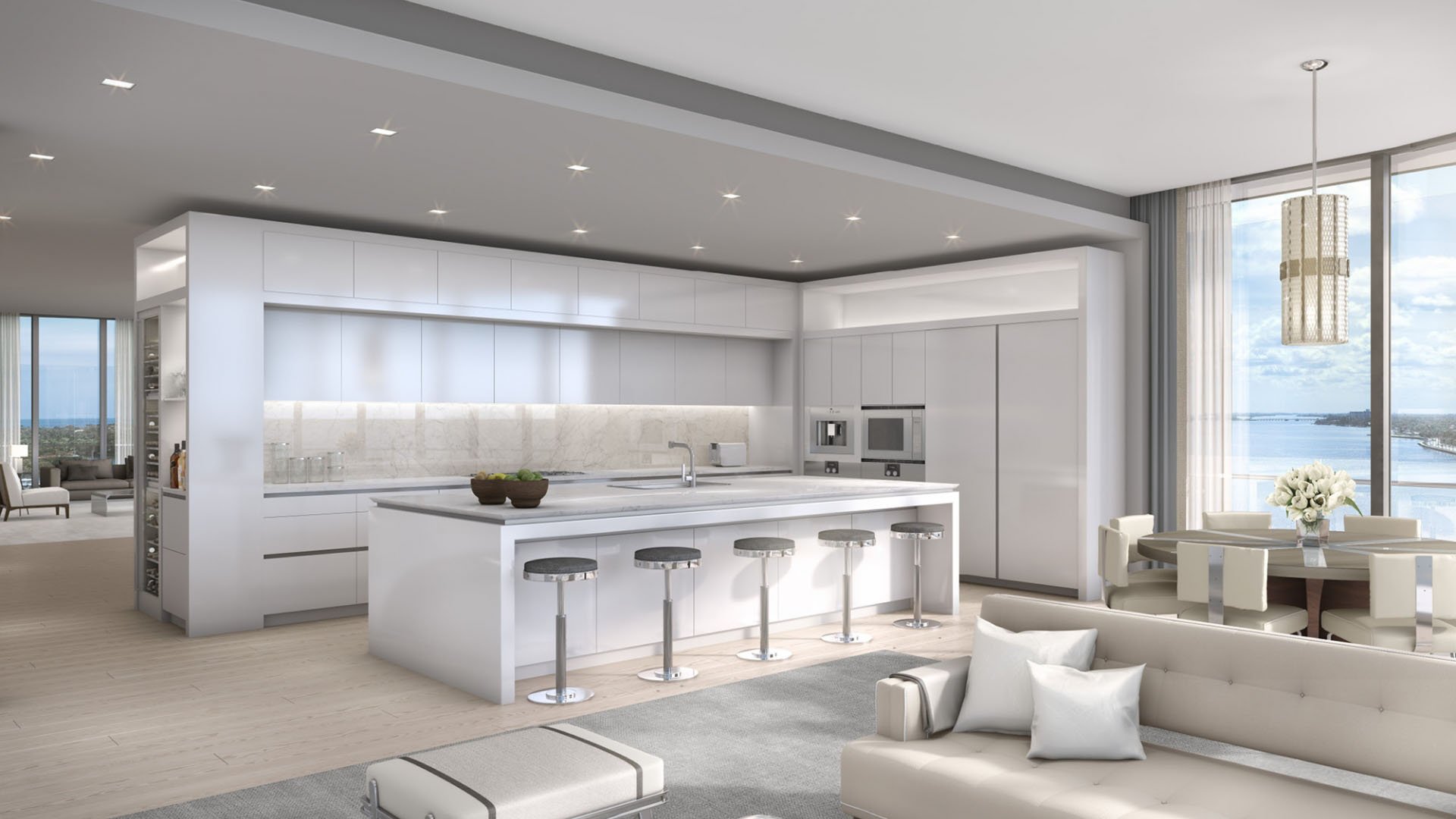
At The Bristol Palm Beach, the appeal is inseparable from the setting: flow-through residences, terraces on both sides, and views encompassing the Intracoastal, Palm Beach, ocean and city. The address deserves precision. This 25-story, 69-residence condominium stands at 1100 South Flagler Drive in West Palm Beach, not on Palm Beach island.
For a buyer considering a substantial coastal residence, those outdoor spaces belong in both the lifestyle brief and the ownership model. Waterproofing, protective coatings, concrete and railings are more than finishing details. They are systems whose condition and maintenance can influence future expenditure.
This is a due-diligence framework, not a finding of corrosion, leaking balconies, failed membranes, pending restoration or a special assessment at The Bristol Palm Beach. Coastal exposure warrants informed questions; it does not establish a building defect.
The Bristol’s balconies project up to 13 feet, with perimeter slabs thickened to 10 inches to accommodate the design. These are meaningful architectural and construction details, not a repair estimate. Neither the projection nor the slab thickness establishes deterioration, a replacement schedule or a higher future bill.
The next step is to connect the terrace design to its actual protective systems. Ask which waterproofing assembly serves the balcony, how it meets the slab edge, what maintenance it requires and whether records document that work. Understand the terrace as an assembly rather than judging it solely by its finished surface.
Basement construction also presented a challenge because of the proximity to ocean water. That makes below-grade waterproofing another appropriate topic for document review. It does not establish actual groundwater conditions or poor waterproofing performance.
For buyers also considering Forté on Flagler West Palm Beach, the comparison should remain building-specific: architectural appeal on one side, documented maintenance and capital planning on the other. Do not assume a shared repair cycle.
Salt and moisture penetration can contribute to corrosion of reinforcing steel and deterioration of concrete. Protective paint and coating systems therefore serve a purpose beyond presentation. Balcony waterproofing and traffic coatings help prevent water from penetrating concrete slabs and reaching spaces below.
That distinction matters when reviewing an expense labeled simply as painting or balcony work. A decorative finish, a protective coating and a structural repair do not necessarily address the same condition. Ask what scope sits behind the budget label.
Where deterioration requires structural restoration, regional repair methods can include removing damaged concrete, treating or replacing corroded reinforcement, restoring the concrete section and applying protective waterproofing. Some systems integrate fluid-applied urethane traffic coatings into the slab edge to protect reinforcement.
These are examples of available repair methods, not specifications established for The Bristol. A building-specific assessment must determine whether intervention is needed and which assembly is appropriate. A pristine surface cannot replace that assessment, just as coastal exposure alone is not a diagnosis.
A useful ownership model keeps distinct obligations visible rather than grouping everything under a general maintenance allowance.
Routine inspection and protective maintenance.
Identify what is inspected, which protective systems are maintained and how completed work is recorded. Base this category on adopted budgets and actual maintenance history, not a generic coastal-property allowance.
Membrane and coating renewal.
Review the installed system’s specifications, warranty terms and maintenance requirements. Renewal assumptions should reflect building-specific condition and professional estimates. A waterfront location alone is no basis for assigning The Bristol an arbitrary replacement interval.
Structural concrete repair.
Keep potential work to slabs, balconies and reinforcement separate from cosmetic surface work. If engineering identifies a repair scope, use its quantities and estimates. Without that foundation, an assumed restoration bill offers apparent precision without supporting evidence.
Railing restoration or replacement.
Regional balcony-restoration services include railing work, with coastal-grade replacement systems engineered for Florida wind loads. Railings therefore warrant separate review; this is not evidence that The Bristol’s railings require replacement.
For each category, record the proposed timing, estimated amount, funding source and owner allocation. Mark an unpriced item as unresolved rather than silently treating it as zero. The objective is a transparent decision model, not a prediction disguised as a spreadsheet.
Regional restoration projects can combine balcony concrete repairs, painting, waterproofing and new glass railings. A single contract may therefore cover several kinds of expenditure. Conversely, separate proposals may address related parts of the same balcony assembly.
Ask the association and its professionals to explain where each scope begins and ends. If planning documents include both a coating allowance and a broader balcony-restoration estimate, clarify whether they overlap before adding them together. Likewise, confirm that railing work has not been assumed to fall within a contract that excludes it.
The declaration deserves equally close attention. Private enjoyment of a terrace does not, by itself, establish who must maintain each component or how a shared project’s costs would be allocated. Have counsel identify the applicable provisions before converting a building-wide estimate into a residence-level obligation. Do not automatically divide that estimate equally among The Bristol’s 69 residences.
Begin with the reserve study, engineering assessments and inspection findings. Read them alongside waterproofing specifications and warranties, maintenance history, adopted budgets and planned contracts. Then reconcile those materials with the declaration’s balcony-cost provisions.
The questions are practical. Which components have been evaluated? What work has been completed? What remains recommended, contracted or unfunded? Which estimates are current, and what assumptions support their timing? Review a warranty for its actual terms rather than treating it as a blanket substitute for maintenance funding.
Apply the same document discipline to a comparison with Alba West Palm Beach. Compare the evidence supporting each ownership budget, not an assumed similarity in construction, condition or future expense.
Inspection deadlines and legal reserve obligations require separate confirmation from qualified advisers using applicable law and building-specific facts. Neither an address nor a general restoration description establishes those obligations.
The Bristol’s terraces can remain a compelling reason to buy while their stewardship receives rigorous attention. Those priorities are complementary. A considered acquisition distinguishes the pleasure of outdoor living from the technical and financial responsibilities that support it.
The decisive question is not whether a coastal condominium could ever need repair. It is whether the buyer understands the installed systems, their documented condition, the funding assumptions and the allocation of responsibility. That is what makes a long-term cost model useful without turning regional risks into unsupported allegations about a particular building.
For a considered perspective on South Florida’s exceptional residences, explore MILLION.
If branded residences are on your mind — as a home or as an allocation — we would be glad to share what we are seeing, privately.
Begin a quiet conversationNo. The Bristol is at 1100 South Flagler Drive in West Palm Beach, overlooking the waterfront rather than occupying a Palm Beach island address.
The Bristol is a 25-story condominium with 69 residences.
Residences are flow-through with terraces on both sides. Balconies project up to 13 feet, with perimeter slabs thickened to 10 inches to accommodate the design.
No. It presents an ownership due-diligence framework, not a finding of active corrosion, leakage, membrane failure, pending restoration or a special assessment.
Salt and moisture penetration can contribute to reinforcing-steel corrosion and concrete deterioration. Exposure alone does not establish a defect in a particular building.
No. Waterproofing and traffic coatings help prevent water penetration into concrete slabs and spaces below, making their condition relevant beyond surface appearance.
Separate routine inspection and protective maintenance, membrane or coating renewal, structural concrete repair, and railing restoration or replacement. Use building-specific estimates for amounts and timing.
Request the reserve study, engineering assessments, inspection findings, waterproofing specifications and warranties, maintenance history, adopted budgets and planned contracts. Review the declaration’s provisions allocating balcony responsibilities and costs.
Not automatically. The applicable declaration provisions and professional advice should establish the residence-level allocation rather than an assumed equal split.
No. Basement construction near ocean water was a project challenge, but that fact does not establish actual groundwater conditions, leakage or poor waterproofing performance.