Ocean House pairs a substantial pre-closing deposit schedule with a 2027 closing horizon. Financed buyers should model appraisal-gap liquidity, lender-specific rate-lock timing and project approval separately from the developer’s construction financing.
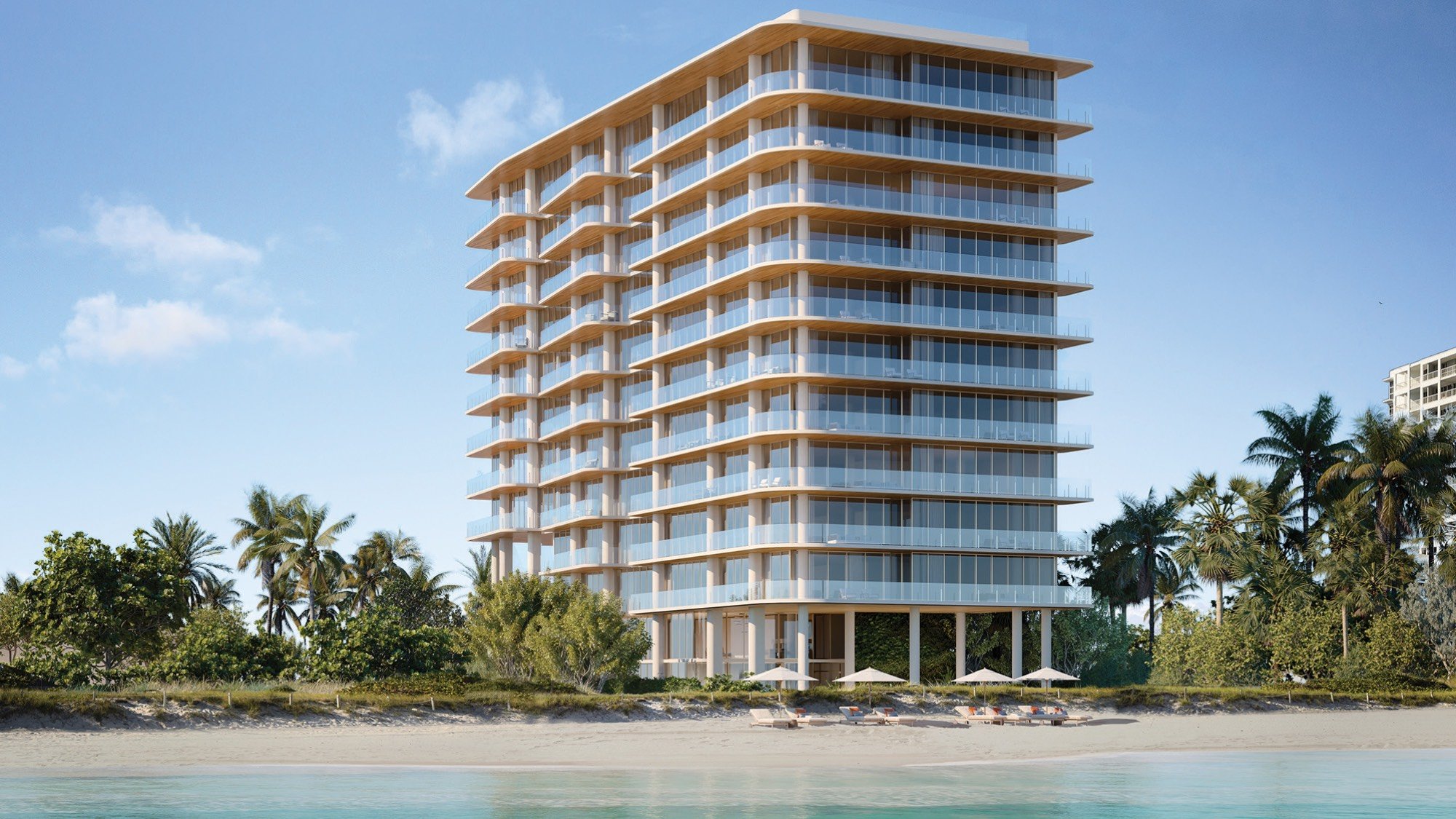
At Ocean House Surfside, the appeal is deliberately intimate: 25 residences on the Surfside oceanfront, with architecture by Arquitectonica and interiors by Carla Guilhem. Planned configurations range from two to five bedrooms, and the largest layouts exceed 6,000 square feet. Construction was underway by February 2025 under developer Multiplan Real Estate Asset Management, while two-bedroom residences are currently advertised from $5.1 million.
For a cash buyer, the principal exercise is contract diligence and liquidity planning. For a financed buyer, the analysis has another layer. A contract signed well before completion does not fix the future appraised value, final loan approval, project eligibility or mortgage rate. Those variables converge closer to the scheduled 2027 closing, when the largest portion of the purchase price comes due.
The contract is signed today, but valuation and final financing converge near completion.
That is why a pre-construction trophy purchase should be underwritten twice: first as a contractual commitment, then as a future financing event. The distinction is especially important in a boutique building, where the scarcity that creates cachet may also limit the number of in-building closed transactions available to an appraiser.
The advertised structure permits a reservation with 10%. The stated schedule then calls for 20% at contract, 10% after 90 days and another 10% after 120 days. Together, these installments equal 40% of the purchase price before closing, with the remaining 60% due at the 2027 closing.
On a $10 million contract, 40% represents $4 million committed before closing, leaving $6 million due at completion. That arithmetic is not a financing commitment. It is a timetable for when the buyer must have capital available and when a lender must be ready to fund.
A sophisticated buyer should ask Florida counsel to identify precisely what the executed contract says about financing, appraisal, default, deposit remedies and any permitted appraisal-gap limit. The advertised schedule is a commercial headline, not a substitute for the operative documents. The buyer’s-guide principle is simple: model the consequences of a financing shortfall before placing substantial deposits beyond immediate reach.
Two public asking positions illustrate the valuation challenge without resolving it. Unit 701 has been offered at $17.6 million for approximately 4,180 square feet, or about $4,211 per square foot. Unit 1003 has been offered at $10 million for approximately 2,633 square feet, or about $3,798 per square foot. Together, they indicate an asking range of roughly $3,800 to $4,200 per square foot.
These are asking prices, not closed sales or appraised values. A displayed “0 units sold” figure is not an audited developer sales statement. It nevertheless provides no closed in-building transactions for direct comparison. An appraiser may therefore need to evaluate other evidence, but the properties, adjustments and methodology a future appraiser might use are not established.
For perspective, an illustrative 10% to 15% valuation shortfall on a $10 million contract equals $1 million to $1.5 million. This is not a forecast for Ocean House. It simply demonstrates the potential scale of additional equity required if a lender advances less than the buyer expected.
The key question is not merely whether the buyer can obtain a loan. It is whether the buyer can close if the valuation, loan amount or both fall short of the original plan. That reserve should remain distinct from funds already allocated to deposits, furnishings, taxes and other ownership costs not quantified in the stated terms.
Surfside offers a rare concentration of design-led residential buildings, but proximity does not make two residences interchangeable. Arte Surfside and Fendi Château Residences Surfside may help a buyer understand the neighborhood’s luxury vocabulary, while The Delmore Surfside provides another current project to consider when assessing new supply.
None should be presumed to be an appraisal comparable for Ocean House. Building age, completion status, residence scale, view, floor, condition and transaction date can matter, but no specific adjustment framework is established. For investment planning, treat neighborhood pricing as orientation and insist that the lender explain its valuation process for the residence itself.
The same discipline applies to basic project identification. The building’s stated height varies among six, 11 and 12 stories, while address references vary between 9317 Collins Avenue and 9309 Collins Avenue. Buyers should rely on the current offering documents, approved plans, purchase contract and legal description rather than secondary profiles.
Because 60% is due at closing in 2027, the relevant borrowing terms are those available when the lender can complete underwriting and fund. No uniform rate-lock duration, extension fee or float-down provision is established for this purchase. Each is lender-specific.
A buyer should obtain a written timeline showing when the lender can review the project, order or complete an appraisal, approve the borrower, lock a rate and authorize closing funds. The buyer should also ask what happens if completion extends beyond the lock period, whether an extension is available, who pays for it and whether improved market pricing can be captured. Those are questions for the selected lender, not assumptions to embed in the acquisition model.
Final approval may also depend on building-level information that is not yet established, including eventual condo warrantability, association documentation, reserve funding, insurance status and eligibility for a particular mortgage program. A preliminary borrower approval cannot resolve those project questions years in advance.
Multiplan secured a $30 million construction loan from Bradesco Bank, with the facility permitting borrowings of up to $60 million. That financing relates to the developer and the project’s construction. It is not evidence that an individual purchaser will qualify for a mortgage at completion, nor does it establish the future terms of that mortgage.
The cleanest strategy is layered: maintain adequate liquidity for the contractual deposit schedule, preserve a separate appraisal-gap reserve, monitor project documentation and revisit lender options as completion approaches. Before each contractual milestone, confirm the legal consequences of proceeding and update the closing-capital model.
Oceanfront scarcity may be the emotional reason to purchase, but precise sequencing is what protects the transaction. For a private consultation on Surfside opportunities and a disciplined acquisition strategy, connect with MILLION.
If branded residences are on your mind — as a home or as an allocation — we would be glad to share what we are seeing, privately.
Begin a quiet conversationOcean House is planned as a boutique oceanfront condominium with 25 residences.
The advertised payment structure places the remaining 60% due at closing in 2027.
The stated schedule is 20% at contract, 10% after 90 days and another 10% after 120 days, totaling 40% before closing.
Yes. The advertised reservation terms state that a residence may be reserved with 10%.
Two-bedroom residences are advertised from $5.1 million.
No. Asking prices are not closed-sale evidence and should not be characterized as appraised values.
Illustratively, it would represent $1 million to $1.5 million of potential additional equity exposure. This is not a prediction of an Ocean House appraisal.
Rate-lock duration, extension costs and float-down terms are lender-specific. Buyers should align any lock with the lender’s underwriting and the expected 2027 closing timeline.
No. The developer’s construction financing is separate from a purchaser’s mortgage approval and future loan terms.
Because public references conflict, buyers should rely on the current offering documents, approved plans, purchase contract and legal description.