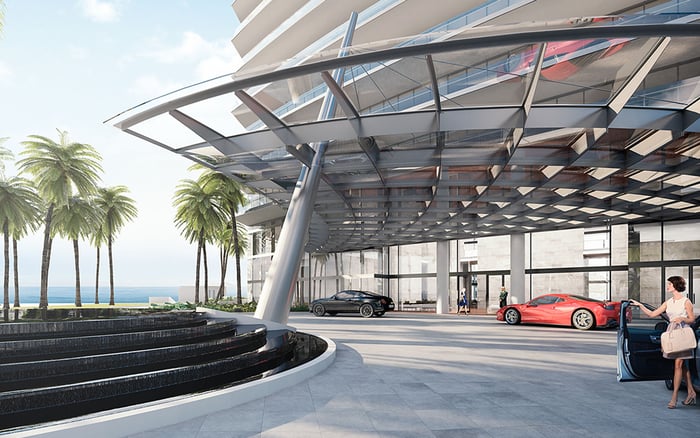
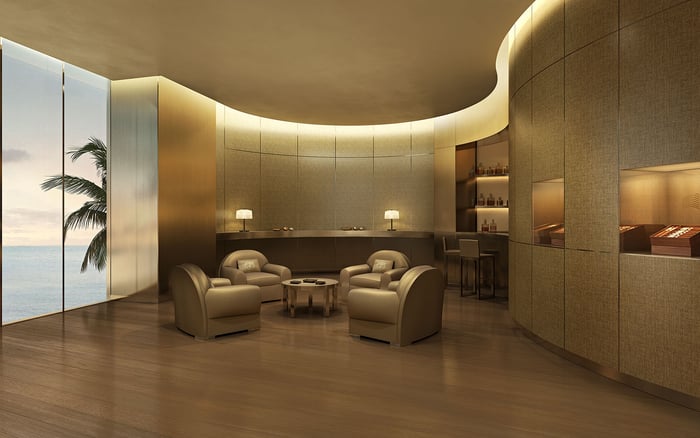
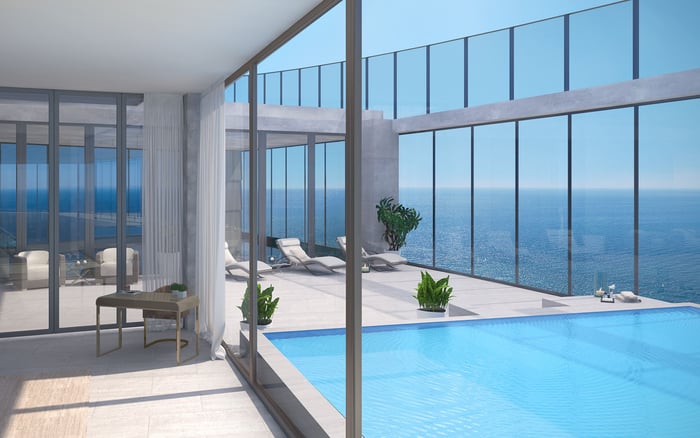
At Jade Ocean, the long view extends beyond purchase price and monthly fees. Ocean exposure makes wash-downs, sealants, balcony membranes, concrete restoration and exterior metals essential lines in a disciplined ownership model.
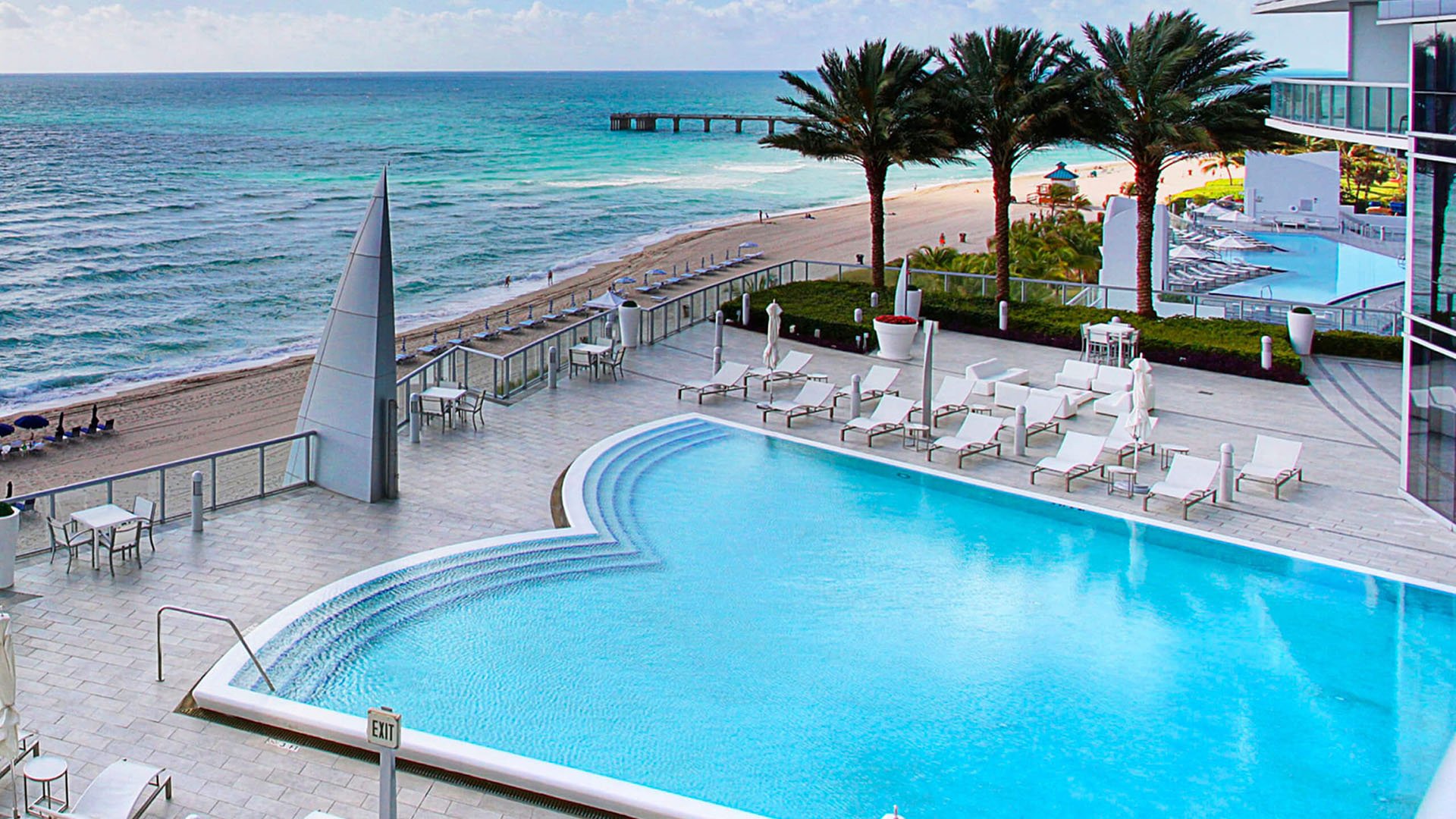
At Jade Ocean Sunny Isles Beach, direct Atlantic frontage is central to the appeal. Completed circa 2009 at 17121 Collins Avenue, the condominium occupies one of South Florida’s most coveted stretches of shoreline. Yet the same proximity that delivers uninterrupted water views also creates a distinct maintenance environment.
Salt-laden air deposits chlorides on exposed components. Over time, those deposits can accelerate corrosion in balcony railings, window frames, brackets, fasteners and door hardware. Ocean-facing elevations, windward façades, splash zones and hard-to-wash crevices warrant particular attention. This is not an argument against coastal ownership. It is an argument for underwriting it with precision.
The ocean view is an amenity, but marine exposure is a lifecycle cost.
For a prospective purchaser, the relevant question is not simply whether the building looks immaculate today. It is whether maintenance protocols, reserves and long-range capital planning account for recurring care and eventual renewal.
Visible oxidation on a fastener may appear cosmetic, but chloride exposure can progress beyond exterior hardware. When chlorides penetrate the concrete cover and compromise the protective environment around reinforcing steel, corrosion can follow. Expanding corrosion products may contribute to cracking, rust staining and spalling.
That progression explains why early inspection matters. A minor sealant failure, hairline crack or localized coating defect can create a pathway for moisture and chlorides. The objective is to identify and correct small vulnerabilities before repairs demand broader access, demolition or concrete restoration.
The review should extend beyond terraces. Roof equipment, condenser units, exposed steelwork, balcony balustrades and exterior life-safety components all operate in the same marine atmosphere. Even external fire-sprinkler heads can exhibit predictable corrosion at coastal Miami-Dade properties, reinforcing the need for a building-wide rather than decorative approach.
A balcony is often marketed as finished living space in the sky. From an asset-management perspective, however, its waterproofing assembly is a renewable lifecycle system. Cracks or failed membranes can expose structural concrete to moisture and chlorides, while compromised transitions, penetrations and perimeter details can concentrate deterioration.
Sunny Isles restoration work commonly encompasses spall repair, soffit restoration and traffic-grade waterproof membranes on occupied balconies and walkways. These are distinct scopes, but they can be connected. Waterproofing protects the substrate; concrete repair addresses existing deterioration; soffit work may resolve damage visible below.
Buyers should therefore look beyond the color and condition of terrace finishes. Relevant records include membrane installation dates, repair locations, warranty terms, maintenance requirements and evidence of recurring inspections. Across the local luxury corridor, residences such as Jade Signature Sunny Isles Beach and Muse Residences Sunny Isles Beach share the broader reality that highly exposed coastal architecture demands durable, long-term stewardship. Their inclusion provides context, not a statement about either property’s present condition.
A credible ownership model should separate ordinary operations from periodic capital work. Routine expenses may include freshwater wash-downs, visual checks, localized sealant renewal, touch-up coatings and minor corrosion treatment. Highly exposed coastal properties should undergo inspections and wash-downs at least quarterly, with additional attention after severe marine-weather events.
Capital expenses are less frequent but potentially broader. They may encompass full membrane replacement, concrete restoration, railing renewal, exterior coating programs or the replacement of ocean-exposed metals and equipment. Protective coatings and corrosion-control treatments have finite service lives, so recoating and durability assessments should not be treated as surprises.
This distinction matters because low routine spending can create the appearance of efficiency while shifting costs into a later capital project. Proactive washing and prompt, localized repairs may improve predictability. Deferred waterproofing or corrosion work can expand the scope ultimately identified through engineering review or formal recertification.
A reserve balance is only a starting point. Buyers should determine whether the underlying study separately identifies balcony membranes, concrete repairs, railings, exterior coatings, window and door systems, roof equipment and other ocean-exposed metals. Bundled categories can obscure whether an expensive component has a defined useful life and funding path.
Request the latest reserve study, engineering reports, balcony and façade repair history, waterproofing warranties, board minutes and notices of planned assessments. Then compare the documents. An engineering recommendation without a corresponding reserve allocation may signal future funding pressure. A reserve line without a recent condition assessment may rely on assumptions that need updating.
This is central to a disciplined resale review and among the most consequential buyer’s-guide principles: examine not only what has been spent, but also what remains unfunded, scheduled or under investigation.
Sunny Isles Beach requires condominium and cooperative buildings at least three stories tall and within three miles of the coastline to undergo recertification at 25 years, followed by recertification every 10 years. Buildings outside that accelerated coastal category generally begin at 30 years.
For a circa-2009 property, the prudent approach is to incorporate that 25-year threshold into the long-term model now rather than wait until it becomes immediate. This does not establish that Jade Ocean requires a particular repair or assessment. It simply gives purchasers a regulatory horizon against which to evaluate inspections, reserve contributions and planned capital projects.
Timing matters in practice. One Sunny Isles building was marketed after completing a $10 million assessment together with 40- and 50-year recertifications. Other Collins Avenue residences have been advertised with 40-year recertification completed, including language indicating that the work was paid. Those examples do not establish Jade Ocean’s condition or future costs. They do show that completed and funded work can become material to resale positioning.
Sunny Isles Beach offers a deep field of contemporary towers, including The Ritz-Carlton Residences® Sunny Isles and Turnberry Ocean Club Sunny Isles. Comparisons among them should extend beyond floor plans, amenities and finish palettes. A more rigorous inquiry examines each association’s inspection cadence, repair history, reserve structure and treatment of marine-exposed systems.
Oceanfront luxury can make preventive work nearly invisible when it is performed well. Clean railings, sound coatings and dry balcony assemblies may reflect sustained spending rather than inherent permanence. In this setting, a polished appearance has value, but documentation allows a purchaser to determine whether that appearance is supported by a repeatable program.
Before making an offer, determine whether major work is completed, merely recommended, contracted, funded or still under investigation. Confirm who bears an assessment at closing and whether payment terms survive a transfer. Review the unit for staining, cracking, sealant gaps and corrosion, while recognizing that a visual tour cannot replace qualified engineering or inspection advice.
The most sophisticated cost model does not attempt to predict an unsupported assessment figure. Instead, it builds scenarios around recurring maintenance, scheduled component renewal and the possibility that formal inspection expands a repair scope. At Jade Ocean, that framework protects more than a balance sheet. It supports the enduring quality expected of a premier Sunny Isles address, where waterfront living, oceanfront exposure and architectural refinement are inseparable from stewardship.
For discreet guidance on South Florida luxury real estate, connect with MILLION.
If branded residences are on your mind — as a home or as an allocation — we would be glad to share what we are seeing, privately.
Begin a quiet conversationDirect ocean exposure can deposit chlorides on railings, frames, fasteners and other exterior components, making recurring inspection and maintenance important.
Chlorides can penetrate concrete cover and contribute to reinforcing-steel corrosion, cracking, rust staining and spalling.
Membranes have finite service lives, and cracks or failures can admit moisture and chlorides into structural concrete.
A long-term plan may include freshwater wash-downs, visual inspections, localized sealant work, recoating and minor corrosion treatment.
Coastal guidance advises at least quarterly inspections and wash-downs, with added attention after severe marine-weather events.
Request the latest reserve study, engineering reports, repair histories, waterproofing warranties, board minutes and planned-assessment notices.
It should clearly account for membranes, concrete, railings, coatings, windows, doors, roof equipment and other exposed metals where applicable.
Qualifying buildings at least three stories tall and within three miles of the coast enter recertification at 25 years, then every 10 years.
No. Local examples illustrate potential project scale but do not establish Jade Ocean’s condition, reserves or future assessment amount.
Determine whether work is recommended, contracted, funded, completed or still under investigation, and clarify assessment responsibility at closing.