A collector-minded buying guide to Armani Casa Sunny Isles Beach, separating advertised wine amenities from the backup-power, delivery-handling and climate-record evidence worth requesting before closing.
For a wine collector, the decisive luxury is not simply a beautiful place to keep bottles. It is confidence in what happens when power fails, a shipment arrives early or an environmental alarm sounds while the owner is away. At Armani Casa Sunny Isles Beach, those questions belong beside the residence’s design and outlook in the buying decision.
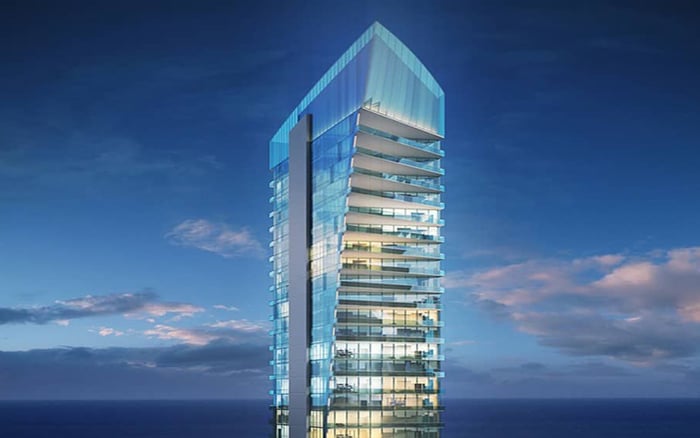
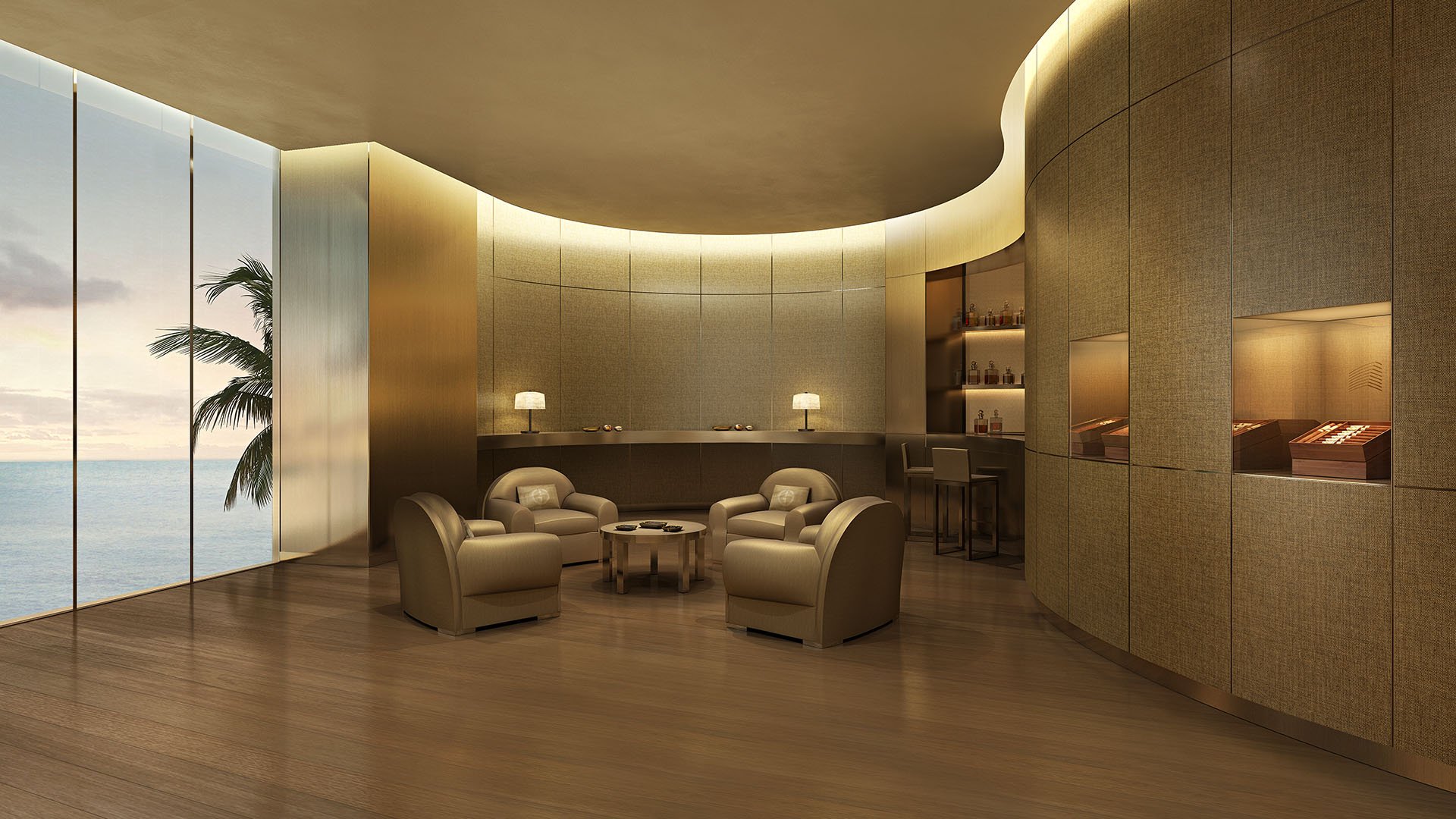
Located at 18975 Collins Avenue in Sunny Isles Beach, Residences by Armani/Casa comprises 308 residences in a 56-story tower. Its advertised amenity program spans more than 35,000 square feet across two floors, furnished by Armani/Casa. It explicitly includes a temperature- and humidity-controlled wine cellar; residence kitchen specifications identify a separate wine cooler.
That distinction matters. The communal cellar and the appliance inside a particular residence warrant independent evaluation. Neither an amenity description nor a kitchen specification establishes the condition, operating arrangements or contractual inclusions relevant to an individual purchase.
The cellar is presented as a resident amenity. Its description does not establish private, deeded lockers or individually controlled compartments. Before assigning value to it, request written clarification of storage arrangements, access procedures, allocation rules and any applicable charges. Treat these as questions, not presumed ownership rights.
The same discipline applies to performance. “Temperature- and humidity-controlled” describes an advertised feature; it does not demonstrate uninterrupted conditioning or conservation-grade storage. Actual temperature and relative-humidity setpoints are not established in the public amenity descriptions. Ask management to identify the operating ranges and explain who is responsible for maintaining them.
A buyer also considering Jade Signature Sunny Isles Beach can apply the same evidence checklist without assuming the buildings offer equivalent wine facilities. The useful comparison is not the language of luxury, but the specific service and documentation available for the intended collection.
Before making an offer, request condominium documents, budgets, reserves, assessment notices, recent board minutes and current move-in and delivery rules. Review them alongside the wine-storage questions rather than treating the cellar as an isolated amenity.
The available amenity descriptions do not establish a dedicated generator circuit, uninterruptible power supply, battery system or emergency HVAC backup for the cellar. This remains an unresolved diligence point-not evidence that backup is absent.
If backup power is represented, ask exactly which equipment it serves. Distinguish cooling, humidity control, sensors, communications and alarms. A statement that the building has emergency power does not, by itself, establish whether cellar conditioning and monitoring remain operational.
Request documentation identifying the relevant emergency circuits, along with generator testing records where applicable. Ask management to explain the outage procedure: how a loss of conditioning is detected, who receives notification and what happens after hours. Seek written answers rather than a general assurance of building resilience.
Discuss document-review protections with counsel while considering contract terms. Where wine storage materially affects the purchase, counsel can help address unresolved representations and review timing. These are recommended diligence steps, not established building policies or automatic contractual rights.
A cellar’s current display cannot explain its performance over the preceding months. Request 12 months of temperature and humidity logs, together with alarm histories, outage histories and HVAC maintenance records. Twelve months is a suggested review period, not a confirmed retention policy or owner entitlement.
Ask how measurements are collected. Public amenity descriptions do not identify sensor brands, sampling intervals, alarm thresholds or calibration procedures. Nor do they establish historical reporting, retention periods or owner access to environmental records. Clarify each point before deciding how much to rely on the system.
If records are supplied, compare the recorded readings with the operating ranges. Ask about gaps, excursions and the action taken when an alarm occurred. The goal is to understand both environmental performance and the response process-not simply to obtain a folder of readings.
If historical records are unavailable, do not mistake that uncertainty for evidence of equipment failure. Instead, decide whether the available evidence meets the collection’s needs and whether to consider another storage arrangement before transferring bottles.
The advertised private oceanfront restaurant and bar includes in-residence delivery. That service is distinct from procedures for receiving wine shipments, moving a collection or admitting specialist delivery teams. The marketing description establishes neither round-the-clock restaurant delivery nor separate alcohol-delivery procedures.
For a collection transfer, confirm loading access, freight-elevator dimensions and capacity, reservation requirements, permitted hours and staging arrangements. Ask about protective materials, insurance certificates and fees before scheduling a carrier. These are practical questions for management, not confirmed requirements.
Clarify who may accept bottles, where a shipment may wait and who authorizes its movement to the residence or cellar. Request instructions for an early arrival, a missed reservation or a delivery outside the permitted window. Align the carrier’s plan with the written response.
Carry the same questions into a separate evaluation of Turnberry Ocean Club Sunny Isles. Assess delivery convenience property by property, without transferring service assumptions from one address to another.
Residence kitchen specifications identify a wine cooler, but the buyer should verify that the particular appliance is included in the sale. Check its condition, capacity, ventilation, electrical requirements and operation before closing. The communal cellar’s advertised features answer none of those unit-level questions.
Keep written answers and relevant inspection findings with the transaction documents. If an operating issue remains unresolved, discuss the appropriate response with counsel rather than assuming a repair or replacement obligation.
Insurance deserves equally specific attention. Clarify coverage and exclusions for wine losses, equipment failure, water damage and delivery damage. Do not assume association coverage extends to the collection or every stage of its transfer.
Once ownership transfers, obtain cellar-access instructions and emergency contacts before moving valuable bottles. Consider independent monitoring for wine stored inside the residence, especially when the home will be unoccupied. Pair that monitoring with a clear understanding of who can respond.
The strongest transition from offer to ownership leaves the buyer with more than an attractive amenity description. It establishes what storage is available, what remains uncertain, how deliveries will be handled and whom to contact when conditions change. For a collector, that clarity is part of the luxury.
For a discreet perspective on South Florida residences and the details that shape ownership, explore MILLION.
If branded residences are on your mind — as a home or as an allocation — we would be glad to share what we are seeing, privately.
Begin a quiet conversationThe building is at 18975 Collins Avenue, Sunny Isles Beach, Florida 33160. It comprises 308 residences in a 56-story tower.
Yes, its amenities include a temperature- and humidity-controlled wine cellar. That description does not establish uninterrupted conditioning or conservation-grade storage.
The cellar is described as a resident amenity, but private, deeded lockers and individually controlled compartments are not established. Request written clarification of allocation and access arrangements.
The amenity descriptions do not establish dedicated backup power for the cellar. Ask which emergency circuits serve cooling, humidity control, sensors, communications and alarms.
Actual setpoints are not published in the supplied amenity descriptions. Request the operating ranges and clarify who maintains them.
Request 12 months of temperature and humidity logs, alarm and outage histories, and HVAC maintenance records. This is a diligence recommendation, not a confirmed retention policy or right of access.
Public amenity descriptions do not establish sensor brands, sampling intervals, alarm thresholds, calibration procedures or owner access to historical records. Seek written clarification from management.
In-residence delivery from the private oceanfront restaurant and bar is advertised, but separate alcohol-delivery procedures are not established. Confirm wine-shipment acceptance, staging and access independently.
Verify that the specific appliance is included in the sale and check its condition, capacity, ventilation, electrical requirements and operation. It is distinct from the communal wine cellar.
No such coverage should be assumed. Clarify coverage and exclusions for wine losses, equipment failure, water damage and delivery damage.