For a primary-residence buyer at Armani Casa Sunny Isles Beach, water protection deserves its own closing review. Distinguish verified equipment from advertised amenities, establish exactly what any shutoff valve controls, and put emergency access, mitigation duties, and financial responsibility in writing.

A primary residence must do more than photograph beautifully. It must support everyday routines, accommodate travel, and offer confidence that an unexpected problem will receive a clear response. At Armani Casa Sunny Isles Beach, water-protection diligence belongs alongside the assessment of layout, finishes, and ocean views.
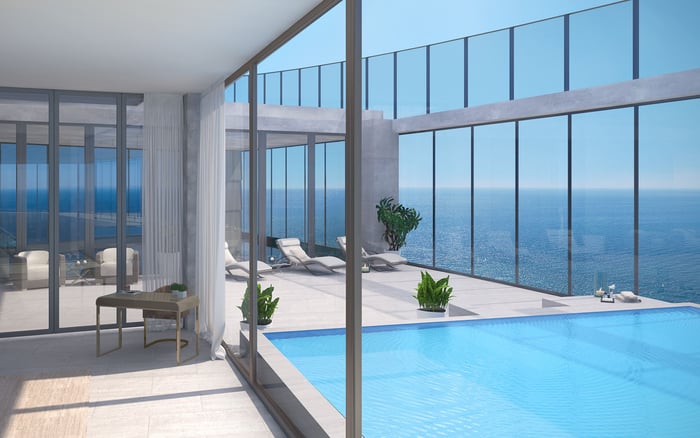
Located at 18975 Collins Avenue, Sunny Isles Beach, FL 33160, the oceanfront condominium is marketed as 56 stories with 308 residences, generally ranging from approximately 1,326 to 4,150 square feet. Advertised features include floor-to-ceiling glass, oversized terraces, summer kitchens, designer plumbing fixtures, and toilets with integrated bidets.
Those details establish the residential setting, not the water-protection specification. Whole-unit leak detection and automatic unit-level water shutoff remain unverified here. That does not establish that either is absent. It means the purchase decision should rest on unit-specific documentation and testing, not an assumption attached to the address.
Begin by asking the seller and management to identify any installed protection in writing. “The apartment has sensors” is not a sufficient answer. Request an equipment schedule identifying manufacturers, models, sensor locations, monitoring arrangements, and maintenance responsibilities.
Have the inspector distinguish point sensors from flow monitoring and explain what each installed component is intended to detect. Ask which locations are covered, which fall outside the system’s scope, and whether alterations have changed that coverage. Advertised plumbing features offer a starting point for questions, but they are not an equipment inventory for the residence being purchased.
The practical review should also establish:
Who receives an alarm, including when the owner is unavailable.
Whether an alert triggers automatic action or requires human intervention.
Who tests the equipment and maintains testing records.
What happens during power loss and how manual operation works.
Treat “whole-unit” as a claim to be demonstrated, not a reassuring label. Request a documented functional test coordinated with management and a qualified professional.
Detection and shutoff are separate questions. Even if equipment is present, ask a qualified plumbing professional to identify whether each valve controls the entire residence, a branch, or an individual fixture. Obtain a marked plan or written description of that boundary.
Trace the sequence from detection to action: what event commands closure, which valve responds, who receives confirmation, and who may restore service? Ask to see the manual override and clarify access when the apartment is unoccupied.
Ask which water-intrusion scenarios fall outside any installed system’s control. A unit-level valve should not be treated as protection against every possible source of damage.
For a buyer also considering Jade Signature Sunny Isles Beach, the same questions provide a disciplined basis for comparison. Compare documented equipment and tested scope without presuming equivalent protection at either property.
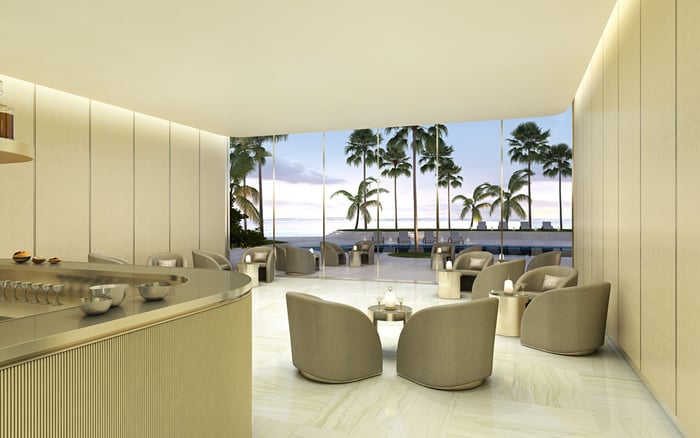
Armani/Casa’s advertised amenity program includes more than 35,000 square feet across two floors, beach attendants, and beach food-and-beverage service. Other advertised offerings include a two-story spa, fitness facilities, a movie theater, an oceanfront pool terrace, concierge, and valet.
These are meaningful lifestyle considerations. They do not establish a contractual leak-response time or an obligation to perform water-damage mitigation.
Request written emergency procedures covering each stage of an incident: first notification, entry, shutoff, vendor dispatch, extraction, drying, and incident documentation. Identify the responsible party at every step. If a response time is promised, ask what starts the clock and whether the commitment concerns acknowledgment, arrival, or the start of mitigation.
A household weighing Turnberry Ocean Club Sunny Isles alongside Armani/Casa should apply the same distinction between hospitality and enforceable response duties. Service descriptions are no substitute for written operating commitments at either address.
The recorded condominium declaration and all amendments are essential to establishing ownership boundaries and association authority. Counsel should review them alongside current rules addressing emergency entry, plumbing work, renovations, insurance, and damage notification.
Ask how access is handled when the owner cannot be reached, who can authorize plumbing intervention, and what approvals are required to add or replace protective equipment. Do not assume a seller’s installation establishes association approval.
The financial review should include the last three approved annual budgets, with attention to plumbing, repairs, insurance, and reserves. Obtain the latest structural-integrity reserve study and current reserve balances, but keep their purpose clear: they address capital obligations, not proof of unit-level leak protection.
Review 24 months of board minutes for discussions of leaks, plumbing failures, mold, waterproofing, restoration, insurance claims, and responsibility disputes. Request disclosure of pending or threatened association litigation involving water intrusion, construction defects, plumbing, mold, or coverage. These are diligence categories, not allegations about the building.
The apartment’s own history matters. Obtain its permit history, particularly where plumbing or appliance installations have been altered. Ask the seller for documentation of protective equipment, testing, maintenance, and prior water-related repairs. Then have the inspection reconcile those records with the current installation.
Request the association’s insurance declarations page and deductibles. Have counsel and the buyer’s insurance adviser determine whether a deductible may be charged to an individual owner and how the proposed owner’s coverage interacts with association obligations.
Consider responsibility separately for finishes, contents, neighboring residences, common elements, and temporary housing. Do not collapse those questions into a general assurance that the building is insured.
If the purchase conveys a cabana, parking, storage, or other appurtenant property, check for separate maintenance, drainage, plumbing, and insurance duties. The review should cover everything conveyed, not stop at the apartment door.
No actual leak-response contract, equipment schedule, functional-test documentation, or verified response-time commitment is established here. Request any applicable agreements and ask counsel to distinguish existing obligations from proposed protections that still require negotiation.
A useful contract review identifies who authorizes vendors, who pays initially, how damage is documented, and who coordinates restoration. It should also address responsibility for damaged finishes, contents, neighboring units, common elements, deductibles, and temporary accommodation without presuming any particular allocation.
If leak protection or response service is material to the purchase, incorporate negotiated representations into signed contract documents. Resolve discrepancies between equipment descriptions, inspection findings, and management’s written procedures before relying on them.
The primary-residence standard is straightforward: understand what can be detected, what can be shut off, who can act, and who bears the consequences. At this level of ownership, operational clarity deserves the same attention as design.
For a discreet perspective on your South Florida residential search, connect with MILLION.
If branded residences are on your mind — as a home or as an allocation — we would be glad to share what we are seeing, privately.
Begin a quiet conversationThe condominium is located at 18975 Collins Avenue, Sunny Isles Beach, FL 33160.
Public marketing does not verify a whole-unit leak-detection package. That does not establish its absence; buyers should request unit-specific equipment details and testing.
Automatic unit-level shutoff is not verified by the public marketing. Any installed valve should be checked to establish whether it controls the entire residence, a branch, or one fixture.
Request manufacturer and model details, sensor and valve locations, alarm recipients, maintenance responsibilities, and testing records. Clarify manual override and power-loss behavior.
Advertised concierge and valet services do not establish a contractual response time or water-damage mitigation obligation. Request the applicable written procedures and agreements.
Review the recorded declaration, all amendments, and current rules. Counsel should establish emergency-entry authority and the rules governing plumbing work and damage notification.
Request the last three approved annual budgets and 24 months of board minutes. Review plumbing costs, repairs, insurance, reserves, and any discussions of water-related incidents or disputes.
No. The reserve study and reserve balances address capital obligations rather than verify unit-level sensors or automatic shutoff.
Obtain the association’s insurance declarations page and deductibles, including whether a deductible may be charged to an owner. Review responsibility for finishes, contents, neighboring units, common elements, and temporary housing with counsel and an insurance adviser.
Have counsel incorporate negotiated representations into signed contract documents. Equipment descriptions, testing findings, and written response duties should be reconciled before the buyer relies on them.