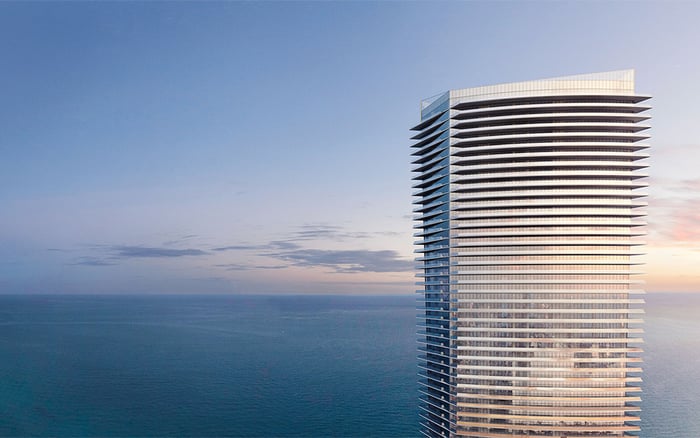
Jade Ocean shares its 17121 Collins Avenue address with an officially recognized public beach-access location. For buyers, that designation calls for precise review of title, survey, condominium, security, and beach-service arrangements without presuming that a particular easement crosses the condominium parcel.
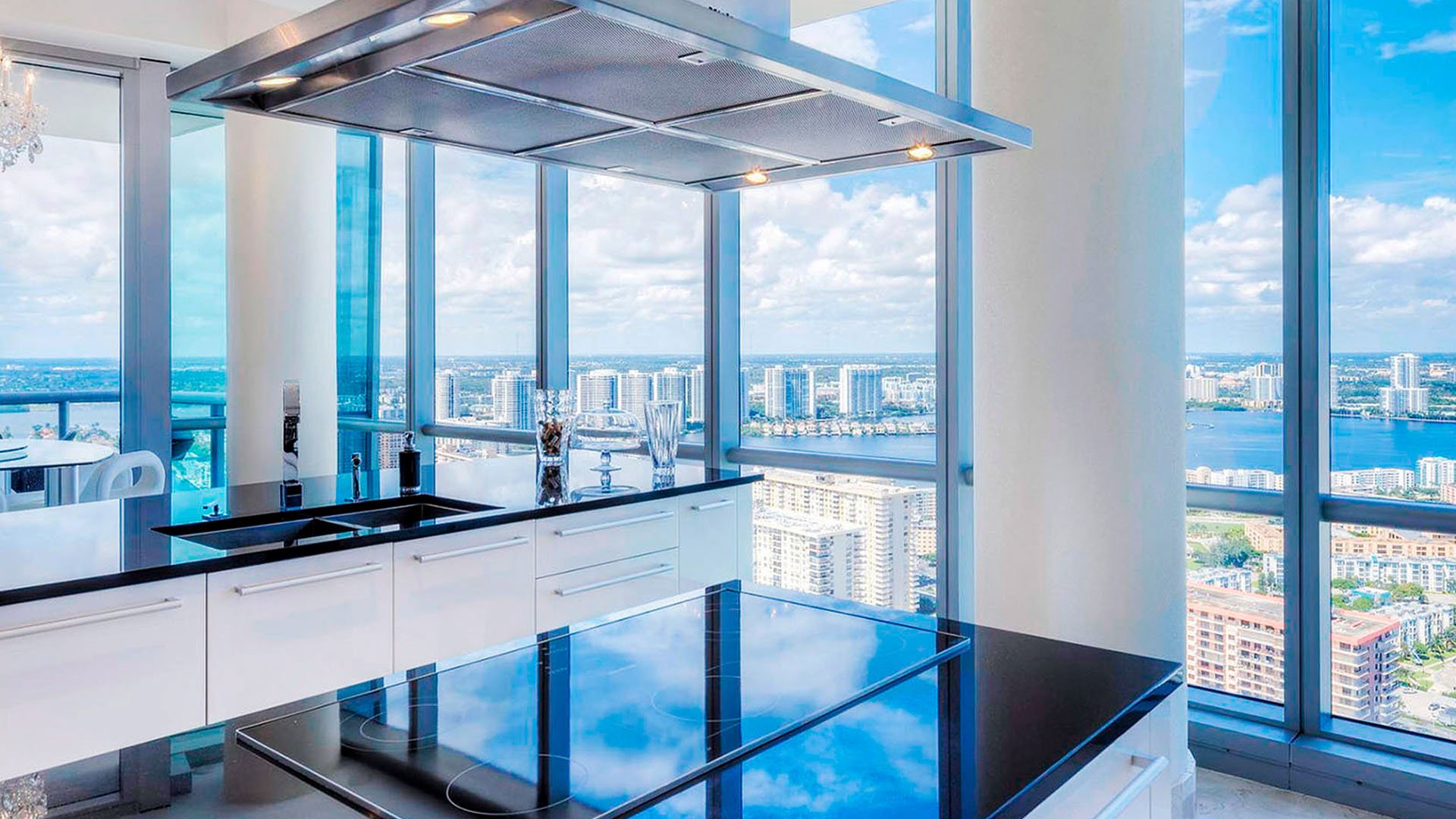
At Jade Ocean Sunny Isles Beach, the ocean is central to the residential experience. Yet sophisticated due diligence extends beyond the view and the building’s privately managed amenities. Jade Ocean stands at 17121 Collins Avenue-the same address assigned to an officially recognized public beach-access location known as Jade Ocean Beach Access.
That shared address is material, but it should not be overread. It establishes that the location serves a public-access function. By itself, however, it does not establish that a specific easement burdens the condominium parcel, define the exact boundaries of any access rights, or explain every operational relationship between the route and the property. Those questions belong in the recorded documents, title materials, survey, condominium declaration, and physical inspection.
A private residential experience and a lawful public route to the shore can coexist.
For an Oceanfront buyer, this distinction is not academic. Access arrangements can shape arrival patterns, privacy expectations, security planning, and the separation of resident beach service from public circulation. None of these considerations necessarily diminishes the building’s appeal. They simply warrant the same disciplined review as assessments, insurance, reserves, and use restrictions.
The Jade Ocean Beach Access is mapped at 17121 Collins Avenue and identified as location J,9. Paved with pavers, the route is designated as handicap accessible and equipped with a shower. Public users are directed to a municipal parking lot behind Walgreens near 175th Street and Atlantic Boulevard.
Together, these features indicate a functional public entry point rather than a casual geographic label. The route is intended to be found and used. A purchaser should therefore understand where people approach, how they move toward the sand, and where that path lies relative to resident entries, valet operations, loading areas, security positions, pool zones, and privately provided beach service.
There are currently 22 identified beach-access locations citywide. A 2020 beach-management plan counted 20 public access points from Collins Avenue established since 2004. The difference likely reflects reporting date or scope and should not be treated as a conflict without deeper review of the records. The broader point is that public coastal access is woven into the city’s physical fabric, including among luxury condominium addresses.
Florida law treats public beach access as including the right to traverse sandy beaches where access exists or has been legally established. A lawful route through private land may arise through prescription, a prescriptive easement, or another recognized legal mechanism. At the same time, the public’s ability to use the foreshore does not confer permission to cross private upland property wherever convenient.
This is why the legal accessway matters. It can provide the defined route connecting a public street environment with the shore when private property otherwise lies between them. For a condominium buyer, however, a municipal access designation begins the inquiry; it does not settle the legal conclusion.
The title commitment should be examined for exceptions involving access, easements, dedications, plats, and rights affecting common elements. A current survey can help physically locate recorded matters. The declaration and amendments may address boundaries, maintenance obligations, security, use of common areas, or cost allocation. Counsel can then determine how those documents relate to the route observed on site.
Luxury marketing often compresses several ideas into a few elegant words. Buyers should distinguish among “oceanfront,” “private beach,” “direct beach access,” and “deeded beach access.” Each can describe a different aspect of the experience; none should automatically be read as a complete statement of legal rights.
Oceanfront describes location. Private beach service may refer to chairs, umbrellas, attendants, or another resident amenity, but it does not necessarily define ownership of the sand or exclude lawful public use nearby. Direct beach access may describe convenience without identifying the legal instrument supporting passage. Deeded access suggests a documented property right, which should be verified in the governing and title records rather than accepted as interchangeable marketing language.
The same careful reading applies across Sunny Isles Beach. A purchaser comparing Jade Signature Sunny Isles Beach, Muse Residences Sunny Isles Beach, or The Ritz-Carlton Residences® Sunny Isles should investigate each property independently. Proximity does not make access rights, parcel conditions, operating procedures, or recorded instruments identical.
Documents establish rights; a site visit reveals how those rights are managed day to day. Ask management to identify the public route and explain how it is separated from resident and guest circulation. Walk the path from Collins Avenue to the shore. Observe whether public users pass near a driveway, service area, gate, security desk, landscaped edge, pool deck, or beach-service station.
Buyers should also ask who maintains the route, pavers, shower, lighting, signage, landscaping, and any gates or barriers. The available facts do not assign those responsibilities, so each should be confirmed rather than assumed. Request details on operating hours, if any; emergency access; construction closures; security protocols; and procedures for keeping resident amenities distinct from public passage.
In practical Beach-access diligence, small spatial details can be consequential. A clearly delineated, operationally separated route may feel markedly different from one that intersects heavily with private circulation. The objective is not to eliminate public presence from a coastal city. It is to understand the interface and determine whether it aligns with the purchaser’s expectations of discretion.
Before contract deadlines expire, review the municipal access map, title commitment, recorded plats and easements, condominium declaration and amendments, and a current survey. Confirm that the legal description in the title work matches the property being acquired and that counsel explains all relevant exceptions.
Then connect the paper record to the physical property. The purchaser’s attorney, title professional, surveyor, and property management team should be able to distinguish a mapped public route from private common elements and resident-only amenity areas. Any inconsistency among marketing language, the observed site, and recorded documentation should be resolved before closing.
For Resale buyers, the inquiry should also address whether prior alterations, security changes, or construction activity affect the practical path. For any Waterfront acquisition, privacy expectations should be expressed in operational terms: where the public walks, where residents receive service, who controls each area, and what rights are recorded.
The fine print at Jade Ocean is ultimately a matter of precision. An officially recognized public entry can coexist with an elevated private residential environment, but the boundary between the two should be understood legally, spatially, and operationally.
For discreet guidance on South Florida luxury real estate, connect with MILLION.
If branded residences are on your mind — as a home or as an allocation — we would be glad to share what we are seeing, privately.
Begin a quiet conversationYes. The access point is listed and mapped at 17121 Collins Avenue, the same address as Jade Ocean.
No. Its precise location and legal terms require review of recorded instruments, title materials, plats, and a current survey.
The route is paved with pavers, designated as handicap accessible, and includes a shower.
They are directed to the municipal lot behind Walgreens near 175th Street and Atlantic Boulevard.
Yes. A lawful public route can coexist with privately managed resident amenities and beach-service areas.
No. Public use of the foreshore does not authorize trespass across private upland property to reach it.
Review the title commitment, condominium declaration and amendments, recorded plats or easements, municipal access map, and a current survey.
Not necessarily. Marketing terms can describe different legal rights or service arrangements and should be verified independently.
Ask how it is separated from resident entrances, guest arrival, security, loading areas, pool zones, and beach service.
The current citywide count is 22, while a 2020 management plan counted 20 public access points from Collins Avenue established since 2004.