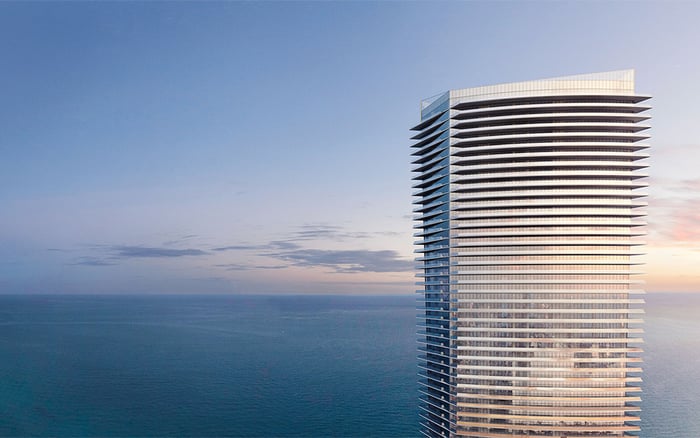
A buyer-focused framework for comparing terrace maintenance, wind exposure, and storm responsibilities at Armani Casa and Turnberry Ocean Club, with emphasis on written rules, physical inspections, and absentee-owner planning.

An ocean-facing terrace is part of the appeal of Sunny Isles Beach ownership. Its value as an outdoor room, however, depends on less visible details: drainage, waterproofing, permitted furnishings, and a storm plan that works when the owner is elsewhere. For a discerning buyer, these are purchase considerations-not matters to defer until move-in.
At Armani Casa Sunny Isles Beach and Turnberry Ocean Club Sunny Isles, the meaningful comparison rests on documents and the specific residence. Request the same records from both associations, inspect the terraces under consideration, and distinguish written obligations from anticipated service. Do not assume that management assistance includes furniture removal, private storage, or emergency entry.
The central question is straightforward: who must do what, by when, and at whose expense?
Sunny Isles Beach is designated evacuation Zone B. Residents and hotel visitors must evacuate when a Zone B evacuation order is issued. This is an evacuation designation, not a FEMA flood-zone classification, and it is no substitute for property-specific flood due diligence.
Storm preparation also includes removing or securing balcony furniture, planters, décor, and other loose objects. Unsecured contents can become windborne projectiles. Protecting glazing and controlling terrace contents are therefore separate tasks.
These municipal requirements do not establish either condominium's private deadlines, approved securing methods, storage arrangements, or penalties. Obtain the declaration and amendments, current terrace rules, architectural guidelines, emergency plan, and recent storm notices. Ask management to identify the provisions governing the residence and explain any apparent inconsistencies in writing.
A general commitment to hurricane preparedness is not an executable plan for a particular home.
Begin with a component-by-component responsibility schedule. Ask who maintains, inspects, repairs, and pays for the slab, waterproofing, railings, drains, doors, glazing, pavers, planters, and owner-installed improvements. Do not assume that responsibility for routine cleaning extends to replacement or damage beneath a finished surface.
This distinction warrants particular attention where an owner has changed flooring, introduced substantial planters, or altered terrace details. Request association approvals and applicable permit records for alterations, then have a qualified professional assess whether the documented work matches the existing condition.
Unpermitted work and property-maintenance requirements fall under separate code provisions in Sunny Isles Beach. A buyer should therefore investigate both authorization and present condition. A permit record does not answer every maintenance question, just as a well-kept appearance does not establish that alterations were approved.
Ask management for its maintenance and inspection schedules rather than assuming a particular frequency. Establish how owners report drainage problems, who responds, and how repair access is coordinated.
Commission a qualified inspection of the specific terrace. The scope should address drainage, ponding, corrosion, sealants, thresholds, railing attachments, and waterproofing transitions. Ask the inspector to identify concerns requiring specialist review; this should not be a cosmetic walkthrough.
For wind exposure, seek a residence-specific assessment rather than inferring performance from the building's name, view orientation, or a neighboring unit. Ask whether engineering guidance addresses permitted furnishings, securing methods, and attachments. Check any proposed anchoring or protective installation against association requirements and applicable approvals before work begins.
Confirm the hurricane-resistance characteristics of the actual windows and doors, including whether shutters or impact glass are present. General advice about protecting vulnerable openings with shutters or plywood does not authorize an owner to install either at a condominium.
During a storm, high-rise residents should keep windows and balcony doors closed. Wind entering an opening can create dangerous internal pressure. That precaution does not replace evacuation obligations or pre-storm terrace clearance.
Ask for the precise trigger that activates each building's terrace protocol. Is action tied to a management notice, a forecast milestone, or a specified weather alert? Obtain the deadline, communication method, and escalation procedure in writing. Do not infer a private-terrace deadline from a municipal beach rule.
Then resolve the physical logistics. Which objects must be removed, which may be secured, and which securing methods are permitted? Where can furnishings and planters go? Who moves them, who pays, and what happens if the owner cannot arrange access before the deadline?
Test the storage arrangements in practical terms. Ask whether any offered service is guaranteed or subject to availability, whether reservations are required, and how responsibility for handling damage is allocated. Confirm fees and liability terms before relying on staff or an outside caretaker.
Drainage belongs in the same preparation plan. Keeping drains clear is part of storm readiness. Ask who checks terrace drains before severe weather and how debris from planting or outdoor arrangements must be removed.
For an owner who travels frequently, the strongest storm plan can operate without a last-minute flight. Obtain written confirmation of owner-entry authorization, emergency contacts, caretaker access, and any management assistance available for an unoccupied residence.
Ask when any offered assistance stops and when outside personnel must leave. Arrange for terrace preparation to be completed before access or staffing becomes constrained, rather than treating evacuation day as a moving appointment.
Apply the same discipline if the search extends to Jade Signature Sunny Isles Beach. The relevant comparison is not whether another property promises attentive service, but whether its written obligations and available assistance fit the buyer's actual pattern of use. Do not transfer assumptions between buildings.
Beachfront properties that pre-set chairs for residents or guests need a beach-chair pre-setting permit. Placement must follow the approved diagram without obstructing emergency access lanes or lifeguard sightlines. Permitted beach chairs and equipment must be removed during a tropical-storm warning or hurricane watch.
That beach-operation requirement does not establish the removal trigger for private terraces. Ask separately about pool-deck procedures, too, rather than assuming a common-area protocol governs an owner's outdoor room.
Before closing, request engineering assessments, milestone-inspection materials, structural-integrity reserve studies, repair schedules, assessments, relevant board minutes, and insurance-claim records. Have appropriate advisers review how those materials relate to the residence, planned work, and potential owner costs.
The better fit is the home whose physical condition, maintenance responsibilities, and emergency arrangements are understood before purchase. Luxury is more useful when its operational details are settled.
For a considered approach to Sunny Isles Beach ownership, explore MILLION.
If branded residences are on your mind — as a home or as an allocation — we would be glad to share what we are seeing, privately.
Begin a quiet conversationNo. Zone B is the evacuation designation used for Sunny Isles Beach and should not be treated as a FEMA flood-zone classification.
Residents and hotel visitors must evacuate when a Zone B evacuation order is issued. Terrace preparation should be planned separately so it does not interfere with evacuation.
Do not assume they do. Request each association's current rules, governing documents, emergency plan, and storm notices before comparing obligations.
Establish responsibility through the applicable condominium documents and written management clarification. Ask separately about routine maintenance, repairs, replacement, and payment.
A qualified inspection should address drainage, ponding, corrosion, sealants, thresholds, railing attachments, and waterproofing transitions. Alterations also warrant review of approvals and applicable permit records.
No. Unsecured furniture, planters, and décor can become windborne projectiles, making terrace-content preparation a separate concern from window protection.
General storm guidance does not establish either condominium's installation rules. Confirm association requirements and applicable approvals before undertaking work.
Do not assume that service is included. Obtain written confirmation of availability, deadlines, access authorization, storage, fees, and liability terms.
The beach-chair requirement concerns permitted beach equipment during a tropical-storm warning or hurricane watch. It does not establish either building's private-terrace deadline.
Request engineering assessments, milestone-inspection materials, structural-integrity reserve studies, repair schedules, assessments, relevant board minutes, and insurance-claim records. Review them alongside the residence's maintenance obligations.