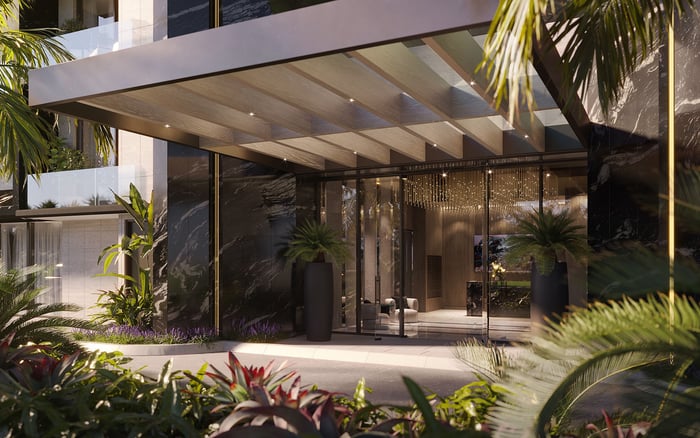
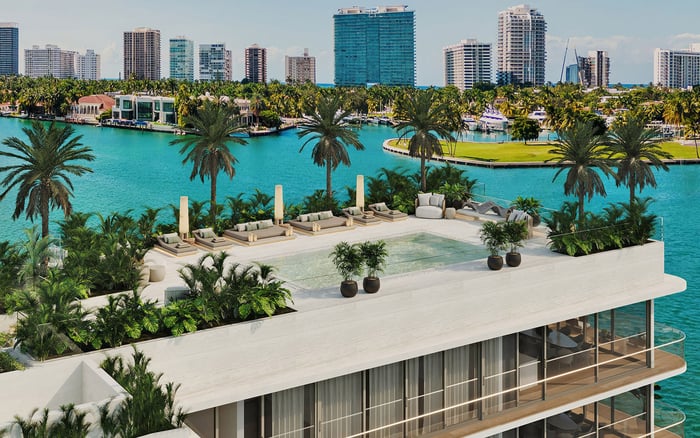
A privacy-focused framework for evaluating arrival routes, elevator access, household-staff circulation, visitor authorization, garage movement, and operating procedures at Alana and La Maré Bay Harbor Islands.
In a luxury residence, privacy is not simply a matter of a discreet lobby or an electronic lock. It is an operating system. The essential question is how residents, household employees, guests, delivery personnel, contractors, and amenity users move from the property line to the residence-and where those paths intersect.
That distinction should frame a buyer’s comparison of Alana Bay Harbor Islands and La Maré Bay Harbor Islands. Rather than relying on labels such as “private,” “secure,” or “boutique,” buyers should trace each property’s physical routes and ask for written explanations of the procedures governing them.
A useful review reconstructs a typical week: a principal arrives from the garage, a housekeeper enters before breakfast, a driver waits for instructions, groceries reach the kitchen, a contractor needs temporary access, and dinner guests are admitted without gaining unnecessary freedom of movement.
Privacy is strongest when architecture, credentials, staffing, and daily protocol operate as one system.
At Alana, begin the review at the street and repeat it from the garage. Follow the route to the principal entrance, lobby, elevator, residential floor, and front door. Record every point where a credential is required, where a visitor may wait, and where resident traffic may merge with staff, vendors, deliveries, or amenity users.
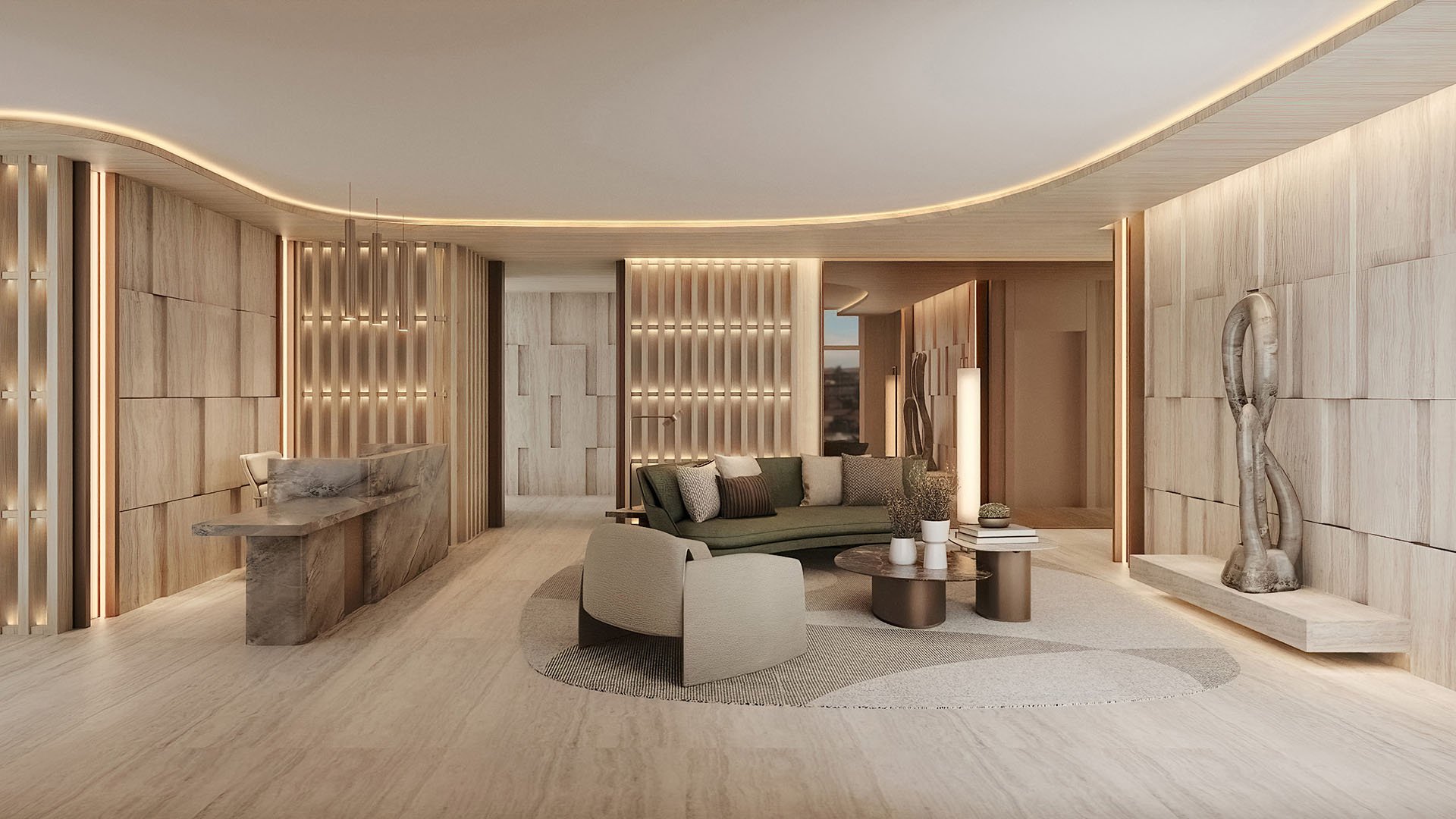
The lobby should be assessed as an operating environment rather than solely as an interior-design statement. Ask whether visitors must be authorized before arrival, how hosts are notified, where guests wait, and what prevents an admitted visitor from proceeding to an unintended destination. If a reception or security function is presented, determine its hours, responsibilities, escalation procedures, and role when personnel are not present.
Buyers should also request a demonstration of the access system. Test how credentials are issued, limited, audited, suspended, and revoked. A recurring household employee may need predictable access during selected hours, while a contractor may require one-time permission. The important issue is whether the system can distinguish those use cases without granting broader access than necessary.
Elevator circulation requires similarly precise questions. Identify who shares each cab, which destinations can be selected without additional authorization, and how staff, deliveries, moves, and amenity traffic are handled. Confirm whether temporary service periods or elevator reservations can affect ordinary residential movement.
A controlled front entrance does not resolve privacy issues that arise elsewhere. Walk from the parking area to the residence and note doors, elevator call points, camera locations, waiting zones, blind corners, and potential intersections with visitor traffic. Repeat the exercise at a busy time if access is available, because a quiet sales presentation may not reflect normal building activity.
Review vehicle handoffs and waiting arrangements as part of the same sequence. Ask where a driver, rideshare vehicle, visitor, or service provider may wait and how each person is notified when access is approved. If any parking or arrival service is proposed, request a clear description of who operates it and how keys, vehicle information, and resident instructions are handled.
Sightlines matter as well. Observe the entrance from the street, neighboring properties, pedestrian approaches, and the parking route. Visual screening and access control solve different problems: a concealed arrival can still have weak credential controls, while a tightly controlled entrance may remain visible from surrounding vantage points.
The same route-mapping method can inform a comparison with Onda Bay Harbor. Architectural character and waterfront orientation may influence a buyer’s preference, but circulation should still be tested through the sequence of entry, authorization, waiting, vertical travel, and arrival at the residence.
At La Maré, the elevator review should move beyond marketing terminology. Request the relevant floor plan and identify the cab, every landing it serves, each door it opens, and every credential needed during the trip. Determine whether the arrangement involves a dedicated cab, a shared cab opening into separate foyers, or another controlled configuration.
The private foyer also deserves scrutiny. Ask whether it is fully within the residence, how emergency access works, and whether building personnel or other authorized users can reach it. Review door hardware, intercom operation, package procedures, and the steps used when a resident does not answer an access request.
Buyers should test normal and exceptional conditions. Ask what happens during a power interruption, fire alarm, system outage, move, large delivery, or elevator maintenance period. Determine whether an alternate cab or route becomes available and whether that fallback changes who may reach the residential floor.
Storage and back-of-house movement should be mapped separately. If storage is offered, confirm its location, access route, hours, and relationship to resident and service circulation. A convenient feature contributes to privacy only when the route and permissions support the household’s actual routines.
For additional Bay Harbor Islands context, buyers may apply the same analysis to The Well Bay Harbor Islands and Origin Bay Harbor Islands. The objective is not to assume equivalence among the properties, but to compare each one with the same disciplined questions and documentary standard.
Household-staff circulation warrants a dedicated interview with the sales or building team. Ask where housekeepers, childcare providers, private chefs, drivers, assistants, and other recurring personnel enter. Determine which elevators and doors they use, where they may wait, and whether their route intersects with resident or guest circulation.
Credential design should reflect different roles. Buyers should ask whether permissions can be restricted by time, day, destination, floor, elevator, or door. Confirm who can create access, how authorization is documented, how quickly it can be revoked, and whether the resident can review activity associated with an issued credential.
Visitor control should preserve hospitality without enabling uncontrolled movement. Review preauthorization, guest parking, rideshare waiting, lobby registration, host notification, elevator access, and escort practices. Follow the process from the visitor’s perspective and identify each point where identity and destination are checked.
Deliveries need a separate route analysis because packages, groceries, flowers, furnishings, and prepared food can involve different personnel and timing. Ask where each delivery type is received, who accepts it, how the resident is notified, where items are staged, and which elevator carries them. For large items, review scheduling, protective procedures, and the potential effect on resident circulation.
Amenities can introduce users who are authorized to enter the property but should not necessarily reach residential floors. Buyers should identify the route to every shared space and determine whether amenity credentials are separated from residential access. Ask how private gatherings, outside vendors, instructors, and guests are handled.
Event procedures deserve special attention. Confirm how attendee lists are submitted, where guests wait, who monitors entry, and whether elevators are programmed differently during a gathering. Buyers who entertain frequently should test whether the process remains welcoming while preserving separation from unrelated residences.
Operational responsibility is as important as system capability. Ask who monitors access events, handles exceptions, reviews incidents, and communicates policy changes. A sophisticated credential platform provides limited protection if permissions are granted casually or remain active after they are no longer needed.
Before contracting, request floor plans and available written protocols addressing loading access, delivery staging, household-staff entry, elevator permissions, guest authorization, garage-to-lobby movement, emergency overrides, outages, moves, and amenity events. If a procedure is important to the household, seek confirmation rather than relying on an informal verbal description.
Buyers should also distinguish current practices from future operations. Ask which procedures are established, which remain subject to management decisions, and which may be governed by documents that should be reviewed with appropriate advisers. The goal is to understand what can be verified now and what may change after occupancy or under future management.
The final comparison between Alana and La Maré should therefore reflect the household’s real operating profile: frequency of staff access, delivery volume, entertaining habits, vehicle arrangements, tolerance for shared circulation, and need for temporary credentials. The stronger fit is the property whose documented routes and procedures most closely support those routines.
For discreet guidance on evaluating these residences and their access protocols, consult MILLION.
If branded residences are on your mind — as a home or as an allocation — we would be glad to share what we are seeing, privately.
Begin a quiet conversationTrace the complete journey from the street and garage to the residence. Note every checkpoint, waiting area, shared route, and potential traffic intersection.
Apply the same route, credential, elevator, and operating-protocol questions to both properties. Base the comparison on documents and demonstrations rather than labels.
Confirm which cabs, floors, doors, and destinations each credential can access. Buyers should also ask how the system operates during maintenance, outages, and emergencies.
Permissions should match each employee’s schedule and required destinations. Buyers should verify how access is issued, reviewed, limited, and revoked.
The route may reveal checkpoints, blind corners, waiting zones, and intersections with guests or vendors. It should be tested separately from the main entrance.
Amenity users and event guests can add circulation within the property. Buyers should verify whether amenity access is separated from residential-floor permissions.
Review preauthorization, arrival, waiting, host notification, elevator permission, and escort practices. Each step should limit visitors to their intended destination.
Buyers should ask where deliveries are received, staged, and transferred to the residence. Large deliveries and moves should be reviewed separately from routine packages or food orders.
Ask which fallback routes and procedures apply during power, network, or elevator interruptions. Confirm whether those alternatives change who can reach residential areas.
Request relevant floor plans and available written procedures for guests, staff, deliveries, elevators, garages, amenities, outages, and emergency access.