At a fully finished branded residence, the right to renovate may be narrower than ownership alone suggests. Buyers should examine the governing documents for approval authority, material standards, contractor conditions, review timing, and completion obligations before the applicable rescission period expires.

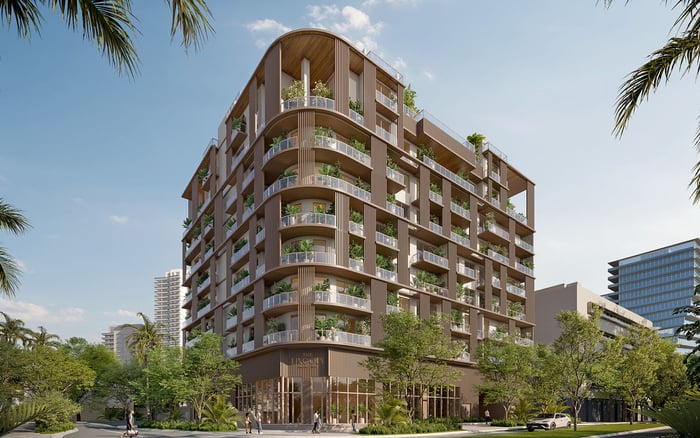
At Four Seasons Residences Coconut Grove, design is not a decorative afterthought. The planned 20-story tower at 2699 South Bayshore Drive is conceived as a highly resolved residential environment, comprising 70 condominium residences and four penthouses. Standard homes span approximately 2,025 to 3,975 square feet, while the penthouses reach about 9,690 square feet.
CMC Group and Fort Partners are developing the property in collaboration with Four Seasons. Revuelta Architecture International designed the tower, and Florentine designer Michele Bönan is responsible for the interiors. The project is positioned as a standalone Four Seasons residential property rather than a condominium attached to a Four Seasons hotel.
That distinction heightens the importance of the branded operating experience, but it does not resolve a separate legal question: What may an owner change after acquiring the residence? Sophisticated buyers should distinguish published design intent from enforceable alteration rights.
A fully finished residence can make the right to alter more consequential, not less.
The residences are marketed as fully finished, with Molteni&C kitchens and Italian marble bathrooms designed by Bönan. Other identified specifications include natural travertine flooring, custom millwork, flush ceilings without dropped soffits, and ceiling heights beginning at approximately 10 feet 6 inches.
For many purchasers, this completeness is an advantage. It replaces the uncertainty of a raw interior with an established architectural language. Yet an owner planning to replace stone, reconfigure cabinetry, introduce specialty lighting, or alter built-ins should understand that the original package may interact with waterproofing, acoustical standards, life-safety systems, ceiling infrastructure, and common building components.
An exact palette for subsequent owner renovations has not been established publicly. Nor has it been confirmed whether replacement finishes must match the originals, exceed a stated quality threshold, or remain visually consistent with the building’s initial specifications. Those answers should come from the operative documents, not from assumptions about ownership.
Four Seasons presents the property as a managed residential experience shaped by brand services and operating standards. That role should not be conflated with legally enforceable authority over alterations. Depending on the final document structure, review could involve the developer, condominium association, architectural committee, operator, or a combination of parties. Buyers should establish the chain of authority and determine whether an adverse decision may be reconsidered or appealed.
The recorded declaration, bylaws, association rules, design guidelines, alteration agreement, purchase agreement, and standard finish schedule warrant coordinated review. Counsel should also determine whether authority changes after developer turnover. A procedure available during the initial ownership period may not remain identical as association governance evolves.
This issue is central to branded residences generally. The value proposition may encompass service, consistency, and carefully maintained surroundings, while the legal power to approve construction remains document-specific. Purchasers comparing Mr. C Tigertail Coconut Grove or The Well Coconut Grove should apply the same principle: Compare the governing frameworks themselves rather than transferring assumptions from one property to another.
Architectural review is rarely limited to whether a sample looks appropriate. A proposed floor can implicate sound transmission. Bathroom stonework can affect waterproofing and drainage. Millwork may interfere with sprinklers, detectors, air distribution, access panels, or glazing interfaces. Ceiling changes can be particularly sensitive in an interior designed without dropped soffits.
A careful submission may therefore require drawings, product data, finish samples, engineering details, and evidence that the work will preserve applicable building systems. Buyers should ask whether mock-ups are required, whether substitutions are permitted, and whether approval of a concept also constitutes approval of its technical execution.
No exact owner-renovation palette has been publicly confirmed for this project. Design and architecture standards may ultimately be detailed, but a purchaser should presume neither complete flexibility nor a rigid matching requirement without reviewing the controlling language.
No mandatory contractor list, insurance thresholds, or project-specific qualification standards have been publicly confirmed. Nevertheless, these conditions can materially shape a renovation. If the governing documents require approved vendors, specialized insurance, licensed trades, designated protection measures, or building orientation, an owner’s preferred contractor may need additional clearance-or may not qualify.
Before retaining a designer or builder, buyers should request any approved-contractor requirements and determine whether outside firms may apply. They should confirm insurance limits, indemnity forms, licenses, deposits, review fees, elevator reservations, loading procedures, debris removal, site supervision, and damage protocols. A prestigious contractor is not automatically compliant with a particular condominium’s rules.
The practical concern is leverage. If a buyer signs a construction contract before securing building approval, deposits and procurement commitments may begin while permission remains unresolved. Contractor agreements should account for association review, potential revisions, access restrictions, and a realistic authorization date.
Groundbreaking was projected for 2025 and closings for 2028, but each buyer should confirm the current contractual completion estimate and available remedies in the purchase documents. Building delivery and owner renovation run on separate timelines. A residence may close on schedule while a planned customization remains under review.
Approval turnaround times, permitted work hours, seasonal blackout periods, and post-closing build-out deadlines have not been publicly confirmed. None should be treated as an established project rule without reference to the governing documents. Buyers should instead ask direct questions: When is a submission deemed complete? Does the review clock pause for comments? How many revision rounds are typical? Can long-lead materials be ordered before final approval? Are move-ins allowed while work remains underway?
A credible schedule should account for document preparation, professional review, revisions, permits where required, material lead times, elevator bookings, construction, inspections, punch-list work, and final sign-off. The completion date should also be tested against any contractual deadline for finishing owner work, if one exists.
For buyers approaching diligence systematically, the most useful inquiry is specific and documented. Before the applicable rescission period expires, counsel should obtain and review the declaration, bylaws, architectural-review procedures, alteration agreement, association rules, standard finish schedule, and any contractor criteria.
The review should identify who approves changes, which standards apply, what fees and deposits are payable, and whether decisions are appealable. It should also address insurance, work hours, elevator access, common-area protection, debris removal, inspections, stop-work rights, violation remedies, and responsibility for damage.
Coconut Grove buyers may naturally compare the property’s completed design proposition with residences at Park Grove Coconut Grove. The meaningful comparison, however, is not merely aesthetic. It is the combination of delivered condition, approval discretion, renovation logistics, and the owner’s intended use of the home.
The objective is not to eliminate design control. Thoughtful standards can support visual cohesion and protect sensitive building systems, although they cannot guarantee resale performance or value preservation. The objective is to price time, discretion, and execution risk before those constraints become personal.
For confidential guidance on South Florida's exceptional residences, connect with MILLION.
If branded residences are on your mind — as a home or as an allocation — we would be glad to share what we are seeing, privately.
Begin a quiet conversationYes. The residences are marketed as fully finished, with disclosed features including Molteni&C kitchens and Italian marble bathrooms designed by Michele Bönan.
The public materials do not establish the precise alteration standard. Buyers should verify permitted replacements in the declaration, design guidelines, association rules, and alteration agreement.
No exact owner-renovation palette is confirmed in the supplied public information. The governing documents should state whether materials must match, exceed, or remain consistent with the original package.
A mandatory contractor list has not been publicly confirmed. Buyers should request any contractor criteria and determine whether outside firms can qualify.
Authority could rest with the developer, association, architectural committee, Four Seasons operator, or a combination. The final governing documents should identify the decision-maker and any appeal procedure.
No project-specific approval turnaround times are confirmed in the supplied public information. Owners should ask when an application is complete and how revisions affect the review clock.
No permitted work hours or seasonal blackout periods are confirmed publicly. These restrictions, if any, should be verified in the association rules and construction procedures.
Flooring can affect acoustical performance and interfaces with other building components. A submission may need technical data in addition to an aesthetic sample.
Request the declaration, bylaws, association rules, design guidelines, alteration agreement, architectural-review procedures, standard finish schedule, and contractor requirements.
Publicly discussed plans projected closings in 2028. Buyers should rely on the current contractual completion estimate and remedies in their purchase documents.