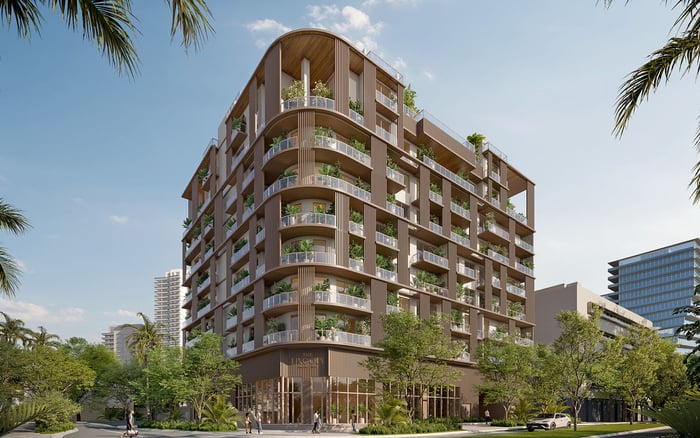
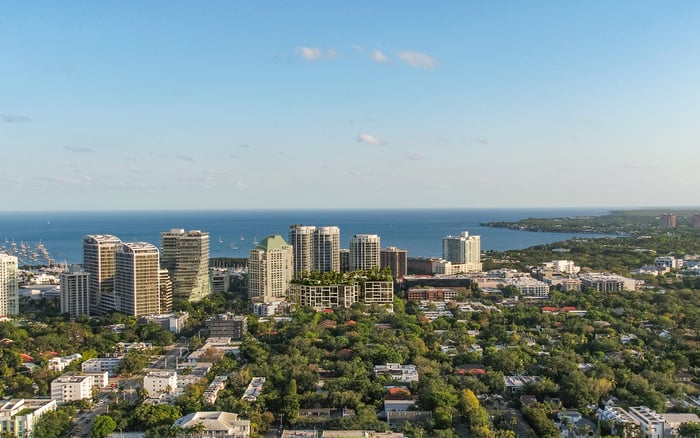
In Coconut Grove, prudent pre-construction buying begins with completed local work, sponsor continuity, and close reading of the documents governing delivery, substitutions, deposits, warranties, and closeout.

Coconut Grove rewards luxury buyers who think like long-term owners. Compelling design may open the conversation, but evidence of execution and the governing documents should shape the decision.
The first question is not whether a developer has produced an impressive presentation. It is whether the sponsor has completed comparable work and whether buyers can evaluate the result. A finished property can reveal details that plans cannot fully convey, including arrival experience, material transitions, acoustic comfort, service circulation, landscape condition, and the durability of shared spaces.
Buyers can also ask owners and association representatives about punch-list resolution, warranty service, and responsiveness after closing. These observations do not predict another project’s outcome, but they can help buyers form sharper questions.
A completed Coconut Grove property provides a practical reference point for assessing design execution, operations, and aging. Buyers should look beyond visual appeal and consider whether the lived experience aligns with the property’s original positioning.
That approach is useful when evaluating active or newer offerings such as The Well Coconut Grove. Buyers can compare current promises with observable work while recognizing that each development may involve different contracts, teams, specifications, consultants, and delivery challenges.
The same discipline applies to Vita at Grove Isle. Physical inspection and current project documents should carry more weight than broad assumptions based on a sponsor name or marketing campaign.
A strong portfolio is evidence, not a transferable warranty. Buyers should determine which members of an earlier team remain involved, what standards are contractually defined, and how responsibility is allocated for delivery and closeout.
Visible construction activity and disclosed financing can be meaningful indicators, but neither replaces contract review. When considering Four Seasons Residences Coconut Grove, buyers should separate several questions: Is construction advancing? Are the contractual delivery provisions acceptable? How are substitutions addressed? What remedies apply if timing changes?
Brand participation also requires precision. Buyers should identify the developer, landowner, contracting entity, and the brand’s stated role. They should also review what the documents say about management, services, standards, and potential changes to those arrangements.
Prestige can inform a property’s positioning, but responsibility must remain legible on paper. A buyer should not assume that a recognizable name guarantees schedule adherence, exact finish quality, warranty performance, or frictionless closeout.
Sponsor continuity should be investigated independently of sales activity. Arbor Coconut Grove can serve as a prompt for buyers to examine the current ownership and development structure through the latest available project documents rather than relying on earlier presentations.
Sales momentum and delivery proof are different measures. Demand does not independently establish stable control, committed financing, construction capability, or enforceable buyer protections.
A careful buyer should ask who controls the project, whether relevant parties have changed, how deposits are handled, what happens if a closing date moves, and which assignment or cancellation provisions apply. These questions become especially important when ownership plans depend on a particular move or the sale of another residence.
The purchase agreement and current offering materials should be treated as operating documents, not formalities. Review the outside delivery date, permitted extensions, force majeure language, deposit schedule, escrow provisions, financing contingencies, assignment restrictions, and default remedies.
Confirm how substitutions involving materials, appliances, or fixtures may be made. Determine whether dimensions, views, layouts, and finish representations are approximate, and understand which documents control if marketing materials differ from contractual disclosures.
The post-delivery framework deserves equal attention. Examine inspection rights, punch-list procedures, warranty scope, association turnover, reserve treatment, projected assessments, and responsibility for common-area defects. Buyers should request current construction information and verify material terms in the latest documents.
The most sophisticated Coconut Grove purchase is not necessarily the one with the fewest risks. It is the one in which the buyer understands which risks remain, who bears them contractually, and whether the anticipated ownership experience justifies that exposure.
What is the best evidence of a Coconut Grove developer’s track record? Completed local properties are a strong starting point because buyers can inspect execution, aging, and operations directly.
Does financing eliminate delivery risk? No. Financing may be a positive signal, but it does not guarantee timing, finishes, warranties, or closeout quality.
Why does local experience matter in Coconut Grove? Comparable local work can help buyers evaluate how a sponsor’s design, construction, and service approach performs in the neighborhood.
Should buyers rely on a branded residence name? No. Buyers should identify the developer, contracting entity, brand role, and relevant contractual provisions.
Is visible construction progress meaningful? Yes, but the purchase agreement still governs the buyer’s delivery rights, obligations, and remedies.
What does strong sales momentum prove? It may indicate demand, but it does not independently prove sponsor stability, financing sufficiency, or successful delivery.
What should buyers inspect at a completed reference property? Review material aging, acoustics, service flow, landscaping, common areas, and the handling of defects after closing.
Which contract provisions deserve close attention? Examine delivery extensions, deposit treatment, substitutions, defaults, assignments, inspections, warranties, and cancellation provisions.
Why investigate sponsor continuity? Changes among controlling or responsible parties can affect financing, contracts, construction responsibility, and the route to completion.
Can delivery risk be removed entirely? No. It can be evaluated, allocated, and reduced through physical evidence, current documents, and disciplined professional review.
For a discreet conversation and a curated building-by-building shortlist, connect with MILLION.
If branded residences are on your mind — as a home or as an allocation — we would be glad to share what we are seeing, privately.
Begin a quiet conversation