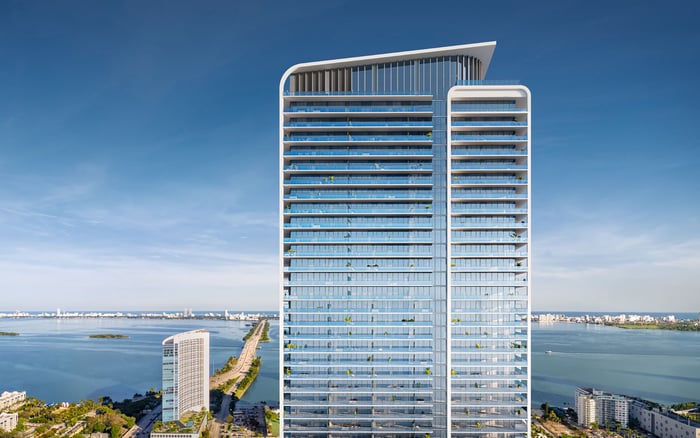
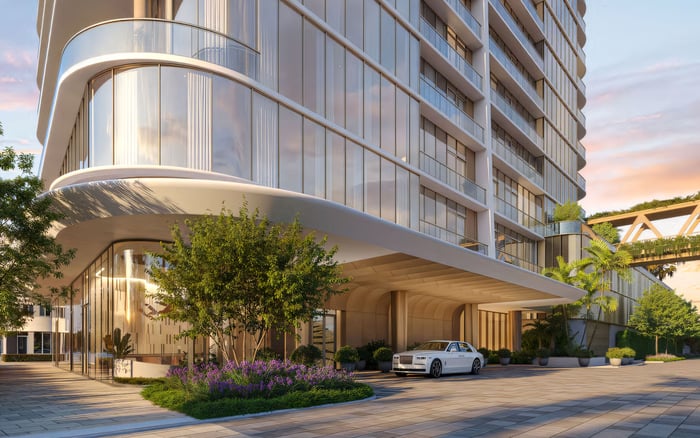
Before reserving a Miami Design District residence, evaluate the full route from curb to home, caregiver parking arrangements, emergency responder access, and high-floor elevator contingencies. Written, unit-specific answers matter more than service language or an accessibility label.

For a luxury residence in the Miami Design District, comfort should extend beyond finishes and attentive service. A caregiver should be able to arrive without confusion, mobility equipment should pass through every doorway, and emergency responders should reach the correct unit through a clearly identified entrance. These are reservation questions, not details to defer until move-in.
The most useful assessment follows the resident’s actual day: vehicle arrival, unloading, lobby entry, elevator travel, and movement within the home. For someone who cannot use stairs, that assessment must also address interruptions. An elegant arrival sequence matters only if it remains workable when assistance is needed.
When considering Kempinski Residences Miami Design District, request property-specific answers rather than assuming service positioning establishes medical support, mobility-handling training, or emergency readiness. Apply the same discipline to every reservation decision.
Visitor parking information does not establish an on-site emergency department or ambulance staging point. Nor does it establish the nearest appropriate emergency department, ambulance response time, or a particular tower’s responder entrance. Each requires separate confirmation; none should be inferred from the neighborhood’s convenience.
Ask management for the exact emergency address, tower identifier, unit designation, and entrance responders should use. Establish who answers overnight, who can unlock controlled doors, and who escorts responders from the curb to the residence. If the public arrival entrance differs from the residential entrance, have that distinction explained in writing.
Separately, discuss appropriate emergency-care destinations with the resident’s healthcare team. A building’s access instructions and a medical-care plan serve different purposes; neither replaces the other.
Request a walkthrough of the responder route, including door access, elevator access, and any restrictions on equipment movement. The objective is a practical handoff: a precise address, an identifiable entrance, an available contact, and a clear route upstairs. Do not accept concierge availability as proof of medical assistance.
Ask which visitor valet and self-parking options are available near the proposed residence, then distinguish them from any residential parking arrangements. The closest station or garage may not provide the shortest step-free route to the home.
Walk the route rather than judging it by distance alone. Confirm whether a caregiver may unload without handing over the vehicle, how long unloading is permitted, and whether there is sufficient clearance to deploy a wheelchair ramp.
Request current charges, operating hours, and recurring-caregiver arrangements directly. Ask how parking costs change with visit duration and whether a shift change requires a separate parking payment. Do not treat visitor pricing as a reservation quote or a commitment to ongoing caregiver access.
For buyers comparing Miami Tropic Residences with other options, request the same written parking answers from each property. Ask about shift changes, independent entry credentials, weather-protected unloading, accessible-space locations, van clearance, and medical-equipment deliveries. A recurring care schedule deserves an explicit arrangement, not reliance on visitor practices.
An accessible parking space does not establish the accessibility of the journey beyond it. Verify the route from parking to the residential lobby, then continue to the elevator, unit, amenities, mailroom, and loading area. Identify every point where a credential, door, threshold, or change in level requires assistance.
Ask which accessibility requirements apply to the property and how they are reflected in the actual route. A general compliance statement does not establish that a particular residence fits an individual’s needs.
Compare measured clearances with the resident’s mobility equipment. Ask for door openings, elevator dimensions, bathroom access, and the space needed for transfers. Include equipment used occasionally, not just the device present during the viewing. A floor plan should support the resident’s routines, including caregiver assistance, rather than simply carry an accessible label.
This comparison can extend to an Edgewater alternative such as Villa Miami without presuming equivalent arrangements. Evaluate each property independently; neighborhood appeal does not establish unit-level suitability.
Ask how many elevators serve the proposed unit and which, if any, operate on emergency power. A statement that the building has a generator does not establish elevator availability. Request an explanation of what residents can expect during a power interruption, a single-elevator outage, and a broader service failure.
Request current elevator documentation applicable to the property, including relevant permits and Certificates of Operation, then ask separately about maintenance communication. How are outage notices delivered? Who provides repair updates? What arrangement applies if the resident cannot use stairs?
Ask how elevator emergency communication works, how the building tests its system, and how it accommodates the resident’s communication needs. Request an explanation of call activation and how a passenger knows that a call has been received.
The decision is not simply high floor versus low floor. It is whether the building’s verified operations and assistance procedures support the individual resident when normal elevator service is unavailable.
A high-rise evacuation plan should be understood before reservation. Ask management to explain the route from the residence to designated exits and how the procedure addresses a resident who cannot descend stairs.
Obtain the building-specific evacuation procedure and clarify how it addresses mobility limitations. Do not assume elevators will be available or that staff can perform transfers. Ask who coordinates assistance, how instructions reach the resident, and what caregivers should do under the building’s procedure.
Prepare a written personal plan covering mobility equipment, transfer ability, communication needs, caregiver contacts, and the building’s assistance arrangements. Share relevant access needs through the agreed management process, and ask how updates are recorded. Distinguish ordinary outages from emergency evacuation rather than treating every interruption as the same event.
Before paying a deposit, assemble written answers on emergency access, caregiver parking, step-free routes, unit dimensions, elevator contingencies, and evacuation assistance. Where an arrangement is proposed rather than operational, ask how and when it will be confirmed. Keep unanswered questions visible rather than converting assurances into assumptions.
The reservation standard is straightforward: the home should support the resident’s daily independence and anticipated assistance needs, with clear procedures when normal access changes. Views and design can then be evaluated alongside an equally important luxury: confidence in how the residence will function.
Explore South Florida residences with MILLION while keeping verified access and care logistics central to your selection.
If branded residences are on your mind — as a home or as an allocation — we would be glad to share what we are seeing, privately.
Begin a quiet conversationNo. Visitor parking information does not identify an on-site emergency department or ambulance staging point, and it does not establish response times.
Request the exact emergency address, tower and unit identifiers, responder entrance, overnight contact, and procedure for escorting responders from curb to unit.
Do not assume so. Confirm recurring-caregiver permissions, current pricing, operating hours, unloading rules, and whether residential parking is handled separately.
Request current charges for the expected visit duration and ask how shift changes affect payment. Confirm any recurring-caregiver arrangement in writing.
Verify operating hours, accessible-space locations, van clearance, and the full step-free route to the residence. Identify any doors or credentials that require assistance.
Confirm where unloading is permitted, how long a vehicle may remain, and whether handing it to valet is required. Check clearance for wheelchair ramps and access for medical-equipment deliveries.
No. Ask which elevators operate on emergency power and what procedures apply when service is unavailable.
Request current elevator documentation, including applicable permits and Certificates of Operation. Separately confirm emergency-communication testing and outage notification procedures.
No. Compare actual door openings, elevator dimensions, bathroom access, and transfer space with the resident’s equipment and assistance needs.
Include mobility limitations, equipment, transfer ability, communication needs, caregiver contacts, and building-specific evacuation or assistance procedures. Clarify arrangements for a resident who cannot use stairs.