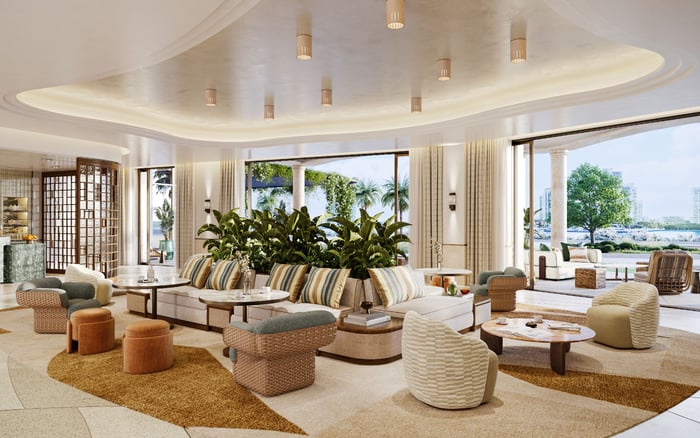
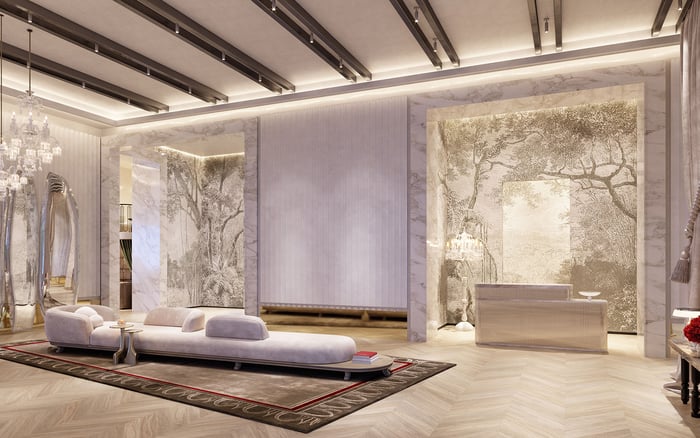
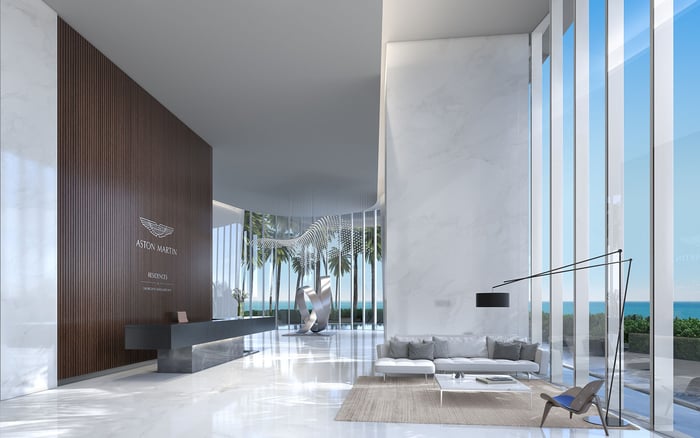
A private-client shortlist of five Miami residential projects with distinctive dining and hospitality programs, separating announced chef access from the service logistics and event permissions buyers should confirm.

For a private client who entertains regularly, a residence’s culinary offering deserves the same scrutiny as its floor plan. A restaurant downstairs, a reservable dining room and a chef preparing dinner at home are distinct propositions. Each shapes the host’s role, the guest experience and the questions that belong in a purchase briefing.
Brickell and Downtown Miami offer several compelling approaches, with Villa Miami providing a nearby Edgewater waterfront alternative. The distinction is not simply between hospitality brands, but between announced services and the operational arrangements that make a private evening feel effortless. A private elevator does not establish the presence of a service elevator, and a celebrated culinary partner is not automatically a bookable private chef.
These projects belong to an active development and marketing landscape, not necessarily a roster of operating services. Planned amenities remain subject to change. A useful buyer’s brief pairs each culinary proposition with the permissions, capacities and circulation details that require confirmation before commitment.
1. Nobu Residences at 619 Brickell: 619 Brickell Avenue, Brickell
Planned as a 75-story tower with 300 residences, Miami’s first Nobu-branded residential development offers the shortlist’s most explicit private-chef proposition. Announced services include private chef services and in-residence dining, alongside a residents-only Nobu restaurant and a private café and bar. The planned ground-floor restaurant also includes a private dining room with exclusive resident access.
For a client who wants to host without leaving home, that combination makes Nobu the clearest starting point. The next conversation should establish how chef bookings work, which kitchen facilities support them, and how ingredients, equipment and staff reach the residence. Exclusive dining access does not, by itself, establish room capacity or reservation priority.
2. Cipriani Residences Miami: 1428 Brickell Avenue, Brickell
Cipriani combines round-the-clock dining services in residences with multiple reservable private dining rooms. A dedicated Cipriani restaurant operated by its hospitality team anchors the program, while planned poolside food-and-beverage service adds an outdoor setting. The appeal lies in the range of settings within a single hospitality concept.
For a host alternating between an intimate dinner at home and a private-room occasion, Cipriani merits close attention. Multiple rooms suggest a choice of settings, but do not establish different seating capacities or the ability to combine spaces. In-home dining should not be treated as confirmation of a dedicated private chef.
3. The St. Regis Residences, Miami: South Brickell
St. Regis pairs a fine-dining restaurant associated with Michelin-starred chef Fabio Trabocchi with 24-hour butler service. Its amenity program also includes a tea and cognac room and a bayfront pool with a bar and café. Together, these settings offer several potential elements of a hosted evening.
The distinction lies as much in the service proposition as in the restaurant. Butler service is relevant to a client’s hosting brief, but its scope requires clarification. Buyers should establish whether dinner coordination, staffing and private-space reservations fall within that service, and whether the culinary offering includes a separately bookable chef arrangement.
4. Villa Miami: Edgewater waterfront, north of Downtown Miami
Villa Miami brings Major Food Group culinary involvement to a waterfront residential setting. Its design includes private elevators and entry foyers, making privacy on arrival a clear part of the proposition. Geographically, it is an Edgewater alternative, not a Brickell or Downtown address.
For clients open to the broader urban core, Villa Miami deserves a place in the conversation. Its culinary partnership should be evaluated separately from private-room reservations or private-chef arrangements. Likewise, private residential elevators do not confirm back-of-house lifts, catering circulation or loading access.
5. JEM Private Residences: Downtown Miami
JEM Private Residences has announced ITO•Kaya, a Japanese dining concept from the team behind omakase restaurant ITO, for its retail program. SunLife Organics is also part of the announced retail offering. This is a restaurant-led proposition rather than a documented resident-only private-dining program.
JEM is relevant for a buyer who values dining within the development’s retail setting. A private-client brief should distinguish that appeal from exclusive resident access, private chef services or reservable event rooms. None should be inferred from the announced restaurant concept.
A buyer comparing 619 Residences by Foster + Partners + Nobu Hospitality with Cipriani Residences Brickell should begin with a practical distinction: does the household want a chef working inside the residence, prepared dining delivered at home, or a separate room where the operator manages the occasion?
Those preferences are not interchangeable. Nobu explicitly announces private chef services; Cipriani’s proposition emphasizes round-the-clock dining and reservable rooms. Buyers should request written booking terms, menu flexibility, staffing arrangements, cancellation rules and outside-chef policies. None should be presumed from branding alone.
At St. Regis® Residences Brickell, the relevant question is how the announced butler service connects with dining. A chef-associated restaurant provides culinary identity, but does not promise the named chef’s personal availability for a resident’s dinner.
The service route deserves its own review. Ask for plans showing loading access, lift locations, staff circulation and the path from arrival to kitchen or dining room. Confirm service-lift dimensions, delivery windows and restrictions on moving equipment or supplies.
At Villa Miami, private elevators and entry foyers address residential access. They do not establish whether catering can move separately from guests. Across all five projects, dedicated service-elevator provision and back-of-house arrangements require confirmation. For a frequent host, that distinction can be as consequential as the room itself.
Event flexibility depends on permissions as well as space. A private room, poolside setting or café may suit different occasions, but the announced programs do not establish verified seating counts or maximum guest limits. Ask for capacities by layout, exclusive-reservation terms, event hours and guest-access procedures.
Then test those arrangements against the household’s actual calendar: a seated dinner, a standing reception or a larger family gathering. Confirm kitchen specifications, outside catering rules and whether adjacent spaces can be reserved together. Treat each as a question, not an advertised entitlement.
The strongest choice is the one whose dining service, privacy and event rules fit the client’s hosting habits, with those details documented before commitment.
For a discreet residential conversation shaped around your hosting priorities, connect with MILLION.
If branded residences are on your mind — as a home or as an allocation — we would be glad to share what we are seeing, privately.
Begin a quiet conversationNobu Residences at 619 Brickell explicitly announces private chef services alongside in-residence dining and exclusive resident dining settings.
Its program includes round-the-clock dining in residences and multiple reservable private dining rooms, supported by a Cipriani-operated restaurant and planned poolside service.
Its fine-dining restaurant is associated with Fabio Trabocchi, but that does not establish a bookable private chef or the named chef’s personal availability.
Villa Miami is on the Edgewater waterfront north of Downtown Miami. It is a nearby alternative rather than a Downtown or Brickell address.
No. Private elevators and entry foyers establish residential access, not dedicated service lifts or separate catering routes.
JEM has announced ITO•Kaya, a Japanese dining concept from the team behind ITO, for its retail program. SunLife Organics is also part of its announced retail offering.
Verified dining-room seat counts and maximum event guest limits are not established here. Buyers should obtain capacities by layout and reservation terms before planning an occasion.
Not necessarily. In-residence dining and a bookable private chef are distinct services, and buyers should confirm the preparation and staffing arrangements.
Request lift locations and dimensions, loading access, staff circulation, delivery windows and permitted catering routes. Dedicated back-of-house arrangements require confirmation across the shortlist.
No. These projects sit within an active development and marketing landscape, and planned amenities remain subject to change.