A buyer’s guide to separating Setai association assessments from hospitality spending, clarifying gratuity expectations, and establishing written controls for à la carte services before closing.
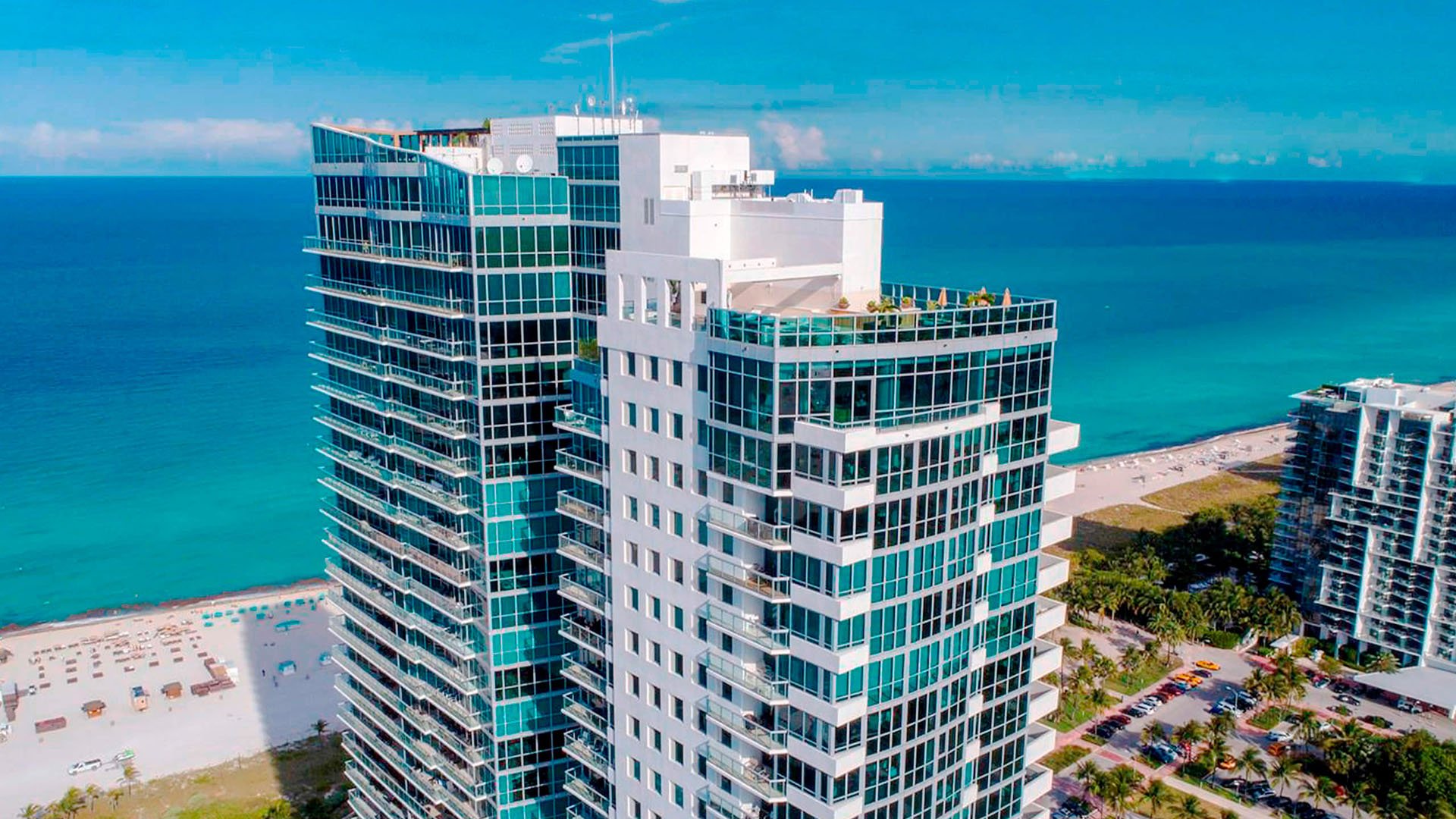
At Setai Residences Miami Beach, the appeal is a residence supported by hotel-style amenities: concierge, valet, beach and pool services, spa facilities, and dining access. The address, 101 20th Street, places that experience in Miami Beach. Before purchasing, however, buyers should distinguish available services from those included in their assessment.
Association maintenance, hospitality service charges, gratuities, and rental-booking fees are distinct obligations. Combining them into a single monthly figure can obscure both the committed cost of ownership and the discretionary cost of enjoying it. The central purchasing question is not simply what maintenance costs, but what that payment covers for the particular residence.
A disciplined budget preserves the pleasure of service by making its financial boundaries clear. Obtain the unit’s current assessment, then prepare a separate schedule for household expenses and optional hospitality spending.
Maintenance figures illustrate considerable variation. Unit 3105 has a reported monthly figure of $3,819; the closed-sale figure for Unit 2504 is $5,054; and Unit 3909 has a reported fee of $11,166. These are unit-specific snapshots, not a building-wide assessment schedule or guaranteed current charges.
An October 5, 2026 snapshot of 10 active listings with usable fee data places the median monthly-equivalent association fee at $5,899. The middle half falls approximately between $4,402 and $9,625. Another listing-derived calculation puts the median near $5,815 monthly, or $4.55 per square foot per month. Neither calculation is an official association budget.
The practical lesson: do not underwrite a purchase using a median. Confirm the exact unit’s assessment, billing frequency, separate recurring charges, and approved special assessments. Public maintenance and tax estimates can be inaccurate; the purchase decision should rest on current documents, not a marketing field.
Maintenance charges may cover water, building insurance, cable, security, pool upkeep, structural maintenance, and parking-related costs, but stated inclusions vary across units. Request a written inclusion schedule rather than assume every listed item applies to the intended purchase.
Ask management to identify which services fall within the association budget, which belong to hotel operations, and which are billed upon use. Parking-related maintenance, for example, does not confirm that every valet transaction is complimentary. Likewise, beach access does not establish that every beach setup is included.
Request the approved budget, financial statements, reserve information, special-assessment resolutions, insurance details, and closing estoppel. Have the appropriate advisers reconcile those materials with the seller’s stated charges. Distinguish approved obligations from proposals still under discussion; a proposal is not an adopted assessment.
This distinction also matters when evaluating Faena House Miami Beach alongside Setai: compare documented inclusions and exclusions, not merely the headline monthly figure.
The available information does not establish a verified resident gratuity policy. Buyers should assume neither a mandatory contribution system nor an entirely discretionary arrangement.
Ask whether holiday funds or staff contributions are mandatory, recommended, customary, or discretionary. Identify who collects them, how suggested amounts are communicated, and whether participation affects any service arrangements. Request the policy in writing so expectations do not depend on informal conversations.
For transactional services, ask whether the bill includes a service charge and whether that charge functions as gratuity. A percentage added to an invoice does not, by itself, establish whether additional tipping is expected. The Setai’s spa carries a stated 20% service charge on all spa services; clarify its treatment as gratuity before adding another tip.
The objective is not to eliminate generosity. It is to distinguish voluntary appreciation from a contractual charge and avoid unintended duplication.
Wellness pricing offers a useful example. Advertised private yoga and meditation each cost $130 per hour, private mat Pilates costs $110 per hour, and personal training costs $100 per hour. Additional-person charges are listed separately. These prices are snapshots, not guaranteed current resident rates.
By contrast, complimentary beach yoga is advertised for guests and residents on Friday, Saturday, and Sunday, from 8:30 to 9:30 a.m. The distinction matters: a scheduled group offering and a privately booked session belong on different budget lines. Confirm current schedules, resident eligibility, and the treatment of any applicable service charge before reserving.
Dining warrants the same precision. The hotel’s three signature restaurants include Jaya, serving South Asian cuisine at breakfast, lunch, and dinner. Dining access does not mean meals, drinks, or in-residence delivery are included.
For buyers also considering Shore Club Private Collections Miami Beach, the useful comparison is a written resident-service schedule, not an assumed equivalence between hospitality offerings.
Rental terms can illuminate potential costs, but they do not establish what every owner pays. For a Setai 2102 rental, the quoted resort fee is $285 plus tax per day, reduced to $115 plus tax per night for stays of 30 nights or longer, payable at check-in. These are booking-specific terms.
Separately, a Setai 1705 rental carries a 16% service fee excluded from the rental rate. That fee is not a condominium assessment. Cabanas, spa treatments, beach setups, and valet may also involve additional charges and remain subject to availability.
If rental use forms part of the purchase plan, request written terms for the proposed arrangement. Keep booking costs separate from association obligations, and establish which charges fall to the owner or guest. Do not import a rental example into an owner budget without confirmation.
Build three budget categories: association dues and assessments; taxes, insurance, and utilities; and discretionary hospitality spending. Then obtain written resident pricing for valet, beach setups, cabanas, housekeeping, dining, spa, and in-residence services.
Ask whether itemized statements, spending alerts, authorized-user restrictions, or approval thresholds are available. Confirm cancellation terms and guest privileges wherever relevant. These are controls to request, not assumed features of ownership.
The same document-led approach can guide a comparison with The Ritz-Carlton Residences® Miami Beach without assuming identical fee structures. Ultimately, the right purchase is one whose service experience and financial obligations are equally clear.
For a discreet approach to evaluating service-led residences in South Florida, connect with MILLION.
If branded residences are on your mind — as a home or as an allocation — we would be glad to share what we are seeing, privately.
Begin a quiet conversationThe residences are at 101 20th Street, Miami Beach, with hotel-style amenities including concierge, valet, beach and pool services, spa facilities, and dining access.
Reported examples include $3,819 for Unit 3105, $5,054 for Unit 2504, and $11,166 for Unit 3909. These are unit-specific snapshots, not guaranteed current assessments.
The October 5, 2026 snapshot places the median monthly-equivalent fee at $5,899 across 10 active listings with usable data. Buyers should verify the exact unit’s current assessment rather than rely on that median.
Public descriptions mention water, building insurance, cable, security, pool upkeep, structural maintenance, and parking-related costs. Inclusions vary in the available descriptions and require written confirmation.
Request the current unit assessment, approved budget, financial statements, reserve information, special-assessment resolutions, insurance details, and closing estoppel.
The available information does not establish a verified resident gratuity policy. Ask whether contributions are mandatory, recommended, customary, or discretionary, and who collects them.
The stated spa policy applies a 20% service charge to all spa services. Confirm whether it functions as gratuity and whether additional tipping is expected.
Beach yoga is advertised as complimentary for guests and residents Friday through Sunday, from 8:30 to 9:30 a.m. Advertised private hourly rates are $130 for yoga or meditation, $110 for mat Pilates, and $100 for personal training, subject to current confirmation.
No such conclusion is established by the rental examples. The Setai 2102 resort fee and Setai 1705 service fee are booking-specific terms, not evidence of universal owner charges.
Obtain written resident pricing and keep hospitality spending separate from association dues and household expenses. Ask whether itemized statements, spending alerts, and authorization controls are available.