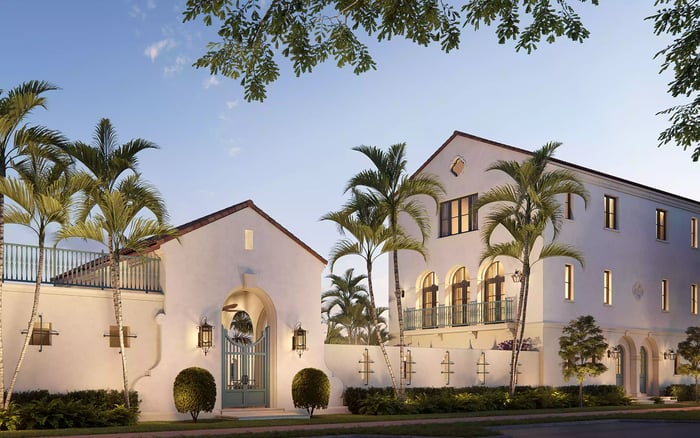
Ponce Park’s advertised valet and secure parking invite a closer look at the documents behind daily convenience. Before purchasing, clarify unit-specific parking rights, responsibility for vehicles, charging access and service arrangements during the busiest hours.

For a luxury residence, arrival is more than a gracious entrance. It is the confidence that your vehicle can be parked, retrieved and, when necessary, charged without reorganizing your day. At Ponce Park Coral Gables, that confidence deserves the same scrutiny as the residence itself.
Located at 3000 Ponce de Leon Boulevard, Coral Gables, FL 33134, the project is marketed as an 11-story condominium with 58 residences. Advertised services include 24/7 valet, an attended lobby, a dedicated doorman, a hospitality-trained concierge and 24-hour dedicated security, along with secure parking for residents and guests.
These offerings describe an intended service experience. They do not, by themselves, establish a purchaser’s parking entitlement, responsibility for a damaged vehicle or access to a working charger. The distinction is simple: an advertised amenity is not a unit-specific right.
Begin with the declaration, parking exhibits and unit purchase contract. Ask which spaces accompany the residence, how they are identified and whether the right is deeded, assigned or structured differently. Clarify whether that arrangement can change and who has authority to change it.
Space count is only the beginning. Confirm dimensions, clearance and restrictions relevant to the vehicles you own. Ask whether self-parking is permitted, valet use is mandatory or an additional vehicle requires a separate arrangement. Clarify guest access, overnight parking and recurring charges before treating parking as an included benefit.
For buyers also considering Cora Merrick Park, a useful comparison begins with the same request for residence-specific documentation-not an assumption that parking arrangements match. A parking promise becomes meaningful when it answers where your vehicle goes, who may move it and what access costs.
The planned parking spans Levels 1, 2 and 3, with 265 spaces in the publicly available plan version. That figure should not be read as completed garage capacity, much less as a pool reserved exclusively for condominium owners. A shared-parking matrix is also part of that plan version.
The total does not establish the allocation among residences, guests, retail uses and other users. Dividing 265 by 58 would therefore give a misleading impression of the spaces available to each household. Nor does the drawing set confirm what a particular residence receives.
Request the final approved parking plans and reconcile them with the current parking exhibits and purchase documents. Have the sales team distinguish resident allocations from shared or other-use spaces in writing. Because the publicly available plans may be historical, they are best used to prompt questions, not settle them.
Round-the-clock valet is advertised, but the service description does not establish whether the cost is included in association dues, charged separately or governed by a long-term operating agreement. Request the relevant budget provisions and agreement, including any mechanism for changing charges or replacing the operator.
Liability warrants a separate review. Ask for the operator’s agreement, insurance certificates, applicable exclusions and claims procedures. Have counsel review who is responsible for vehicle damage, theft, lost keys and delayed retrieval. Confirm whether the documents distinguish the valet operator’s responsibilities from those of the association or owner.
Practical questions matter alongside contractual ones. Is vehicle condition recorded at handoff? How are keys controlled? What is the procedure for reporting damage, and what documentation must an owner supply? If your vehicle requires particular handling, ask whether the operator will accept those instructions in writing.
These are questions to resolve, not statements of existing Ponce Park policy. An attended arrival and dedicated security do not, by themselves, establish who bears a loss.
The meaningful test of valet convenience is simultaneous demand. The advertised service does not establish guaranteed retrieval times, staffing levels or peak-occupancy procedures. Ask how the proposed operation would handle residents departing for work while guests arrive and other vehicles await charging.
If operations have begun, visit during commute periods and busy weekends. Observe queues, request-to-retrieval intervals and guest handling rather than relying on a quiet appointment. Ask whether observed staffing reflects the intended arrangement at full occupancy and how service changes as demand rises.
If operations have not begun, request the written operating plan. Seek clarity on staffing assumptions, vehicle staging, guest overflow and escalation when a car is delayed. A useful answer explains responsibilities and procedures rather than simply promising manageable demand.
Buyers comparing The Village at Coral Gables can apply the same household-level test: how would each proposed parking arrangement accommodate their actual departure times and visitors?
EV-charging requirements in the drawing set do not confirm that operational chargers will be available to residents at closing. Ask how many chargers will be installed and commissioned, where they will be located and what power ratings they will provide. Distinguish infrastructure intended for future installation from equipment ready for use.
Then examine allocation. Will charging be attached to a particular space or shared? Who may reserve it, for how long and under what priority rules? If valet personnel move vehicles onto and off chargers, ask who manages that sequence when retrieval demand is also high.
Clarify electricity billing, possible session or idle charges, maintenance responsibility and outage procedures. If a private installation is important, request written details of the permission process and responsibility for installation costs.
Public Level II charging is listed at municipal garages in Coral Gables at 254 Minorca Avenue, 220 Aragon Avenue, 345 Andalusia Avenue and 51 Aragon Avenue. These facilities are separate from Ponce Park and do not establish on-site charging rights or availability for residents.
Before committing, organize the answers into three categories: rights attached to the residence, services delivered by an operator and amenities shared under allocation rules. This keeps an assigned parking space from being confused with valet access, or a charging reference from being mistaken for assured overnight charging.
Ask your attorney to reconcile the purchase contract, declaration, parking exhibits and relevant operating provisions. Where an answer remains verbal, request written clarification and discuss whether it should be reflected in the purchase documents. The objective is not to presume a problem. It is to know precisely what supports the effortless daily experience you intend to buy.
For a discreet conversation about your next Coral Gables residence, connect with MILLION.
If branded residences are on your mind — as a home or as an allocation — we would be glad to share what we are seeing, privately.
Begin a quiet conversationPonce Park is located at 3000 Ponce de Leon Boulevard, Coral Gables, FL 33134.
The project is marketed as an 11-story boutique condominium with 58 residences.
Yes, 24/7 valet and an attended lobby are advertised. That description does not establish retrieval guarantees or peak-hour staffing.
The advertised service does not establish whether valet is included in dues or charged separately. Request the relevant budget provisions and operating agreement.
The advertised secure parking does not establish each residence’s deeded or assigned entitlement. Verify the arrangement in the declaration, parking exhibits and unit contract.
No. It is a count from a potentially historical plan version that includes a shared-parking matrix, not confirmation of completed capacity or exclusive resident allocation.
The advertised services do not resolve responsibility. Have counsel review the operator’s agreement, insurance, exclusions and claims procedures.
References to charging requirements in the drawings do not confirm operational chargers at closing. Request written details about installation, commissioning and resident access.
No. Municipal charging facilities are separate from Ponce Park and do not establish residents’ on-site charging rights or availability.
If operations have begun, observe commute periods and busy weekends for queues, retrieval times and charging access. Otherwise, request written plans addressing staffing, guest handling and simultaneous demand.