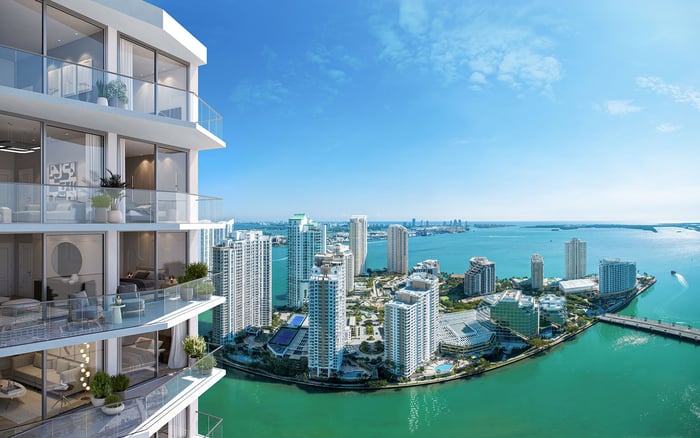
For an executive purchasing a South Florida primary residence, personal borrowing strength is only one part of approval. A disciplined review separates jumbo financing, condominium eligibility, association finances, and title questions before the closing timetable becomes a constraint.

For an executive establishing a South Florida primary residence, the purchase decision may begin with privacy, location, and the rhythm of daily life. Financing requires a different lens. A lender must evaluate both the borrower and the condominium project; strength in one does not cure a deficiency in the other.
Substantial income and assets cannot overcome a project’s failure to meet applicable eligibility requirements. Nor does primary occupancy override concerns about structural condition, litigation, commercial use, or concentrated ownership.
For a Brickell search that includes Una Residences Brickell, evaluate lifestyle fit and review documents in parallel. Project references here illustrate a buyer’s search, not a conclusion about any building’s financing eligibility or condition.
Agency condominium standards are useful reference points, but they are not a universal rulebook for jumbo lending. Before relying on a percentage or a general assurance that a building is financeable, ask which portfolio requirements and additional lender conditions govern the proposed loan.
Separate three questions: Is the borrower approved? Has the project been reviewed? What conditions remain before funding? Request the project-review requirements in writing. A borrower preapproval is not a building approval.
Ask the lender to identify required association documents, applicable commercial-space and ownership limits, insurance requirements, and its treatment of pending litigation. Establish who will obtain the documents and who will decide on project eligibility. Those responsibilities are particularly important when closing is tied to a relocation schedule.
Reserve adequacy is not simply a percentage in an annual budget. The more revealing question is whether funding supports the projected costs identified in the reserve study under the standards applicable to the loan.
Request the current budget, reserve study, financial statements, and available information on planned repairs and assessments. Have the lender explain how those materials satisfy its review. A budget allocation, an existing reserve balance, and a funding plan for future work answer different questions; none should substitute for another.
Unresolved critical repairs and significant deferred maintenance can independently make a project ineligible. A buyer’s willingness to absorb an assessment should not be mistaken for a solution to project eligibility.
In a Miami Beach search that includes The Perigon Miami Beach, maintain that distinction between residential appeal and financing diligence. Neither a project name nor a buyer’s purchasing power establishes reserve sufficiency.
Reserve requirements can also change. Ask the lender to confirm the controlling guidance and effective date for the transaction rather than relying on a remembered minimum allocation.
A lawsuit does not automatically prohibit financing. The subject matter, potential financial exposure, insurance coverage, and applicable exceptions all matter. Litigation involving structural soundness, safety, habitability, or functional use deserves particular attention.
Request a clear description of each relevant dispute, then have counsel and the lender evaluate it for their respective purposes. A brief assurance that a matter is routine should not replace an examination of the allegations and remaining exposure.
The inquiry should extend beyond cases filed in court. Some project-review standards include alternative-dispute-resolution proceedings, so ask about arbitration and other relevant proceedings as well.
Keep insurance in the discussion without assuming coverage resolves every concern. Litigation coverage is one consideration; the project’s broader insurance compliance is a separate part of eligibility review.
Commercial or mixed-use space can affect project eligibility. The applicable limit, calculation method, and exceptions matter. Ask the lender to identify its threshold and the documents supporting the calculation. A visual impression of the building cannot substitute for that analysis.
Investment ownership presents a different set of questions. Overall investor occupancy concerns investment-owned units across the project. Single-entity ownership concerns units concentrated under one owner or a related ownership group. These are separate risks, not interchangeable percentages.
Even if a particular program relaxes an overall investor-occupancy restriction, that does not establish that single-entity restrictions no longer apply. Request a current ownership breakdown and ask the lender how it evaluates related ownership.
When comparing Coconut Grove options such as Four Seasons Residences Coconut Grove, apply the same questions to each candidate. Intended personal occupancy does not eliminate project review.
Assessment delinquencies can restrict eligibility because unpaid dues weaken association operating cash flow. Review collections alongside reserves rather than treating a reserve balance as a complete measure of financial health.
Ask for the association’s assessment-delinquency information and the insurance documentation required by the lender. Seek clarification wherever the budget, repair funding, or collection information leaves questions unanswered. The objective is a coherent financial picture, not merely a completed questionnaire.
For a West Palm Beach comparison involving Alba West Palm Beach, apply the same discipline to document review. Comparing residences is more useful when the financing questions are consistent, even though lender requirements may differ by project and loan program.
Keep title and ownership questions on a separate agenda; project approval does not answer them. Ask transaction counsel and the title professional to address the proposed vesting, title exceptions, recorded liens, and coverage available for the particular transaction.
If a trust or entity is under consideration, ask counsel to evaluate the intended ownership structure alongside primary-residence and homestead objectives, then coordinate that discussion with the lender. Do not infer a legal or tax outcome from the buyer’s intention to live in the property.
Special assessments deserve equally explicit treatment. Ask counsel how the contract allocates responsibility and what remains payable at or after closing. Financing and document-review contingencies also require negotiation and legal review; do not assume those protections apply automatically.
Bring the outstanding questions into one closing agenda: borrower approval, project eligibility, reserve and repair exposure, litigation, commercial use, ownership concentration, insurance, and title. Ask the responsible professional to identify what is resolved and what remains conditional.
The objective is not to eliminate every complexity. It is to understand which issues affect funding, which require legal judgment, and which change the economics of ownership. That clarity allows the residence to be evaluated as a home without losing sight of the transaction behind it.
For a discreet perspective on your South Florida residential search, connect with MILLION.
If branded residences are on your mind — as a home or as an allocation — we would be glad to share what we are seeing, privately.
Begin a quiet conversationNo. Borrower approval and project eligibility are separate, and strong finances do not overcome a project’s failure to meet applicable requirements.
No. Personal occupancy does not override project-level concerns involving structural condition, commercial use, litigation, or concentrated ownership.
No universal jumbo rulebook applies. Establish the actual lender’s portfolio requirements and additional conditions before treating an agency standard as controlling.
Examine whether reserve funding supports projected costs identified in the reserve study, alongside the applicable lender requirements. A budget percentage alone does not answer that question.
Yes. Unresolved critical repairs and significant deferred maintenance can make a project ineligible independently of the buyer’s creditworthiness.
No. The dispute’s subject matter, financial exposure, insurance coverage, and applicable exceptions matter, with structural and safety issues warranting particular attention.
Yes. Some project-review standards include alternative-dispute-resolution proceedings, so the inquiry should extend beyond court-filed lawsuits.
Excessive commercial or mixed-use space can affect project eligibility. The lender should confirm the applicable threshold, calculation method, and exceptions for the proposed loan.
Investor occupancy concerns investment-owned units overall, while single-entity ownership concerns concentration under one owner or related group. A change to one restriction does not necessarily change the other.
Ask counsel about vesting, title exceptions, liens, ownership structures, and primary-residence objectives. Special-assessment allocation and financing or document-review contingencies also warrant transaction-specific legal review.