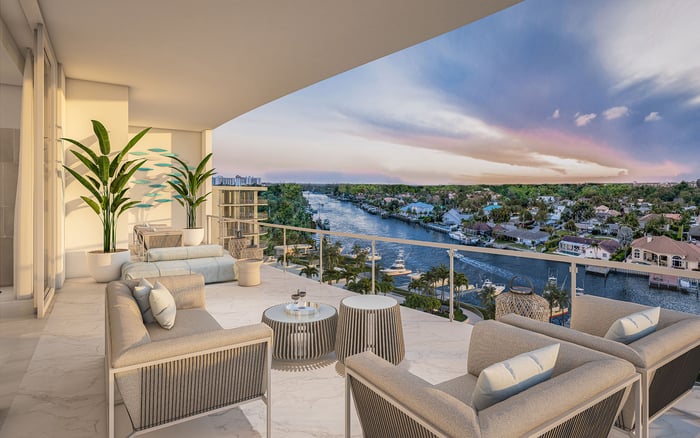
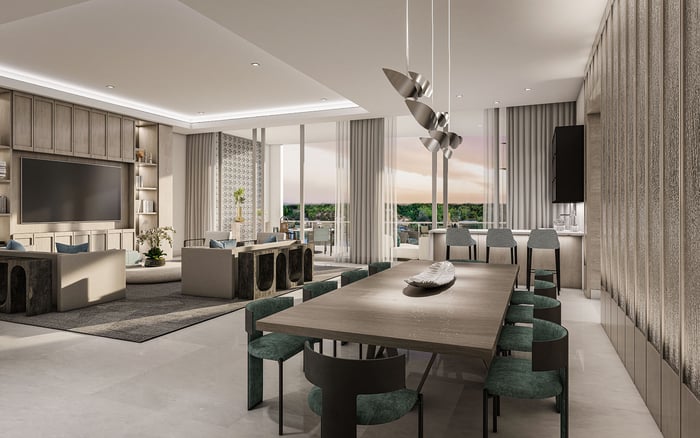
For Maison d’Or buyers, water-risk planning belongs alongside finishes and amenities. Clarify detection coverage, valve boundaries, emergency access, and damage-response obligations in writing before treating protection as part of the purchase.

At Maison D'Or South Flagler in West Palm Beach, purchase planning should extend beyond the visible pleasures of waterfront living. A review of finishes and amenities does not answer what happens when water escapes inside an unattended residence.
This purchase-planning review does not confirm a particular whole-unit leak-detection system, automatic-shutoff configuration, or contracted water-damage-response provider at Maison d’Or. That does not mean protection is absent. It means buyers should seek a written scope rather than assume personalized service includes emergency mitigation.
Treat “whole-unit” as a term to define, not a complete specification. Ask whether the proposed protection uses point sensors, flow monitoring, pressure analytics, or a combination. Request a plan showing exactly where each component operates.
The equipment schedule should identify manufacturers, model numbers, sensor locations, monitored zones, warranties, and maintenance responsibilities. Request a water-source schedule addressing hot and cold supplies, appliances, toilets, filtration equipment, wet bars, HVAC condensate, and exterior connections. Each should be marked as included, excluded, or subject to another system.
Do not accept a broad coverage statement without defined boundaries. Ask which events generate an alert, which trigger automatic action, and which require human confirmation. The useful deliverable is a coordinated drawing and operating description-not merely a product name.
For buyers also considering Alba West Palm Beach, apply the same diligence questions to each purchase file. This is a comparison framework, not a claim that either property has a particular installation.
Document detection and shutoff separately. Ask whether a valve controls one residence, a riser, a zone, a mechanical room, or the entire building. Then ask the question that makes the answer meaningful: which residences lose water when that valve closes?
Ask whether the proposed system can isolate an affected zone while leaving other zones operating. Zoned isolation is not a verified Maison d’Or feature in this review, and buyers should not treat “automatic shutoff” as synonymous with residence-specific isolation.
Request a valve schedule tied to the plumbing plan. It should explain the proposed treatment of hot and cold water, who can initiate closure, whether closure occurs locally or requires communications, and who may restore service. Ask the team to distinguish automatic functions from actions requiring staff or owner approval.
If Forté on Flagler West Palm Beach is also on the shortlist, compare written valve boundaries rather than service language. Do not assume equivalent protection across projects.
A successful demonstration should mark the beginning-not the end-of commissioning diligence. Request documented tests of leak detection, alarm delivery, valve closure, communications failure, and after-hours escalation. The records should identify what was tested and any unresolved conditions.
Ask how the proposed installation behaves during a power outage or internet interruption. Does detection continue locally? Is backup power included? Can an authorized person operate a manual override? What procedure governs water-service restoration after the original trigger has been investigated?
These are proposed diligence requests, not confirmed project capabilities. Before closing or turnover, request the relevant test records, operating instructions, warranty terms, and maintenance assignments. Have the purchase team explain how the transaction documents would address unresolved commissioning items.
An alert protocol should identify more than a recipient’s phone number. Request a written sequence naming the primary recipient, backup recipient, after-hours contact, and escalation path if no one acknowledges an alarm.
For an unattended residence, clarify who may enter, how access is authorized, and who can approve emergency plumbing or mitigation. Ask how owners and their representatives will be notified and how actions inside the residence will be recorded. Discretion and personalized attention do not, by themselves, establish those permissions or duties.
Carry the same distinction into a review of Mr. C Residences West Palm Beach: evaluate hospitality expectations separately from written emergency authority. The point is contractual clarity, not an unsupported comparison of building operations.
Request the identity of any proposed damage-response provider and the actual service agreement. Ask for terms specifying 24/7 availability, response targets, licensing, insurance, equipment capacity, and escalation procedures for an event involving multiple residences. A contact directory is not a substitute for an agreed scope of work.
The agreement should distinguish four stages: stopping the source, extracting water and drying, removing damaged materials, and restoring finishes. Ask who is responsible for each stage and whether separate contractors or authorizations are required. Do not assume an emergency drying assignment includes reconstruction.
For a residence with carefully selected finishes, clarify how restoration decisions would be approved and who coordinates the work. Request clear requirements for documentation, owner communications, and completion criteria. These should be negotiated or confirmed as applicable, not presented as services already included at Maison d’Or.
Have counsel and the insurance broker review the proposed allocation of owner and common-element responsibilities. Clarify deductibles, exclusions, mold limits, and the authority to incur emergency expenses. Ask how costs are handled when work begins before responsibility is resolved.
Do not build a presumed insurance discount into ownership projections. Any benefit associated with leak detection or shutoff requires confirmation for the actual installation and policy. A general technology benefit does not guarantee a premium reduction for this purchase.
Ask the broker which installation and commissioning documents would be needed for coverage review. Keep that review distinct from the developer’s equipment description and the mitigation provider’s service proposal.
The final purchase file should connect three things: the equipment promised, the people authorized to act, and the work they are obligated to perform. Ask counsel to incorporate material representations into signed documents and establish requirements for delivery of plans, service agreements, operating protocols, and commissioning records before closing or turnover.
Treat the amenity fact sheet as a reference for amenities and finishes, not proof that water-risk protection is included. The strongest purchase position rests on a written understanding of coverage, exclusions, authority, maintenance, and cost.
For a discreet perspective on South Florida luxury purchase planning, explore MILLION.
If branded residences are on your mind — as a home or as an allocation — we would be glad to share what we are seeing, privately.
Begin a quiet conversationThis review does not confirm a particular whole-unit system. Buyers should request written equipment and coverage details without assuming protection is absent.
Ask for the detection methods, sensor locations, and monitored zones. Request explicit treatment of hot and cold water, appliances, toilets, filtration, wet bars, HVAC condensate, and exterior connections.
Residence-specific isolation is not confirmed for Maison d’Or in this review. Ask whether each valve controls a residence, riser, zone, mechanical room, or the entire building.
Request manufacturers, model numbers, sensor and valve locations, monitored zones, warranties, and maintenance assignments. Tie the equipment schedule to the relevant plans.
Ask for documented tests of detection, alarm delivery, valve closure, communications failure, and after-hours escalation. Request clarification of unresolved test conditions before closing or turnover.
Ask whether detection and shutoff operate locally during power or internet interruptions. Clarify backup power, manual override, and authorization to restore water service.
Do not treat personalized service as confirmation of an emergency-response obligation. Buyers should separately confirm alarm recipients, entry permissions, emergency-work authority, and written response duties.
Request the provider’s identity, availability, response targets, licensing, insurance, capacity, and multi-residence escalation procedures. Separate source control, extraction and drying, material removal, and finish restoration.
No premium reduction is confirmed for Maison d’Or in this review. Any benefit needs confirmation for the actual installation and insurance policy.
Have counsel and the insurance broker review owner and common-element responsibilities, deductibles, exclusions, and spending authority. Clarify how costs are handled if emergency work begins before responsibility is resolved.