A buyer-focused examination of Pompano Beach luxury residences, weighing scarce layouts, private circulation, service commitments, and carrying costs without mistaking advertised features for proven resale premiums.
In Pompano Beach, the most useful luxury comparison is not which address offers the longest amenity menu. It is which residence combines a difficult-to-replace layout, genuinely discreet circulation, and a service structure whose cost is clear before purchase.
These distinctions support a resale thesis, not a demonstrated premium. Private foyers, expansive terraces, and hospitality services are tangible features to evaluate, but they do not establish achieved appreciation. Asking prices and launch prices are no substitute for closed resale transactions.
The buyer's objective is practical: identify what a future purchaser would struggle to replace, then determine what it costs to preserve that advantage. Brand, scale, and service belong in the same conversation, but none should stand in for the others.
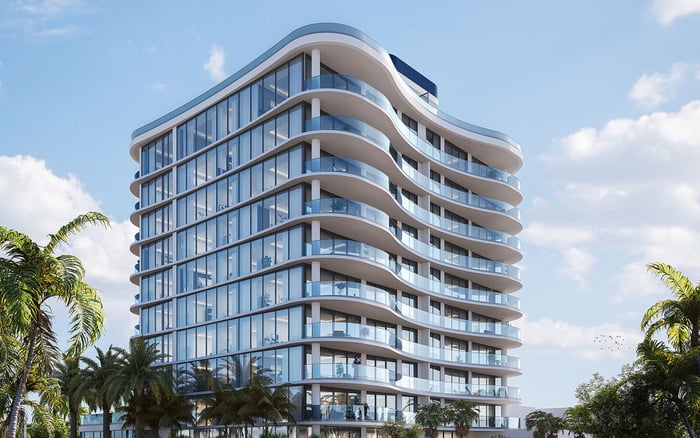
Salato, at 305 Briny Avenue, has an advertised collection of 40 residences. That limited count is a useful starting point for buyers who prefer a smaller residential setting. It does not, by itself, establish how many comparable floor plans exist within the building or nearby.
A more revealing test counts substitutes for the specific home. Request the complete layout schedule and compare interior area, terrace configuration, orientation, and arrival sequence. A small building can still contain repeated plans; a larger collection may include an unusually limited category.
Salato's advertised amenities span more than 20,000 square feet and include beach service, a swimming pool with bar, spa, fitness center, and 24-hour concierge service. That combination raises a second question: how are those services funded, and how are their costs allocated among residences? Limited scale should prompt budget scrutiny, not an assumption of either low or high carrying costs.
Salato's advertised 14-foot-deep terraces offer a concrete dimension to test against other plans. Depth deserves scrutiny alongside total outdoor area: furniture placement and circulation depend on geometry, not just a headline measurement.
Ask for dimensioned plans and consider how the space would accommodate dining, seating, and an unobstructed route between doors. Review exposure and neighboring sightlines rather than assuming outdoor area automatically delivers privacy.
Keep interior and exterior measurements separate in the financial comparison. A terrace may be central to the buying decision, but adding it to the denominator of an interior price-per-square-foot calculation obscures the comparison. Apply the same discipline to carrying costs.
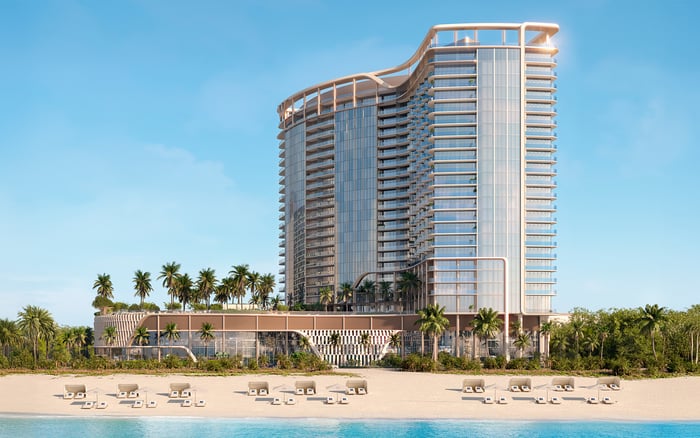
At Waldorf Astoria Residences Pompano Beach, advertised private elevator access and foyers warrant close examination. The advertised residence range of approximately 2,100-6,100 square feet also underscores why comparisons should be made by layout category, not merely by address.
Salato offers a different circulation arrangement: four semi-private elevators and a porte cochère. Semi-private access should not be read as a dedicated elevator for each residence. Establish which homes share access and how guests, deliveries, and service personnel move through the building.
The service comparison requires equal precision. Waldorf Astoria's advertised offering includes approximately 12,000 square feet of interior amenities, while its hospitality services include a beachfront café with room service, cabanas with poolside dining, and wellness facilities. Its advertised marina has 19 boat slips, but slip rights and costs require separate confirmation.
These amenity measurements are not interchangeable. Interior facilities, outdoor decks, and broadly defined amenity totals should not be ranked as though they measure the same thing.
The advertised offering at The Ritz-Carlton Residences® Pompano Beach includes 115 residences ranging from 1,309 to 4,850 square feet, alongside a separately identified collection of four penthouses measuring 5,405-6,824 square feet.
That distinction is more useful than a blended building-wide comparison. Four penthouses define a limited category within the advertised offering; they do not prove a resale premium or establish scarcity across the wider market.
For a large-format purchase, build the comparable set around homes that genuinely offer an alternative. Examine usable room proportions, outdoor space, circulation, and the total ownership commitment. A smaller conventional residence may belong to the same development yet serve a different buyer. Its price per square foot should not automatically become the benchmark for a penthouse.
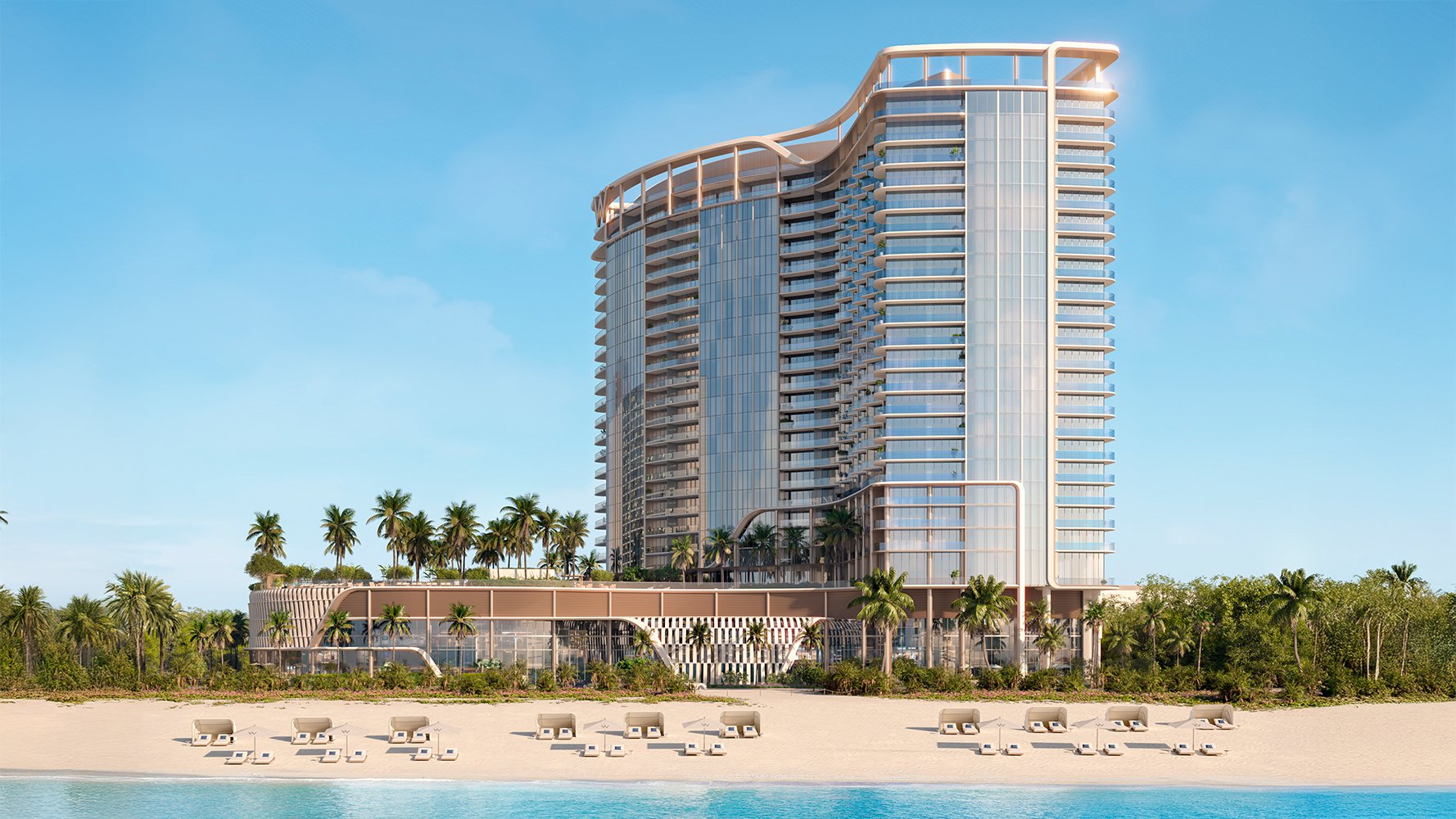
The advertised plans for W Pompano Beach Hotel & Residences place it on a 3.75-acre site across from the beach. Residence layouts span approximately 2,388-3,462 interior square feet, with selected balconies of approximately 290-1,150 square feet.
Its advertised services include a private resident lobby, 24-hour security, valet, butler, doorman, porter, and concierge-related reservations support. A private lobby is a relevant distinction, but buyers should still examine the full route from arrival to residence and how resident and guest circulation intersect.
Keep condominium residences separate from condo-hotel suites when assessing value. Confirm the current condominium count in governing documents before using inventory as evidence of scarcity. More importantly, verify the ownership category, use restrictions, service entitlements, and expense allocation attached to the specific purchase. A shared project name does not establish equivalent ownership economics.
The appropriate comparison is all-in annual carrying cost, shown both per residence and per interior square foot. There is no basis here to rank these projects by verified operating-cost efficiency.
Begin with annual association assessments, then add property taxes, unit-level insurance, utilities, and mandatory charges not already included. Itemize optional services separately. Keep financing costs explicit rather than blending different borrowing assumptions into the building comparison.
Avoid double-counting. If assessments already fund building insurance, staffing, or reserves, do not add those expenses again. Review special assessments and potential capital obligations separately from the recurring baseline so a low initial figure does not conceal a different long-term commitment.
Request the budget, reserve documentation, insurance information, and service agreements. Establish whether advertised services are association-funded, separately charged, or governed by another arrangement. Salato's advertised delivery infrastructure, including large-delivery storage and refrigerated food storage, illustrates why practical service details deserve attention alongside pools and spas.
Operating-cost discipline does not mean choosing the lowest assessment. The better test is whether the budget transparently supports the privacy, maintenance, and service being purchased.
Before committing, reduce the investment case to three questions: what is difficult to replace, how is privacy delivered, and what does ownership cost? Then test the answers against comparable closed sales when available and current governing documents.
Reconfirm development-stage dimensions, amenities, and service commitments. A compelling residence can justify a lifestyle decision without a proven resale premium; the mistake is treating the two as identical.
For a considered approach to Pompano Beach ownership, explore the residential collection with MILLION.
If branded residences are on your mind — as a home or as an allocation — we would be glad to share what we are seeing, privately.
Begin a quiet conversationThey support a resale thesis, but they do not establish a demonstrated premium. Comparable closed transactions are needed to test achieved value.
Salato advertises 40 residences at 305 Briny Avenue in Pompano Beach. The building count alone does not establish the scarcity of a particular layout.
They are advertised as 14 feet deep. Buyers should examine dimensioned plans, exposure, and sightlines alongside total outdoor area.
Its published circulation features include four semi-private elevators. That should not be interpreted as a dedicated elevator for each residence.
The project advertises private elevator access and foyers. Buyers should confirm sharing arrangements, visitor controls, and service-access routes.
The advertised marina has 19 boat slips, but inclusion should not be assumed. Confirm slip rights and associated costs separately.
The advertised offering identifies four penthouses of 5,405–6,824 square feet, distinct from the listed standard residence range. They require a comparable set suited to their size and configuration.
They should be analyzed separately. Confirm the ownership category, restrictions, service entitlements, and expense allocation for the specific purchase.
Compare annual assessments plus taxes, unit-level insurance, utilities, and mandatory charges not already included, both per residence and per interior square foot. Avoid counting assessment-funded expenses twice.
Review current governing documents, budgets, reserve documentation, insurance information, and service agreements. Confirm which services are funded through assessments and which carry separate charges.