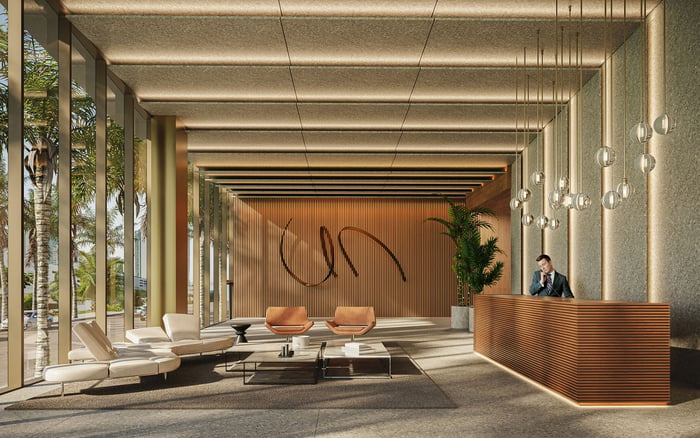
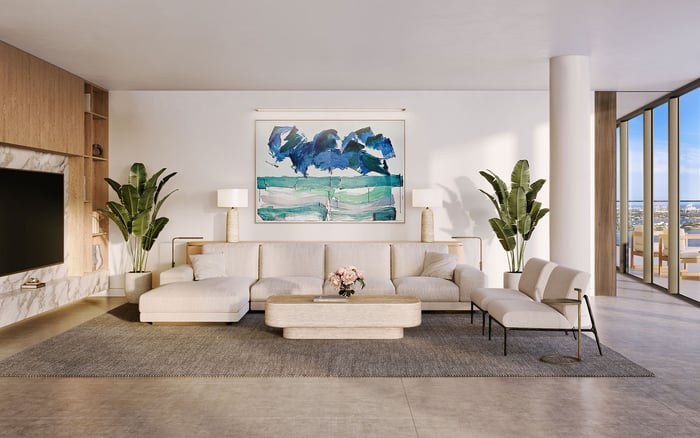
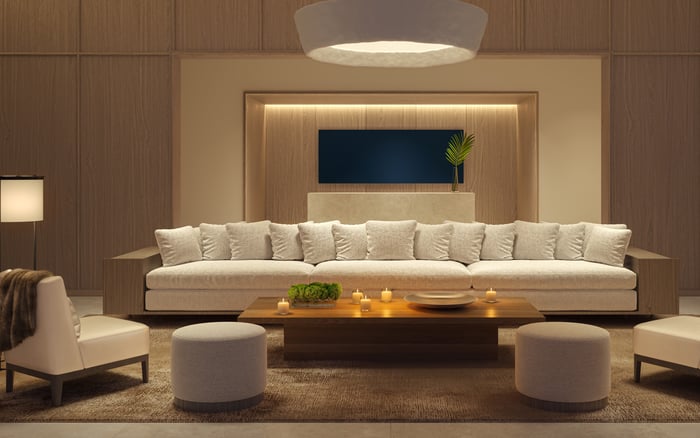
A collector’s purchase framework for Lilli Miami Edgewater, balancing waterfront daylight with glare control, collection-specific exposure limits, and the permissions needed to implement an art-conscious interior.
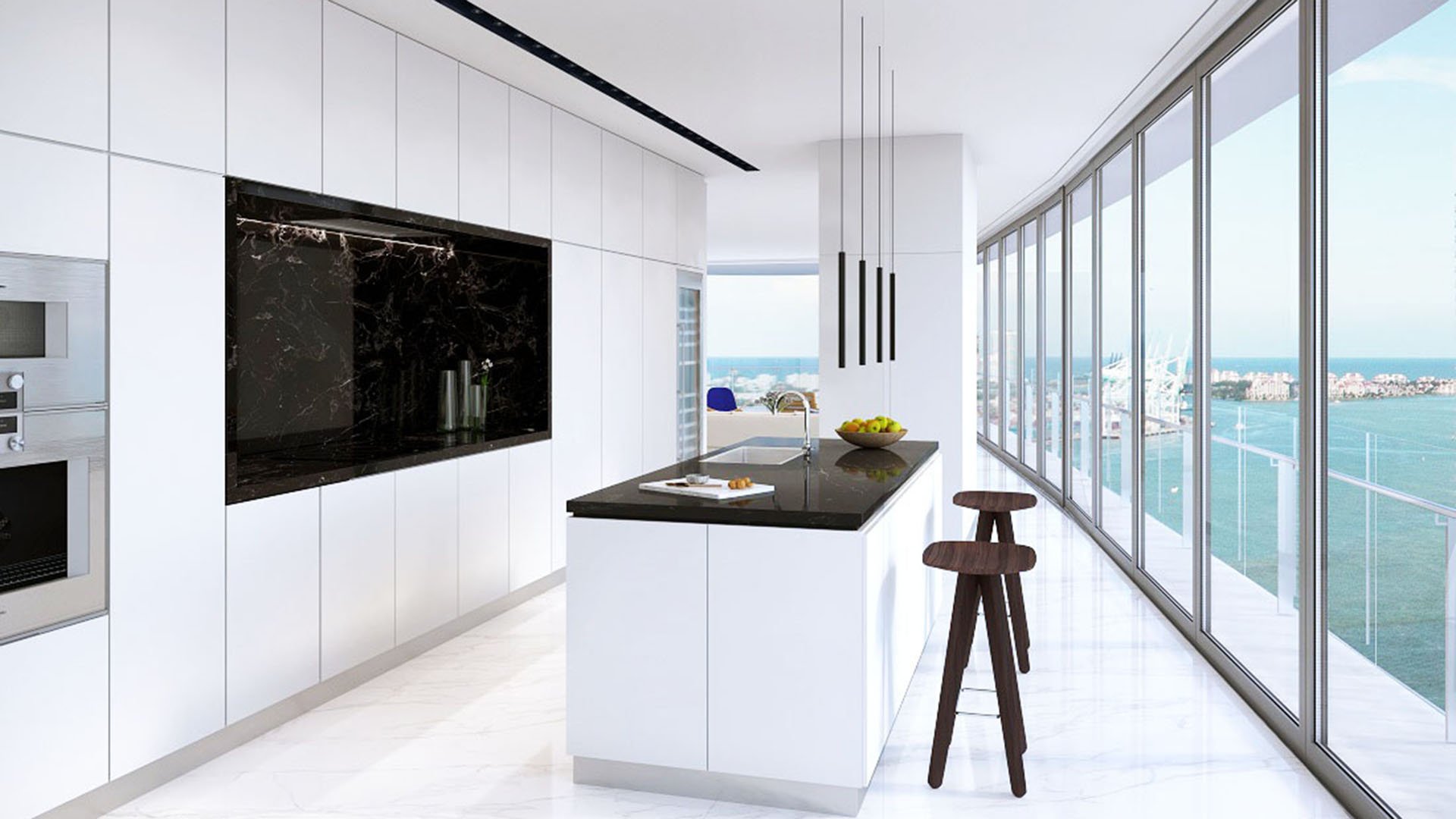
The appeal of a waterfront residence is its openness to light. For an art collector, that openness calls for a second design brief: not simply where a painting looks best, but whether its display conditions can be controlled without compromising daily life.
Lilli Miami Edgewater is planned as a 53-story condominium with 117 waterfront residences at 717 NE 27th Street. The project pairs OKO Group with Adrian Smith + Gordon Gill Architecture as designer and ODP Architects as architect of record. Plans call for floor-to-ceiling windows and balconies in every residence, with views toward Biscayne Bay, Miami Beach, and the Miami skyline.
Those qualities establish the architectural proposition, not an art-conservation specification. Museum-grade conservation should be treated as a performance objective, not a confirmed LILLI amenity. The purchase decision should pair the desired view with a documented strategy for protecting the collection.
A room that feels comfortable to the eye is not necessarily suitable for sensitive artwork. Glare control, ultraviolet filtration, and visible-light exposure management are three distinct requirements. A successful interior must address each, rather than assume one elegant window treatment resolves all three.
Shutters, curtains, and blinds can control window glare. UV-absorbing protection may take the form of film adhered to glass or plastic sheets used as secondary glazing, subject to the residence’s technical and approval requirements. Clear UV-filtering film, however, does not prevent visible-light fading. It cannot replace an exposure plan.
Begin by eliminating direct sunlight from collection objects. Then ask a conservator to establish acceptable conditions for each work. The brief should specify what must be controlled at the artwork, rather than rely on a general description of the glass or the apparent softness of the room’s daylight.
Request the proposed residence’s orientation, window dimensions, balcony geometry, and glazing specifications. Obtain written rules governing window films, shade tracks, motorization, and electrical connections. Treat permissions and technical performance as separate questions: even a desirable intervention needs an approved path to installation.
The documentation should distinguish what comes with the residence from what must be designed, approved, and installed independently. Do not assume that an expansive glazed elevation includes a developer-provided conservation package, or that every glazing surface can accept the same treatment.
If Aria Reserve Miami is also on an Edgewater shortlist, request the same documents for the specific residence under consideration. This is a framework for comparison, not a claim that the projects share glazing, permissions, or conservation capabilities. Compare the ability to meet the collection’s requirements, not just the view presented in marketing imagery.
LILLI’s curvilinear form, rounded corners, expansive glazing, and terraces are central to its architectural presentation. They do not establish the daylight or glare performance of an individual residence. A balcony alone is not evidence of adequate shading.
Commission seasonal daylight and glare analysis using the intended unit’s geometry and proposed art locations. Ask the specialist to assess potential reflections from the bay and neighboring buildings, rather than treat them as measured conditions. The analysis should distinguish direct sun from other daylight exposure and test the proposed shading strategy.
Include the places where owners will sit, read, entertain, and view art. Request separate assessments of seated-eye glare and illuminance at display surfaces. Evaluate the scheme with shades both open and deployed, so the buyer understands how the protected interior will feel in daily use.
Approximately 50 lux is a conservation display benchmark for light-sensitive materials. Approximately 150 lux is a benchmark for oil and acrylic paintings and other moderately sensitive objects. Neither figure promises damage-free display. A conservator should determine how each work’s material and condition affect its requirements.
Duration matters as much as the selected illuminance. Cumulative exposure is expressed in lux-hours, calculated by multiplying illuminance by exposure duration. Annual guidance includes maximum exposures of 100,000 lux-hours for very sensitive objects and 450,000 lux-hours for moderately sensitive objects. These are planning benchmarks, not universal allowances for every collection.
For illustration, 50 lux for eight hours a day over 250 days equals 100,000 lux-hours. This is not a recommended schedule. The calculation demonstrates why even restrained illumination requires attention to display hours, including both daylight and artificial lighting.
For paintings, the UV objective is ideally zero. One conservation benchmark caps unavoidable exposure at 75 µW/lm, while stricter guidance for watercolors and other highly light-sensitive paints specifies a maximum of 30 µW/lumen alongside 50 lux. These differing limits should not be blended into a single promise of safety. Have the conservator select the appropriate criteria for the actual works.
Translate the conservation brief into a coordinated interior proposal. Ask the designer, lighting specialist, and conservator to evaluate display walls together, including whether selected works need a location with more controllable light. Preserve the view where possible, but do not make every artwork compete with the brightest part of the room.
Window protection should combine the required UV control with an effective shade strategy, including closure during the most intense daylight. Specify how the household will operate that strategy. If motorization is proposed, confirm its permissions and electrical requirements before treating it as part of the finished design.
For buyers also considering EDITION Edgewater, the same question applies: can the chosen residence accommodate both the collection’s exposure budget and the owner’s preferred daily routine? The answer requires a unit-specific assessment, not an assumption based on a project name or architectural image.
Before committing, consolidate the documentation, analysis, permissions, and proposed interventions into one purchase brief. Identify which decisions depend on confirmation and which can be resolved through the interior design. The objective is a clear understanding of what the residence must deliver for the collection.
Before installing valuable works, verify proposed display locations with light and UV measurements, alongside temperature and humidity monitoring. Continue checking conditions against the conservator’s requirements; an initial reading is not a permanent result. The most convincing art-conscious residence is not simply dimmer. It offers deliberate control over where, when, and how light reaches the collection.
For a considered approach to selecting a South Florida residence around your collection, explore MILLION.
If branded residences are on your mind — as a home or as an allocation — we would be glad to share what we are seeing, privately.
Begin a quiet conversationLILLI is a planned collection of 117 waterfront residences, marketed as a 53-story condominium at 717 NE 27th Street in Miami’s Edgewater neighborhood.
No confirmed art-conservation package is established here. Treat museum-grade conservation as a performance objective that requires residence-specific design and verification.
No. Orientation, window dimensions, balcony geometry, and glazing specifications should inform a seasonal assessment of the selected residence.
No. Clear UV-filtering film does not prevent visible-light fading, so it must not substitute for controlling illuminance and exposure duration.
Approximately 50 lux is a benchmark for light-sensitive materials, while approximately 150 lux applies to oil and acrylic paintings and other moderately sensitive objects. Neither is a damage-free threshold.
Lux-hours equal illuminance multiplied by exposure duration. For example, 50 lux for eight hours a day over 250 days produces 100,000 lux-hours.
Guidance includes recommended maximum annual exposures of 100,000 lux-hours for very sensitive objects and 450,000 lux-hours for moderately sensitive objects. A conservator should determine the appropriate budget for each work.
Ideally, paintings should receive no UV radiation. Guidance includes a 75 µW/lm ceiling for unavoidable exposure and a stricter 30 µW/lumen maximum for watercolors and other highly light-sensitive paints.
Request written rules governing films, shade tracks, motorization, and electrical connections. Confirm both technical suitability and installation permissions before relying on a proposed treatment.
Verify proposed display locations with light and UV measurements, plus temperature and humidity monitoring. Check those conditions against collection-specific requirements established by a conservator.