Public access beside a luxury condominium is a document question before it is a lifestyle question. Miami Beach examples show why buyers should distinguish Beachwalk easements, sidewalk rights-of-way, and historical design proposals before drawing conclusions about privacy or control.
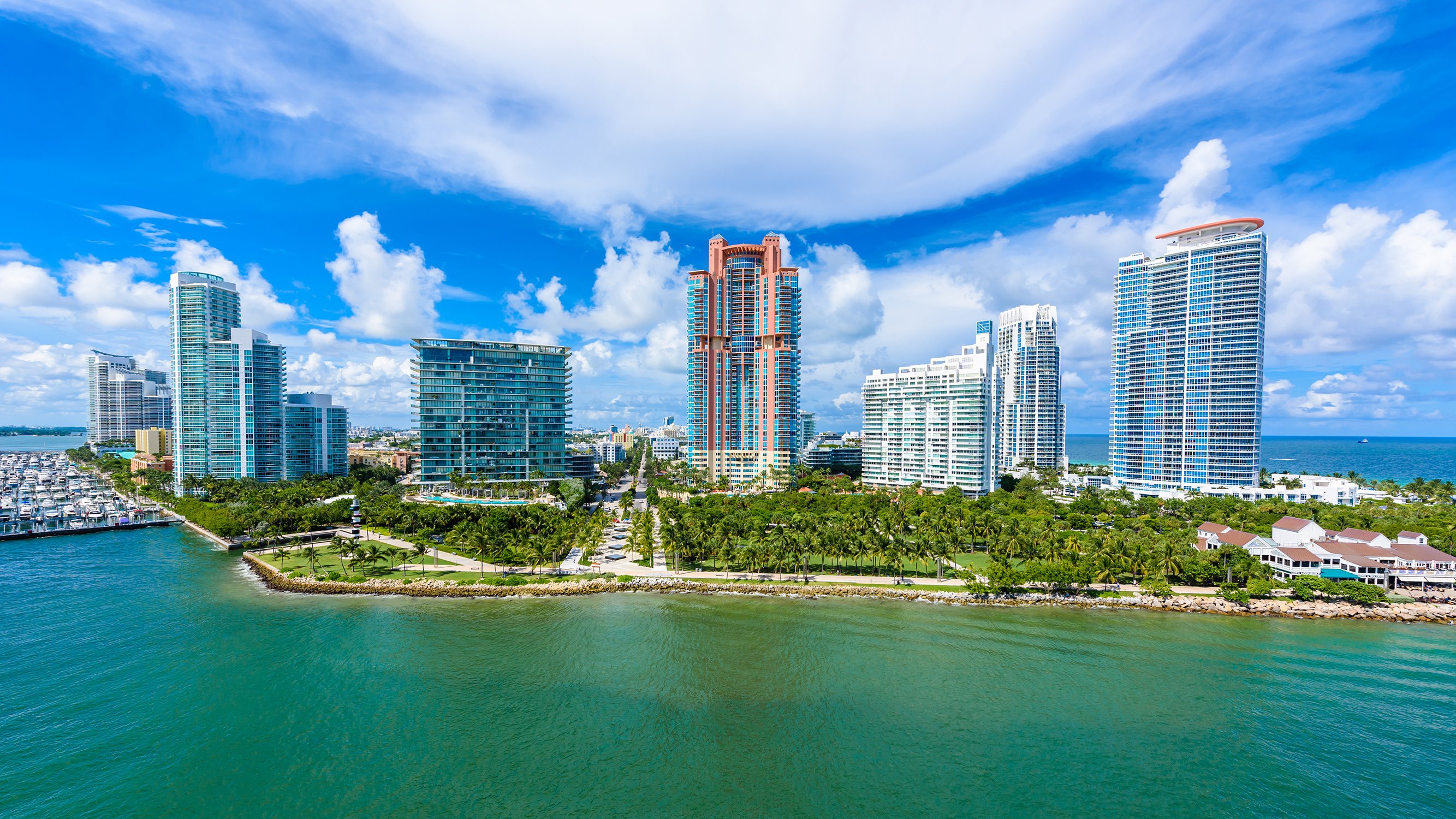
A path beside a luxury condominium can look like a landscape detail: a ribbon of paving, a planted edge, a route toward the water. For a buyer, its significance lies in the documents that define it. Before deciding whether that corridor complements the residence or complicates expectations of privacy, establish who may use it, for what purpose, and within which boundaries.
Miami Beach offers several distinct examples: easements accepted for the public Beachwalk, an access-and-use agreement involving Merl Manor Condominium Association, a sidewalk-and-utility strip at 304 Ocean Drive, and a historical beach-access proposal at 5775 Collins Avenue. Each raises a different question. They are not interchangeable evidence of public rights across residential land.
The central distinction is simple: physical appearance does not establish legal scope. A landscaped passage may be subject to specific rights, while an approved agreement may still require recordation before taking effect.
Miami Beach accepted easements at 101, 121, and 161 South Ocean Drive for construction and maintenance of the public Beachwalk bicycle and pedestrian path. Granting owners include Heafey/Bentley Management, LLC at 101 South Ocean Drive and South Of Fifth Condominium Association at 121 South Ocean Drive.
These easements serve a defined public-path purpose. They do not establish that every nearby entrance, garden, or route toward the sand is open on identical terms. The buyer’s task is to locate the easement on the survey and understand its relationship to residential circulation.
For someone considering Continuum on South Beach, the same document-first approach applies when evaluating the surrounding pedestrian environment. This is a due-diligence principle, not a statement that the project is subject to any agreement discussed here. Proximity cannot substitute for a property-specific title review.
The Merl Manor Condominium Association agreement grants a perpetual, non-exclusive access-and-use easement across legally described property. Authorized users include the city, its successors and assigns, employees, agents, contractors, representatives, and licensees in connection with the easement.
Read those provisions together. Duration establishes how long the right continues; the authorized-user language establishes who may exercise rights under the agreement. Neither should be detached from the permitted purposes and legal description to support a broader conclusion about unrestricted public beach access.
Amendments, releases, or termination require a recordable instrument executed by the parties and Miami Beach City Commission approval. That requirement matters when a buyer hears that a board could simply close or relocate a corridor later.
An association’s willingness to make a change is not the same as its legal authority to do so. Ask counsel to identify the applicable approval mechanism before assigning value to assurances about future gates, landscaping, or rerouting. The Merl Manor provisions illustrate why unilateral control should never be assumed.
At 304 Ocean Drive, Miami Beach Resolution 2023-32528 authorized a perpetual, non-revocable right-of-way easement agreement with Ocean Park South Beach Condominium Association. The agreement concerns a three-foot strip for sidewalk purposes and city utilities.
Permitted uses include sidewalks, landscaping, lighting, signage, utilities, drainage, and related maintenance. These should not be equated with unrestricted public passage through the property to the beach. The strip’s narrow dimensions are informative, but its permitted purposes remain essential to understanding what the agreement allows.
Timing also matters. The agreement becomes effective upon recordation in the Miami-Dade County Public Records. Authorization and effectiveness are therefore separate questions. The resolution and agreement terms alone do not establish when recordation occurred.
For a purchase review, request the recorded instrument rather than relying solely on an approval document. Have counsel confirm its status, exhibits, and any subsequent amendments before treating the corridor’s legal position as settled.
The historical example at the Marlborough House property, 5775 Collins Avenue, concerns design rather than a confirmed recorded easement. Revised luxury-condominium plans described in October 2017 included public beach access beside the proposed building, with a linear park incorporating a 15-foot-wide path, lighting, benches, and landscaping.
The proposal illustrates how public access can shape a project’s ground-level design. It does not establish current conditions, completion of those features, or the existence of a recorded easement. A historical plan cannot support a present-day legal conclusion without the intervening documents.
When comparing 57 Ocean Miami Beach and The Perigon Miami Beach, apply that distinction to each property independently. Request the relevant recorded rights and approved plans rather than treating these historical examples as evidence of either project’s access arrangements. Architecture and legal access deserve parallel review, not conflation.
Start with the complete recorded easement, all amendments, the title commitment, a current survey, the condominium declaration, and relevant municipal approvals. Ask counsel to reconcile the legal description with the corridor visible on site. A drawing is most useful when its boundaries can be tied to the operative instrument.
Next, establish permitted users and purposes, maintenance obligations, and any documented access controls. Ask who is responsible for the path, planting, lighting, drainage, and repairs where those elements are covered. Do not assume responsibility follows the nearest building entrance or the apparent property edge.
Finally, separate existing rights from proposed changes. If a future closure, relocation, or redesign matters to the purchase decision, identify the required approvals and recordable documents. Treat operating hours as a question to verify, not a feature to infer from signage, a rendering, or an informal description.
Second-home buyers may weigh an adjacent public route differently from full-time residents, but personal preference is not evidence of a market effect. These examples do not quantify changes in resale prices, noise, privacy, or security. Nor do they establish operating hours for a particular corridor.
The disciplined conclusion is neither that public access diminishes luxury nor that thoughtful landscaping resolves every concern. A residence should be evaluated against the rights and obligations that actually apply. Understand the boundary, confirm the permitted use, and make the lifestyle decision with those facts in view.
For a considered approach to Miami Beach residential choices, explore MILLION.
If branded residences are on your mind — as a home or as an allocation — we would be glad to share what we are seeing, privately.
Begin a quiet conversationNo. Its appearance does not establish legal rights; the applicable instrument must be reviewed for boundaries, permitted users, and purposes.
Miami Beach accepted easements at 101, 121, and 161 South Ocean Drive for construction and maintenance of the public Beachwalk bicycle and pedestrian path.
It grants a perpetual, non-exclusive access-and-use easement across legally described property. Its scope must be understood from the agreement’s purposes and authorized-user provisions.
Amendments, releases, or termination require a recordable instrument executed by the parties and Miami Beach City Commission approval. A board should not assume unilateral authority.
It concerns a three-foot strip for sidewalk purposes and city utilities, including specified improvements and maintenance. It should not be treated as unrestricted public access through the property to the beach.
No. The agreement states that it becomes effective upon recordation, and the authorization alone does not establish when that occurred.
Revised plans included public beach access beside the proposed building through a linear park with a 15-foot-wide path, lighting, benches, and landscaping. Those historical plans do not confirm completion or a recorded easement.
Request the complete recorded easement and amendments, title commitment, survey, condominium declaration, and municipal approvals. Counsel should reconcile their boundaries, uses, obligations, and approval requirements.
No. Operating hours for a particular corridor require property-specific verification rather than assumptions based on these examples.
These examples do not quantify resale effects or establish impacts on noise, privacy, or security. Evaluate the applicable rights and physical setting without assuming a financial outcome.