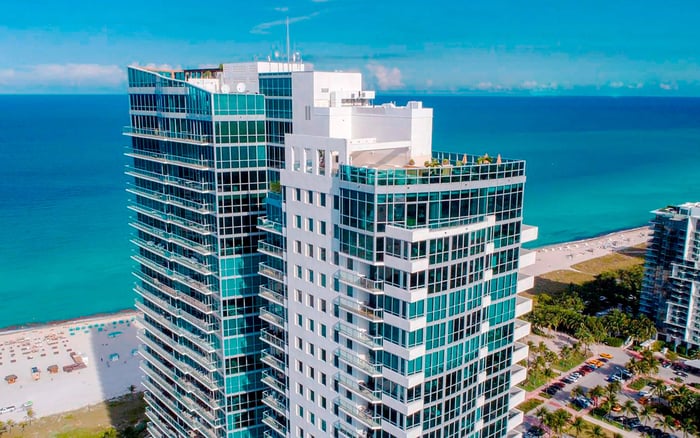
For private-aviation households, a Miami Beach residence needs more than attentive service. Written authority, clear escalation procedures, and independent evacuation arrangements should anchor diligence before storms, water intrusion, or medical emergencies test the plan.

For a private-aviation household, the decisive residence-management question is not whether someone will answer the telephone. It is whether the right person can act while the owner is airborne, overseas, or unreachable. In Miami Beach, that distinction deserves the same attention as architecture, privacy, and arrival logistics.
A polished service presentation does not establish permission to enter a residence, engage a contractor, approve emergency spending, or communicate medical information. Review those powers in the applicable agreements and building rules, with clear boundaries between the owner's representative, building management, association, and outside vendors.
For buyers considering The Perigon Miami Beach, the essential inquiry concerns documents, not impressions: what authority would apply to this particular residence, and who would exercise it? A project name should never substitute for that review.
All of Miami Beach is a hurricane evacuation zone because of storm-surge exposure. A major storm may trigger mandatory evacuation, and departure planning should allow for leaving before a formal order when conditions warrant. There are no hurricane shelters within the city or nearby coastal communities. A household plan should therefore identify mainland lodging or shelters established by Miami-Dade County and the American Red Cross.
Residence management and public authority have distinct roles. A manager's operational responsibilities do not replace evacuation directives. Likewise, if the Building Official deems a storm-damaged home uninhabitable, occupants must leave until proper repairs are completed. An owner's preference to return cannot override that restriction.
Oceanfront appeal should be evaluated alongside these practical boundaries. When considering Faena House Miami Beach, ask how the residence-specific plan distinguishes securing property, assisting departure, and communicating occupancy restrictions. These are diligence questions, not representations about that property's services.
Second-home ownership makes delegated authority especially important. Ask counsel and the proposed manager to reconcile the management agreement, applicable condominium rules, access permissions, and insurance provisions. The objective is a usable decision framework, not a broad assurance that emergencies will be handled.
Request written answers to five questions:
Who may enter the residence when the owner cannot be reached, and under what conditions?
What spending may be authorized without additional approval, and who approves anything beyond that limit?
Who is the alternate decision-maker if the primary representative is unavailable?
Which vendors may be engaged, and what documentation should accompany their work?
Who communicates with the association, insurer, household staff, and owner's advisers?
Any spending threshold should be negotiated and documented, not assumed. Access permission must also be distinguished from technical competence: authorization to enter does not establish authorization or qualification to perform repairs.
Request a sample incident record showing how decisions, attempted contacts, photographs, invoices, and approvals would be preserved. The purpose is to make actions traceable when several people are working remotely.
Waterfront ownership calls for a specific water-intrusion protocol. Start with a hypothetical: a leak is discovered while the owner is in flight, and the first contact does not answer. Ask the team to walk through the next steps, including safe access, escalation to appropriate personnel, permitted mitigation, and the point at which additional approval becomes necessary.
Storm preparation should also address drainage. Roof overflow drainage, particularly on flat roofs, should be inspected, drains cleared, and gutters and downspouts secured. Blockages can cause pooling and extensive damage. Buyers should establish which tasks concern common property and which fall within their own maintenance arrangements.
At Setai Residences Miami Beach, apply the same residence-specific questions rather than assuming the service setting answers them. Ask who receives a water-intrusion notification, who can inspect, and how responsibility is handed off.
Flooding can be reported through the Miami Beach e-Gov app or the Public Works Control Room at 305-673-7625. Free technical assistance on reducing flood hazards is available through the Building Department at 305-673-7610. Neither contact replaces a residence's internal response plan.
A private flight should be one component of a departure plan, not its sole foundation. Confirm directly with the aircraft operator how departure decisions, communications, and alternative arrangements would be handled. Do not assume the residence manager has authority over aviation decisions or that an intended itinerary will remain available.
Build a parallel mainland plan. Specify who arranges ground transportation, where household members will go, and how instructions reach guests or staff if the principal is unavailable. Ask management when property-securing tasks would stop so personnel can address their own safety and evacuation obligations.
For a purchase at The Ritz-Carlton Residences® Miami Beach, the same distinction matters: evaluate residence services separately from the aircraft operator's procedures and public evacuation requirements. Confirm each handoff rather than treating them as one continuous service.
Text MBALERT to 888777 for local traffic and hazard updates. Assign someone to monitor those messages and relay relevant changes, without making one person's availability the plan's weak point.
A medical emergency should go directly to 911, not first through a residence manager or concierge. Clarify management's supporting role in advance: ask how staff would help responders locate the residence, facilitate authorized access, and notify designated contacts without delaying the emergency call.
For residents requiring specialized transportation or unable to evacuate independently because of medical needs, pre-registration with Miami-Dade County's Emergency Evacuation Assistance Program is required. Registration can be initiated by calling 311. Treat this as advance planning, not a substitute for calling 911 during an immediate medical emergency.
Review emergency contacts and any proposed information-sharing permissions with appropriate advisers. The plan should specify what staff may share and with whom, rather than assume a service relationship grants unrestricted discretion.
The final diligence exercise is a tabletop walkthrough covering departure, an unattended leak, a medical emergency, and return after storm damage. Ask each participant to identify their authority, backup, and stopping point. Written plans should make those boundaries easier to follow under pressure.
Emergency building permits may be issued when necessary to expedite storm-damage repairs, but that possibility is not permission to bypass applicable occupancy restrictions. Confirm who coordinates repairs, tracks required approvals, and communicates when a return is appropriate.
The strongest ownership arrangement is not an unlimited promise. It is a precise allocation of responsibility that remains workable when the owner is elsewhere.
For a discreet conversation about Miami Beach ownership priorities, connect with MILLION.
If branded residences are on your mind — as a home or as an allocation — we would be glad to share what we are seeing, privately.
Begin a quiet conversationYes. All of Miami Beach is a hurricane evacuation zone because of storm-surge exposure, and a major storm may trigger mandatory evacuation.
Departure planning should allow for leaving before a formal order when conditions warrant, rather than waiting until departure becomes difficult.
There are no hurricane shelters within the city or nearby coastal communities. Plan for mainland lodging or shelters established by Miami-Dade County and the American Red Cross.
Do not assume that authority exists. Verify written spending permissions, approval limits, and backup decision-makers in the applicable agreements.
Confirm who may enter, under what conditions, and how entry and subsequent decisions will be documented. Entry permission should be distinguished from authority to undertake repairs.
Use the Miami Beach e-Gov app or call the Public Works Control Room at 305-673-7625.
No; call 911 first. Residence staff should provide supporting assistance rather than serve as a required intermediary.
Residents needing specialized transportation or unable to evacuate independently because of medical needs must pre-register with Miami-Dade County's Emergency Evacuation Assistance Program. Call 311 to initiate registration.
Occupants must leave and remain out until proper repairs are completed if the Building Official deems the home uninhabitable. A manager's reassurance does not override that restriction.
It should not be the sole foundation of departure planning. Verify arrangements with the aircraft operator and maintain a separate plan for mainland transportation and accommodation.