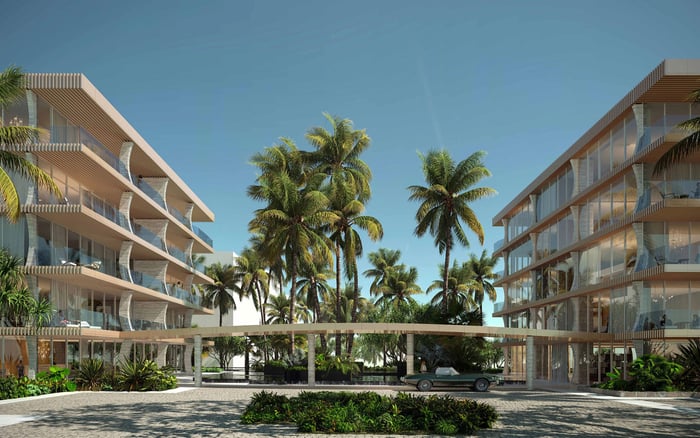
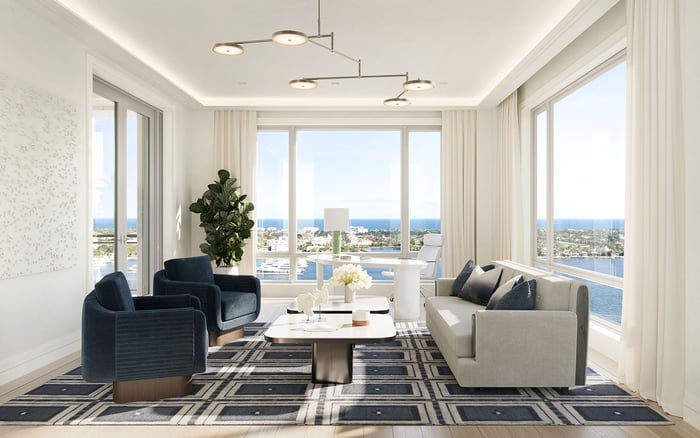
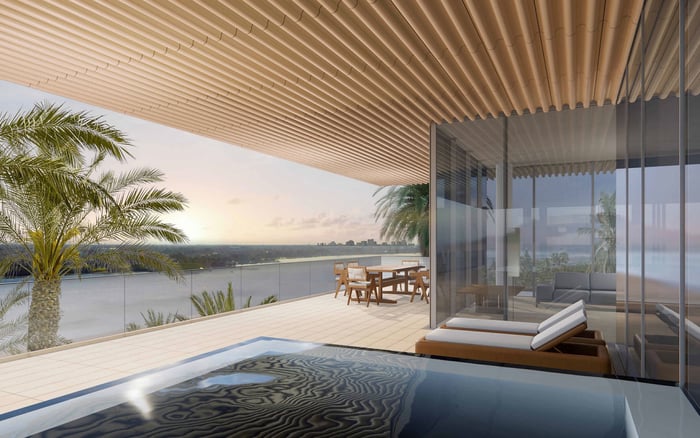
At South Flagler House, an extensive culinary and social amenity program elevates the ownership proposition. Yet private dining rooms, catering infrastructure and wine spaces are only as useful as the rules governing access, reservations, vendors, fees and events. Buyers should secure those operating details in writing before their purchase becomes non-cancelable.

At 1355 South Flagler Drive, South Flagler House West Palm Beach positions dining as a meaningful component of residential life. The development is planned with approximately 50,000 square feet of amenities spanning wellness, leisure, dining and resident services. Its culinary offering includes private dining spaces and a bar for residents and their guests.
The physical program is notably layered: two private dining rooms, a resident dining room and an outdoor dining patio, along with indoor and outdoor dining, a commercial kitchen, catering kitchens, a cocktail lounge and wine storage. The program also encompasses three culinary concepts. This is purpose-built infrastructure, not a token multipurpose room.
Yet infrastructure alone does not establish an owner's practical rights. A beautiful private dining room may have limited value if it cannot be reserved on desired dates, requires an approved caterer, carries an undisclosed minimum or closes before an evening would naturally conclude. For a buyer who entertains regularly, those operating details belong in the acquisition review.
The enduring amenity is not simply the room, but the owner's dependable right to use it.
The first question is what “private” means. Buyers should establish whether a room can be reserved exclusively, its seated and standing capacity, permitted hours, guest limits and any cap on booking frequency per residence. They should also ask whether adjacent dining areas remain open to other residents during an event and whether staff or building management may enter throughout the reservation.
Room rental fees, food-and-beverage minimums, mandatory staffing charges, gratuity rules and event-duration limits remain undisclosed. Those omissions are not evidence that charges or restrictions will apply; they simply leave economically important questions unresolved. A written fee schedule and amenity reservation policy can turn a general promise into a reliable ownership expectation.
This level of inquiry is relevant across the West Palm Beach market, whether a buyer is considering South Flagler Drive or evaluating Maison D'Or South Flagler. Private-club language should prompt closer diligence, not assumptions of unrestricted access.
South Florida entertaining is highly seasonal. The most desirable evenings may cluster around holidays and periods of heavier resident use-precisely when private dining becomes most valuable. The operating terms do not disclose how far in advance dining spaces may be booked, whether holiday blackouts apply or whether building and restaurant functions receive priority.
A buyer should request the opening date and time for each reservation window, any lottery or priority system, wait-list procedures and the number of future bookings one residence may hold. The same inquiry should address cancellation deadlines, penalties, deposits and whether a late cancellation affects future privileges. If owners and building-sponsored events compete for the same room, that hierarchy should be explicit.
Peak-season access should also be tested against the buyer's own calendar. Someone who expects an annual family dinner needs a different assurance from an owner planning occasional weekday lunches. Lifestyle value is personal, but the underlying reservation mechanism should be objective and documented.
A catering pantry, catering kitchen or commercial kitchen confirms that food can be staged or supported. It does not, by itself, confirm that a resident's private chef may cook there. The operating terms do not state whether outside caterers or chefs may enter back-of-house spaces, nor do they define permitted cooking activities.
Written vendor rules should address licensing, insurance, registration, approved-vendor requirements, staff supervision and delivery routes. Buyers should distinguish among full cooking, reheating, finishing and plating delivered food. They should also confirm refrigeration access, advance delivery timing, waste removal and responsibility for cleaning or damage.
These details affect both creative freedom and cost. A mandatory in-house service model can offer consistency, while an outside-vendor policy can provide flexibility. Neither is inherently superior, but an investment decision should reflect the model that will actually govern ownership. Buyers comparing hospitality-oriented residences such as Mandarin Oriental Residences, West Palm Beach should apply the same distinction between an amenity's presence and its operating terms.
The amenity program extends across three full floors, placing private dining among lounges, co-working areas, children's spaces, fitness facilities and spa treatment rooms. Shared circulation makes event rules consequential. Delivery schedules, guest arrivals, event traffic, sound and quiet hours can shape an evening long before the menu is considered.
Buyers should ask about music, amplified sound, decorations, candles, photography, security, guest registration and maximum event duration. They should clarify whether outside planners, florists and musicians are treated as vendors, and whether service elevators or loading areas require advance scheduling. If an event runs late, the rules should specify overtime charges and staff authority to end it.
Waterfront living often depends on a carefully managed balance between sociability and privacy. Restrictions can preserve residential calm, but they can also narrow a host's options. The point is not to resist governance, but to understand whether the building's operating culture matches the buyer's intended use.
Wine storage or tasting space beside private dining creates an appealing setting for collectors, but alcohol service often carries separate controls. Buyers planning wine-focused occasions should request rules for outside bottles, corkage, bartender requirements, bottle storage and access to wine rooms.
The review should identify who may retrieve stored bottles, whether alcohol can move between amenity areas and whether service must stop at a fixed time. It should also clarify whether the building's dining operator has exclusive service rights. Bars and wine rooms can be defining social assets, yet their value depends on access and service protocols as much as design.
Before a contract becomes non-cancelable, request the current declaration, bylaws, rules and regulations, amenity reservation policy, vendor manual, fee schedule and any food-and-beverage operating agreement. Counsel should also review the association's power to amend fees, hours, booking priorities and vendor policies after closing.
Written answers should cover high-season booking windows, holiday blackouts, cancellation penalties, guest registration and security requirements. Ask which document controls if sales materials, staff descriptions and formal rules differ. For a pre-construction purchase, buyers should also identify which policies remain provisional and when final operating rules are expected.
A disciplined comparison can include other Palm Beach area offerings, such as The Ritz-Carlton Residences® West Palm Beach, but the objective is not to compare room counts in isolation. It is to compare actual reservation rights, service obligations, fees and the authority to change them.
For the right owner, private dining can extend the residence into a polished setting for family celebrations, business dinners and intimate evenings. South Flagler House provides a substantial culinary framework. The remaining task is to establish, in writing, how that framework will function when demand is highest and the occasion matters most.
For discreet guidance on evaluating South Florida luxury residences and their governing details, connect with MILLION.
If branded residences are on your mind — as a home or as an allocation — we would be glad to share what we are seeing, privately.
Begin a quiet conversationThe room's existence does not establish exclusive access, booking priority, permitted hours or total cost. Written rules show how the amenity can actually be used.
Not necessarily. Buyers should confirm whether outside chefs may enter, cook, reheat or only plate food in designated areas.
Request room rental charges, food-and-beverage minimums, staffing costs, gratuities, deposits, overtime fees and cancellation penalties.
Confirm advance booking windows, holiday blackouts, priority rules, wait-list procedures and limits on future reservations per residence.
No. Buyers should obtain written confirmation of exclusive use and determine whether adjacent spaces remain open during the event.
Review licensing, insurance, registration, approved-vendor status, supervision, delivery routes, service-elevator scheduling and cleanup responsibilities.
Guest limits, permitted hours, music rules, quiet hours, decorations, security and maximum duration can materially shape an event.
They should confirm outside-alcohol rules, corkage, bottle storage, bartender requirements, retrieval procedures and wine-room access.
Request the declaration, bylaws, rules, reservation policy, vendor manual, fee schedule and any food-and-beverage operating agreement.
They may if the governing documents grant amendment authority. Counsel should review who can change fees, hours, priorities and vendor policies.