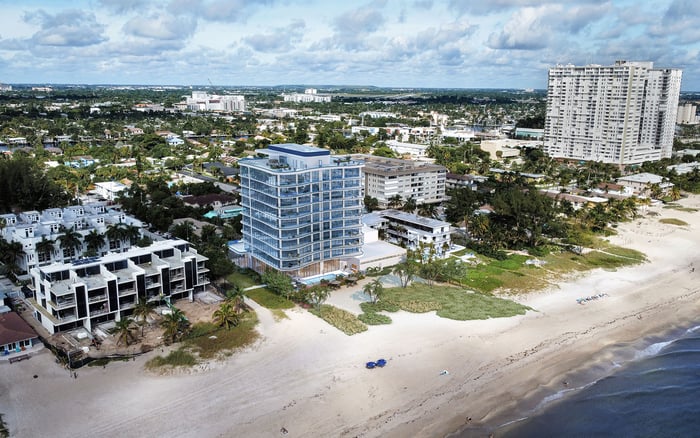
A disciplined residence strategy for Frankfurt buyers aligning euro conversion, proof of funds, Florida closing, ownership, FIRPTA, and potential homestead eligibility.

A move from Frankfurt to Pompano Beach is not simply a property search followed by a wire. It requires synchronizing three clocks: the purchase contract, the euro-to-dollar conversion, and the buyer’s residence plan. Each involves different decision-makers, documentary requirements, and consequences. A disciplined acquisition strategy places all three on one calendar before the contract is signed.
The contract dictates when deposits and closing funds must arrive. The currency plan determines when euros become available as cleared U.S. dollars. The residence plan determines whether ownership and genuine occupancy are established in time for any intended Florida homestead application. None of these clocks should run independently.
The strongest strategy coordinates the contract, the currency path, and the residence plan on one calendar.
For an oceanfront search, buyers might compare Armani Casa Residences Pompano Beach with other local opportunities while simultaneously testing the operational path to closing. The residence may inspire the move, but execution protects it.
Foreign-exchange timing should begin with certainty about obligations, not predictions about where the euro-dollar rate may move. Before signing, identify every contractual payment, its currency, its recipient, and the date by which cleared funds must be available. Then coordinate the conversion with the German bank, the U.S. bank if one is involved, and the Florida title or escrow company.
There is no universal international-wire deadline or standard foreign-exchange product suitable for every purchaser. Instructions must therefore be transaction-specific. Buyers should request current funding instructions directly from the closing party and independently verify them through a trusted contact before initiating a transfer. Any currency-conversion arrangement should be reviewed with regulated banking, tax, and legal advisers familiar with the buyer’s circumstances.
This approach separates two decisions that are often conflated: selecting an acceptable exchange rate and ensuring that dollars reach escrow by the contractual deadline. A buyer can preserve flexibility around conversion only after the closing calendar, account access, compliance review, and transfer authority are organized.
Proof of funds is best treated as part of transaction preparation, not as a last-minute attachment. No single format applies to every Pompano Beach acquisition. A seller, developer, title company, bank, or escrow provider may impose its own requirements, so the buyer should establish what must be shown, how recently it must be dated, whose name must appear, and whether translated or supplemental records are required.
The objective is a coherent financial narrative. The purchaser named in the contract, the account holder supplying the money, and the intended title holder should align logically. If they differ, advisers should address the distinction before submission or funding. This is especially important when family capital, a trust, or an entity is contemplated.
The principle is simple: documentary readiness should precede negotiating urgency. A buyer comparing Ocean 580 Pompano Beach and W Pompano Beach Hotel & Residences can keep the property conversation elegant while handling financial documentation privately and in parallel.
One person should maintain the master calendar, with each specialist owning a defined workstream. The real-estate adviser tracks contractual dates. The title or escrow company provides transaction-specific funding instructions and closing requirements. German and U.S. banks coordinate account access, conversion, and transfer execution. Legal and tax counsel review ownership, residence, and cross-border consequences.
Before funds move, confirm the payee, destination account, transfer reference, amount, currency, and procedure for acknowledging receipt. Never rely on assumptions from a previous purchase. A practical internal target should allow time to resolve a compliance question or banking issue before the contractual deadline, but the appropriate lead time must be established with the institutions handling the transfer.
For a high-value investment, the final walkthrough, signing arrangements, funds, title structure, and occupancy plan should converge rather than proceed as unrelated tasks. A residence such as The Ritz-Carlton Residences® Pompano Beach may anchor the search, yet the true luxury of closing is the absence of preventable friction.
Florida’s homestead exemption can reduce the taxable value of a qualifying primary residence by as much as $50,000. Eligibility generally requires legal or beneficial title and good-faith use of the property as the owner’s permanent residence as of January 1. The owner generally files Form DR-501 with the county property appraiser by March 1.
Closing and genuinely occupying the home before January 1 may position a qualified buyer for the tax year beginning that January. A fourth-quarter closing can allow time to establish occupancy and supporting Florida documentation, but the deed and closing date do not independently prove permanent residence. Physical presence on January 1 is not strictly required, although the property must already be the owner’s residence and homestead.
Permanent residence means living at the property with a present intention to remain indefinitely and no present intention to move. Evidence may include a Florida driver’s license or identification card, vehicle registration, voter registration when applicable, and a declaration of domicile. Local filing and documentation procedures should be confirmed directly before relying on a timetable.
Immigration residence, U.S. income-tax residence, German tax residence, and Florida homestead residence require separate analyses. Purchasing a condominium does not establish permanent residence. A person admitted under a temporary visa cannot satisfy Florida’s permanent-residence requirement for the homestead exemption, so immigration status should be reviewed before homestead benefits enter the financial plan.
Neither an applicant nor the applicant’s spouse may receive another property exemption that depends on residence. A continuing German or other non-Florida residence-based tax benefit may conflict with the Florida permanent-residence position and should be examined before filing. Evidence that a competing exemption has ended may be required.
This distinction matters for a second-home strategy. Homestead eligibility can end if the residence ceases to be the owner’s permanent home, the owner ceases to be a permanent Florida resident, or the unit is rented. Lifestyle intention and legal position must remain aligned after closing.
Florida recognizes legal title and beneficial title in equity for homestead purposes. Even so, a proposed trust or entity should be reviewed for compatibility before closing rather than corrected afterward. The preferred structure may involve considerations beyond homestead, and no single ownership solution fits every cross-border household.
FIRPTA is another pre-contract checkpoint. When U.S. real property is acquired from a foreign seller, the buyer generally must withhold 15% of the gross sale price, subject to applicable exceptions or reduced-withholding procedures. For the Frankfurt purchaser, it affects the acquisition only if the seller is foreign. It may also matter on a later resale if the owner remains a foreign person for U.S. tax purposes.
Begin with the intended use of the home: permanent residence, future primary residence, or discretionary retreat. Select advisers, then review immigration, tax, title, and any competing residence-based benefits. Map deposits and closing funds before obtaining current proof-of-funds and wire requirements from the parties handling the transaction. Coordinate euro conversion with the contractual calendar, verify instructions, close, and document genuine occupancy where homestead is intended.
In Pompano Beach, the most refined acquisition is not merely a successful closing. It is one that supports the buyer’s wider life, remains consistent with cross-border obligations, and creates a defensible record of every consequential decision.
For discreet guidance across South Florida’s finest residences, connect with MILLION.
If branded residences are on your mind — as a home or as an allocation — we would be glad to share what we are seeing, privately.
Begin a quiet conversationBegin before signing by mapping every deposit and closing obligation. Coordinate actual conversion and transfer timing with the banks and closing party handling the transaction.
No universal format is established here. Request current requirements directly from the relevant seller, developer, bank, title company, or escrow provider.
No. Ownership alone does not establish permanent residence, immigration eligibility, or homestead qualification.
A qualifying owner generally must hold legal or beneficial title and use the property in good faith as a permanent residence as of January 1.
The owner generally submits Form DR-501 to the county property appraiser by March 1 after establishing permanent Florida residency by January 1.
Not necessarily. The owner must already reside there and use it as a homestead, even if physically absent that day.
A person admitted under a temporary visa cannot satisfy Florida’s permanent-residence requirement for homestead exemption.
It may conflict with the permanent-residence position required in Florida. The buyer and spouse should review and resolve competing residence-based exemptions before filing.
Florida recognizes legal and beneficial title, but a proposed structure may affect homestead compatibility. Cross-border legal and tax advisers should review it before title is taken.
If the seller is foreign, the buyer generally must withhold 15% of the gross sale price, subject to exceptions or reduced-withholding procedures. FIRPTA may also matter on a later resale if the owner remains foreign for U.S. tax purposes.