A buyer-focused framework for protecting an Alana Bay Harbor Islands residence during extended absences, from proposed humidity targets and condensate inspections to remote alerts and authorized local response.
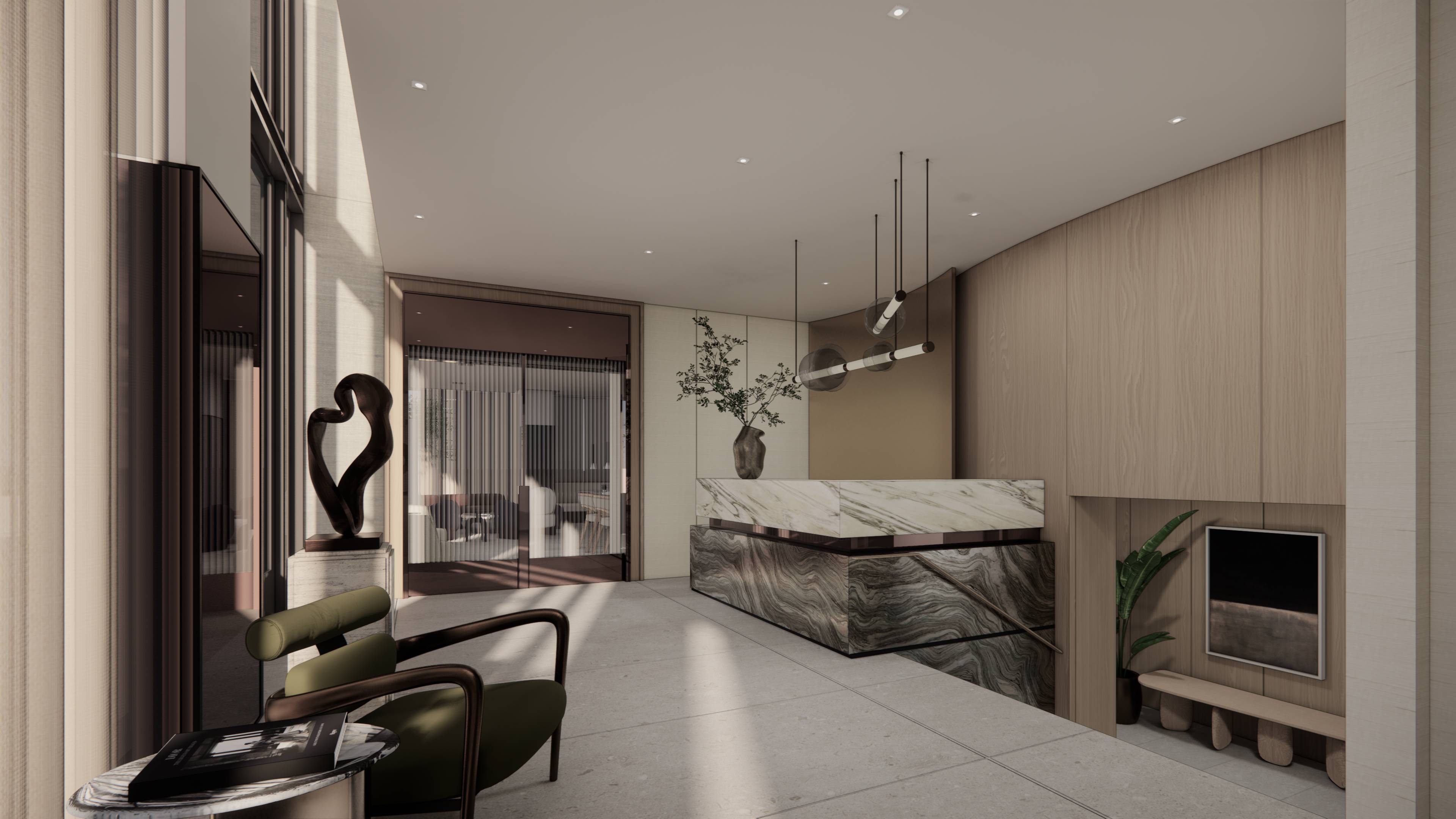
A residence should feel as carefully maintained on arrival as it did on departure. For buyers considering Alana Bay Harbor Islands, that expectation calls for due diligence beyond finishes and floor plans: how will the home manage moisture when no one is there to notice a change?
The answer combines measured indoor humidity, maintained cooling equipment, prompt attention to water problems, and someone authorized to respond. A thermostat setting alone is not a complete vacancy plan. Neither is a connected sensor without a person who can investigate its alerts.
Treat the settings discussed here as proposed operating choices, not Alana building requirements. Before an extended absence, obtain written guidance from management and a qualified HVAC professional for the particular residence. The objective is straightforward: agree on conditions the equipment can maintain, establish how they will be checked, and decide who acts when they change.
Indoor relative humidity should remain below 60%, ideally between 30% and 50% where possible. For vacancy planning, a proposed 45-50% RH target falls within that ideal range. It is a starting point for professional review, not a verified Alana requirement or a guarantee against mold.
The distinction matters: 60% is not a desirable operating target. Humidity above that level can promote mold growth. Maintaining a margin below that threshold is a sensible planning objective, but the final operating approach should reflect the residence's equipment and conditions.
Measure RH directly with a humidity gauge rather than inferring it from the thermostat. Temperature and humidity are different measurements; a temperature setting does not establish the home's actual RH.
Likewise, do not adopt 76-78°F as an established vacancy rule. Ask the HVAC professional to recommend temperature settings that support moisture control in the unit, then check actual humidity under the proposed vacancy conditions. Air conditioning and dehumidification can both help reduce indoor humidity when needed.
Humidity control cannot correct a plumbing leak or eliminate every area of condensation. A useful inspection therefore examines where water may enter, collect, or fail to drain-not just the thermostat display.
Have the HVAC professional inspect condensate-drain performance and drain-pan slope. Drip pans should remain clean, unobstructed, and properly draining. Poor drainage can leave standing water beneath cooling coils, creating a moisture source within the equipment intended to condition the home.
Ask who maintains each relevant component and how a drainage problem would be handled during an absence. Clarify those responsibilities before departure, including any coordination required between the owner, management, and an approved service vendor.
Address plumbing leaks and other water problems promptly. Where cold surfaces show condensation, seek an assessment of airflow and insulation rather than assuming a lower thermostat setting will solve the problem. Increasing air circulation or insulating cold surfaces can help prevent condensation. A satisfactory room humidity reading does not rule out localized moisture problems.
For Alana, the most useful management conversation is operational. Ask for applicable HVAC requirements, any approved thermostat range, condensate-maintenance responsibilities, vendor-access procedures, and emergency-entry authorization. Confirm whether unattended dehumidifiers and the proposed monitoring devices are permitted before purchasing or installing them.
If supplemental dehumidification is proposed, have the professional explain how collected water will be managed and how the arrangement will be checked. Permission to place a device in the residence is not a substitute for a workable operating plan.
A buyer also considering Bay Harbor Towers should request a separate set of answers there. Do not transfer a vacancy protocol from one property to another without confirming the relevant rules and equipment.
Keep the approved instructions together with service contacts and access authorizations. The goal is not paperwork for its own sake, but a clear division of responsibility when the owner is away and a decision must be made.
Direct humidity measurement is the foundation. Remote connectivity is an optional operating layer, subject to building permission and the owner's chosen service arrangement. Continuous cloud monitoring, local data logging, and a particular sensor-accuracy specification should not be treated as mandatory building standards.
Ask the installer to explain sensor placement and how readings will be checked against actual conditions. What matters is whether the arrangement helps the owner recognize a change and arrange an appropriate inspection-not simply whether an app is available.
For discussion with the professional, consider proposed alerts of 55% RH for an advisory and 60% RH for an urgent notification. These are planning suggestions, not published Alana alarm requirements. Decide how sustained readings or recurring excursions will be assessed, and identify who receives each notification.
Pair humidity alerts with a plan for suspected leaks, lost connectivity, or a power outage. Name a primary local responder, arrange a backup, and confirm who can authorize entry. An alert is useful only when someone can investigate; a humidity reading alone neither establishes mold nor proves its absence.
The departure routine deserves the same attention as the equipment. Switching HVAC off during or shortly after water-intensive cleaning can allow humidity to rise and contribute to moisture problems. Coordinate cleaning with continued moisture control rather than treating the end of housekeeping as the moment to shut everything down.
During moisture-producing activities, use appropriate bathroom exhaust and vent cooking and showering moisture outdoors. Opening windows is not a universal drying strategy: ventilating with cold, dry outdoor air differs from introducing warm, humid outdoor air, when dehumidification may be needed instead.
For buyers evaluating The Well Bay Harbor Islands, the same questions belong in a property-specific handoff discussion, without assuming identical systems or policies. Before leaving any residence, test the agreed notification route and confirm that the designated responder has the access and instructions needed to act.
Whether the search centers on Alana or extends to Bal Harbour, moisture management belongs within the ownership decision. Ask what the vacancy arrangement requires of the owner, which services must be arranged separately, and how unresolved issues will be escalated.
A useful departure record captures the agreed settings, recent equipment checks, responsible contacts, and any outstanding repairs. It should be simple enough for an authorized responder to use without reconstructing the owner's intentions.
For Alana, the priorities are measured RH, functioning drainage, prompt repair of water problems, and reliable local access. Monitoring supports those measures; it does not replace them. Together, they provide a more deliberate approach to caring for a residence between visits.
Explore South Florida residences with MILLION and make vacancy planning part of your purchase due diligence.
If branded residences are on your mind — as a home or as an allocation — we would be glad to share what we are seeing, privately.
Begin a quiet conversationA proposed 45–50% RH target falls within the ideal indoor range of 30–50%. Confirm its suitability with a qualified HVAC professional; it is not a verified Alana requirement.
No. Indoor humidity should remain below 60%, and readings above that level can promote mold growth.
Obtain unit-specific guidance from management and a qualified HVAC professional. Do not treat 76–78°F as an established Alana vacancy requirement.
No. Measure relative humidity directly because the selected temperature does not establish actual indoor RH.
Have a qualified professional inspect condensate-drain performance and drain-pan slope. Drip pans should be clean, unobstructed, and properly draining.
Do not assume they are mandatory or automatically permitted. Confirm building requirements and device permissions with management before installation.
A 55% RH advisory and a 60% urgent notification are proposed planning settings. They are not verified Alana alarm requirements and should be paired with an agreed response plan.
Not as a universal strategy. Warm, humid outdoor air may call for dehumidification rather than open-window ventilation.
No. A room humidity reading cannot establish whether mold is present or rule out localized leaks and condensation.
Coordinate cleaning with continued HVAC operation and moisture control. Switching HVAC off during or shortly after such cleaning can allow humidity to rise.