A residence-specific guide to evaluating sound isolation, mechanical adjacency, and privacy at South Flagler House and Edgeworth, from pre-contract questions to long-term ownership records.
The most personal measure of a luxury residence is often what does not enter it: a neighboring conversation, an intrusive sightline, or the activity of a service corridor. In West Palm Beach, distinguishing an exceptional view from an exceptional home requires scrutiny beyond finishes. Quietness, mechanical adjacency, and privacy should be evaluated separately, then considered together for the particular residence.
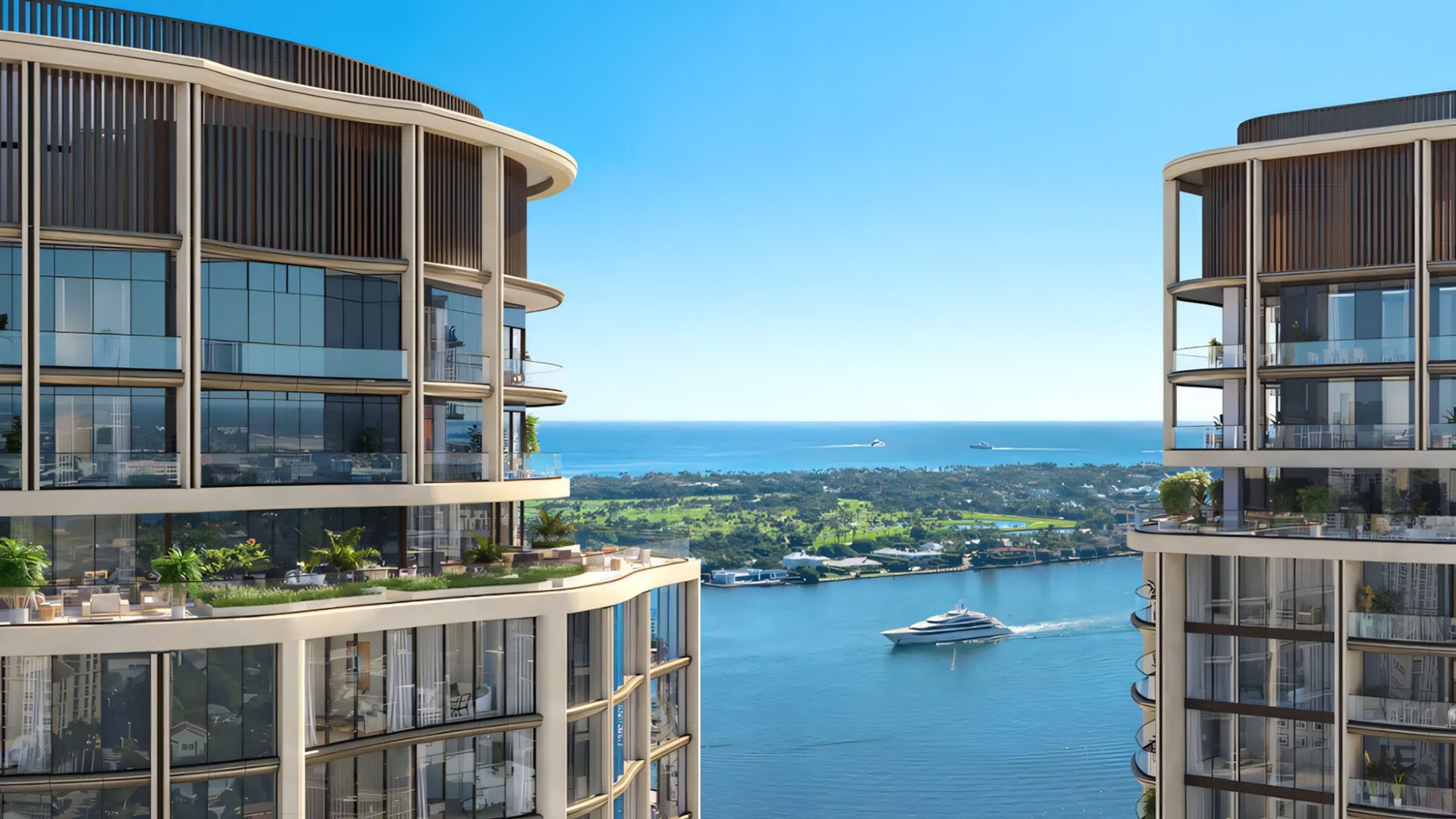
At South Flagler House West Palm Beach, the advertised setting includes two 28-story, limestone-clad buildings at 1355 S. Flagler Drive. Private terraces and views toward the Intracoastal Waterway, Palm Beach Island, and Atlantic Ocean are part of the residential presentation; they do not establish identical outlooks for every home. Nor does any of these attributes establish acoustic performance.
For buyers also considering Edgeworth West Palm Beach, the appropriate comparison is residence against residence, supported by plans, written criteria, and evidence from completed conditions. Neither name should become shorthand for superior quietness. The useful question is not which building sounds more exclusive, but what can be established about the home under consideration.
Before signing, ask for the exact residence plan and the corresponding plans immediately above and below. Request a package that identifies mechanical rooms, equipment, shafts, elevators, plumbing stacks, neighboring residences, amenities, loading areas, and service circulation. A presentation floor plan should begin that discussion, not conclude it.
Then request the specified wall and floor-ceiling acoustic ratings, including any STC and IIC criteria. Ask which assemblies those ratings describe, whether the supporting evidence comes from laboratory testing or completed-building field testing, and whether it applies to the selected residence. A rating without a clearly identified assembly or testing context is an incomplete basis for a purchase decision.
Have an independent acoustical consultant review the technical response, and ask counsel which commitments are incorporated into the purchase agreement. Discuss inspection access, testing opportunities, and any remedies for underperformance before assuming they will be available. The aim is contractual clarity-not a claim that either development offers a particular acoustic warranty.
South Flagler House’s advertised residential collection includes one- to five-bedroom homes, penthouses, and guest suites. Its public floor-plan materials distinguish South, North, West, Lake, and guest-suite layouts. That variety makes a residence-specific review more useful than a general conclusion about the development.
Ask the design team to walk through each bedroom boundary, the study, and the principal living spaces. What occupies the other side of each wall? What is directly overhead? Where do plumbing and service shafts run? Have the consultant identify details that require clarification; generous room dimensions should not be mistaken for acoustic separation.
Mechanical adjacency warrants its own marked-up plan. Request equipment locations and the applicable equipment-noise criteria, then ask how those criteria will be assessed in the completed residence. Do not infer that an upper floor, a corner position, or a penthouse is inherently quieter. Seek details about the actual neighboring spaces and systems to support any such preference.
South Flagler House advertises private keyed elevators and dedicated service elevators as distinct access provisions. They are relevant to the arrival experience, but they do not establish sound isolation or guarantee complete privacy between residences.
Ask to see how the private arrival area relates to neighboring entries, elevator shafts, and service routes. Review who may access each area and how deliveries and maintenance visits are intended to reach the residence. Keep that operational discussion separate from questions about noise transmission through adjoining construction.
The same discipline applies to a broader search that includes Forté on Flagler West Palm Beach. Compare answers to identical access, adjacency, and testing questions rather than treating an address or a private-entry description as evidence of acoustic performance. Consistent questions make the comparison more useful without presuming that different developments share specifications.
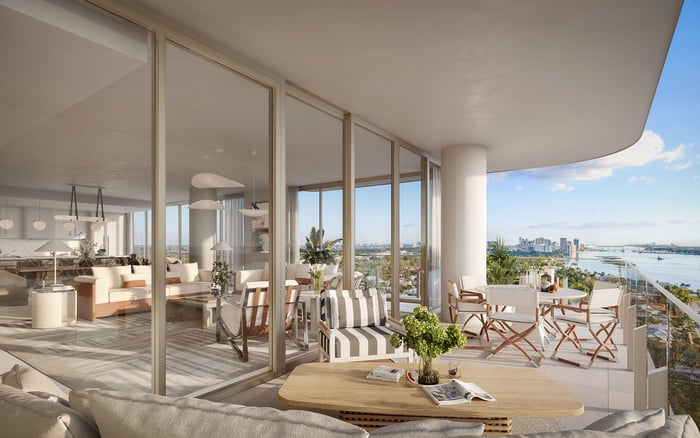
A private terrace does not, by itself, establish visual seclusion. At South Flagler House, review the selected terrace’s relationship to neighboring outdoor spaces, windows, and shared amenities. Consider the seating and dining positions you would actually use, rather than assessing privacy only from the center of an unfurnished terrace.
Apply the same review to interior windows. Ask for drawings that clarify orientation and neighboring sightlines, and inspect the completed conditions when access is available. Assess the view separately: an expansive outlook does not answer whether another residence can look toward a bedroom or sitting area.
For Edgeworth, make these same questions part of the residence review without assuming a particular terrace configuration, entry arrangement, or window relationship. Visual privacy, controlled access, and sound isolation require three separate judgments. A favorable answer to one should not stand in for the others.
As completion and closing approach, ask the acoustical consultant whether completed-unit testing is appropriate and what access it would require. Agree on the scope, relevant operating conditions, and written documentation in advance. A brief, quiet visit should not replace the technical review requested before contract.
South Flagler House advertises package and mail facilities, climate-controlled storage, two deeded parking spaces per residence, and electric-vehicle charging. As part of diligence, ask where these functions and their associated circulation sit relative to the selected home. Their inclusion identifies available provisions, not their residence-specific acoustic consequences.
Carry the review into ownership with an organized file of applicable specifications, final drawings made available to you, test records, correspondence, and any agreed corrective work. Ask management about procedures for documenting concerns and reviewing later alterations. If a disturbance emerges, record its location, timing, duration, and apparent operating conditions before seeking professional assessment.
The strongest purchase decision distinguishes advertised features from contractual commitments and measured performance. For both South Flagler House and Edgeworth, ask the advisory team to identify what has been established for the chosen residence, what remains unresolved, and which points matter enough to settle before proceeding.
Long-term comfort deserves the same attention as the view: exact plans, clear written answers, and records that remain useful after the keys change hands.
For a considered approach to West Palm Beach residence selection, connect with MILLION.
If branded residences are on your mind — as a home or as an allocation — we would be glad to share what we are seeing, privately.
Begin a quiet conversationSouth Flagler House is located at 1355 S. Flagler Drive in West Palm Beach.
The development comprises two 28-story, limestone-clad buildings. That configuration alone does not establish the acoustic performance of an individual residence.
No. South Flagler House advertises private keyed elevators, but access control is separate from acoustic performance and visual privacy.
Yes, dedicated service elevators are advertised separately from private residential elevator access. Buyers should request plans showing their relationship to the selected residence.
Request the exact residence plan and plans for the floors immediately above and below. Ask that they identify equipment, shafts, elevators, plumbing, amenities, loading areas, and service circulation.
Ask for specified wall and floor-ceiling ratings, the assemblies they cover, laboratory versus field-test evidence, and equipment-noise criteria. Have an independent acoustical consultant review their applicability to the chosen residence.
A responsible ranking requires residence-specific acoustic evidence. Compare documented assemblies, adjacencies, criteria, and testing rather than names or marketing descriptions.
They should not be assumed to be quieter. Review the actual neighboring spaces, equipment locations, and construction details for the residence under consideration.
Review neighboring terraces, windows, and shared amenities from the positions you expect to use. Assess visual privacy separately from the quality of the view and sound isolation.
Retain applicable written specifications, available final drawings, acoustic test records, correspondence, and any agreed corrective work. These documents can support later professional assessment if concerns arise.