A discreet buyer’s guide to choosing a South Florida home by testing the neighborhood on ordinary weekdays, not only on perfect weekends.

For a buyer arriving from Singapore, the first instinct may be to compare South Florida by skyline, water view, brand, or balcony line. Those details matter, but they should not be the first filter. The more revealing question is whether the neighborhood still performs on a weekday, when the beach is not the agenda, guests are not arriving, and the home must support ordinary life with grace.
South Florida is not one market experience. It is a collection of distinct daily rhythms: vertical urban living in Brickell, quieter residential enclaves, waterfront resort settings, and walkable village pockets. A residence that feels spectacular at sunset may feel less persuasive on a Monday morning if the surrounding streets, service access, parking routine, and daily errands do not align with the buyer’s habits.
This is why the best buyer’s guides begin with lifestyle cadence. Before deciding on a floor plan, define what a normal week should feel like. Will the home serve as a primary base, a seasonal residence, a family landing point, or a discreet pied-à-terre? The answer should guide the neighborhood before it guides the building.
A weekday-ready neighborhood offers more than amenities. It reduces friction. The right address should allow a buyer to leave for meetings, receive guests, manage wellness appointments, dine casually, and return home without making every task feel like a production.
For some buyers, that means choosing Brickell because a dense urban environment can place work, dining, fitness, and services within a compact radius. For others, it means selecting a calmer district where the reward is privacy, residential texture, and a softer sense of arrival. Neither is inherently superior. The better choice is the one that fits the buyer’s repeatable routine.
The Singapore comparison is useful because it sharpens the question. Buyers accustomed to efficient daily living often notice whether a neighborhood feels intuitive. They observe how a building is entered, where cars pause, how deliveries are received, whether a quick meal is effortless, and whether the evening return feels composed rather than congested. In South Florida luxury real estate, those small operational details often separate a beautiful purchase from a genuinely livable one.
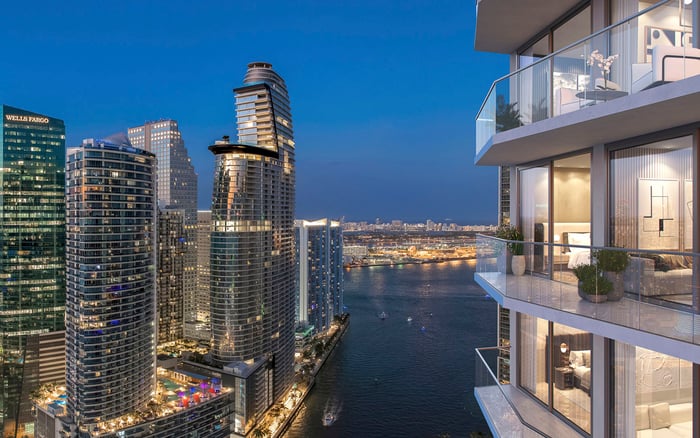
Brickell is the natural starting point for many international buyers because it offers a recognizably urban proposition: towers, restaurants, professional energy, and a strong sense of vertical living. The appeal is not only the view. It is the possibility of reducing the distance between home and daily obligations.
Still, Brickell should be tested carefully. Visit in the morning, mid-afternoon, and early evening. Notice how the approach changes by hour. Watch the porte cochère, valet rhythm, lobby privacy, and ease of movement between the building and the neighborhood. A buyer comparing 2200 Brickell with Cipriani Residences Brickell should not only compare architecture or finish level. The more useful comparison is how each address supports the exact version of city life the buyer wants to lead.
In a weekday-first search, the best Brickell home is not necessarily the most theatrical. It is the residence that makes the city feel legible: easy to enter, easy to leave, and easy to enjoy without over-planning.
Some buyers want proximity to Miami without living inside its most vertical district. Coconut Grove and Coral Gables often enter the conversation when the buyer values shade, privacy, residential character, and a slower daily atmosphere. These neighborhoods can be compelling for families, long-stay owners, and those who prefer the home to feel like a retreat rather than a perch above the city.
In Coconut Grove, the key is to understand how village life translates into weekday convenience. A buyer looking at The Well Coconut Grove should consider how wellness, privacy, and access fit into a normal week, not just how the residence photographs. The question is whether the surrounding environment supports the buyer’s pace after the novelty of arrival has settled.
Coral Gables invites a similar but distinct analysis. It can appeal to buyers who want a refined, composed setting with a residential tone. When considering The Village at Coral Gables, the weekday lens should include arrival sequence, household logistics, guest parking expectations, and the ease of moving between home, dining, school considerations, and professional commitments.
The best choice between these areas is not about prestige alone. It is about which rhythm feels natural on a Tuesday at 8 a.m. and still feels elegant at 8 p.m.
Miami Beach is often chosen emotionally, and understandably so. Water, light, architecture, and resort culture are central to its appeal. But the weekday test is especially important here because the best beach address must function when the owner is not on holiday.
A buyer should ask whether the home will be used for quiet mornings, entertaining, wellness, family visits, or seasonal escapes. Waterfront living can be exceptional when the building, neighborhood, and access pattern align. It can feel less effortless if the residence requires too much coordination for simple routines.
The right Miami Beach decision often depends on temperament. Some buyers want proximity to energy. Others want the beach to feel private, polished, and almost invisible until they choose to engage with it. In either case, weekday practicality should sit beside beauty. Views are important, but so are elevators, service areas, arrival privacy, and the ability to enjoy dinner nearby without turning every evening into an event.
West Palm Beach is increasingly relevant for buyers who want a more measured South Florida base. It can suit those who prefer a composed downtown, waterfront proximity, and a residential atmosphere that feels less compressed than Miami’s most active districts.
For a buyer considering Mr. C Residences West Palm Beach, the same weekday discipline applies. Do not begin with the sales gallery impression alone. Walk the immediate surroundings at several times of day. Consider where guests will arrive, how often the owner will dine out, what services must be nearby, and whether the neighborhood feels comfortable outside peak social hours.
The strongest West Palm Beach purchase is one where the buyer’s week feels naturally accommodated. If the home is meant to be a calm U.S. base, its value is measured not only by finish and view, but by confidence in daily use.
After the neighborhood passes the weekday test, the building comparison becomes more precise. Start with privacy. How many transitions occur between the street and the residence? Does the arrival feel discreet? Are staff, guests, deliveries, and residents intuitively separated, or does the experience feel crowded at peak times?
Then consider the floor plan. South Florida buyers often focus on terraces and views, but the interior sequence matters just as much. A strong plan should allow morning routines, work calls, hosting, staff access, and quiet retreat without conflict. The best residence is not merely large. It is legible.
Finally, study the building’s amenity culture. Some owners want extensive shared spaces and a hotel-like atmosphere. Others want privacy and restraint. A mismatch here can affect daily satisfaction more than a small difference in view. Luxury is personal, and the right building should reinforce the owner’s preferred level of visibility.
Weekend visits can flatter almost any South Florida neighborhood. The light is generous, the restaurants are alive, and the water does much of the selling. The weekday visit is more honest. It shows how the address behaves when life is practical rather than ceremonial.
For the Singapore-to-South Florida buyer, the ideal home is not simply the one with the most recognizable skyline or the most dramatic amenity deck. It is the one that creates calm inside a new geography. If Brickell delivers energy without friction, it may be the answer. If Coconut Grove, Coral Gables, Miami Beach, or West Palm Beach offers a better daily cadence, that restraint may be the more luxurious choice.
A successful purchase should feel beautiful on arrival, but also intelligent after repeated use. That is the quiet standard of a neighborhood that still works on weekdays.
Should an international buyer choose Brickell first? Brickell is a logical starting point for buyers who want an urban routine, but it should be compared with quieter neighborhoods based on actual weekday habits.
What is the most important weekday test? Visit the neighborhood at different times of day and observe arrival, exits, service flow, dining access, and general ease of movement.
Is a waterfront view enough to justify a purchase? A view can be extraordinary, but it should not compensate for a neighborhood or building that does not support daily life.
How should buyers compare Coconut Grove and Coral Gables? Focus on rhythm, privacy, household logistics, and whether the surrounding streets feel natural for the way the owner expects to live.
Does Miami Beach work for primary living? It can, provided the buyer chooses an address where daily access, privacy, and services feel practical beyond vacation use.
Why consider West Palm Beach? West Palm Beach may suit buyers who want a calmer South Florida base with a more measured daily atmosphere.
Should branded residences be prioritized? They should be evaluated for service culture, privacy, and daily fit rather than brand recognition alone.
How many times should a buyer visit before deciding? Multiple visits are wise, especially during weekday mornings, late afternoons, and evenings when routines are most visible.
What makes a residence feel discreet? A discreet residence usually has a composed arrival, intuitive service flow, strong privacy, and limited friction between public and private spaces.
What is the simplest rule for choosing correctly? Buy the neighborhood that makes ordinary weekdays feel effortless, then select the residence that best expresses that rhythm.
To compare the best-fit options with clarity, connect with MILLION.
If branded residences are on your mind — as a home or as an allocation — we would be glad to share what we are seeing, privately.
Begin a quiet conversation