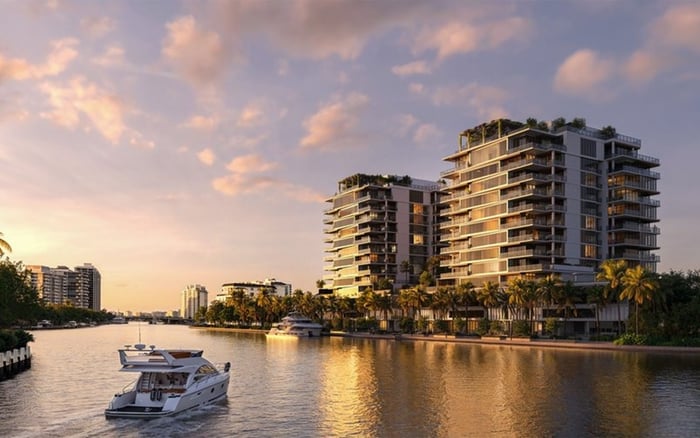
A waterfront address and a usable berth are separate purchases in practical terms. Understand the documents behind slip rights, the limits of waitlist priority, and the vessel-specific checks that turn marina access into a dependable part of South Florida living.
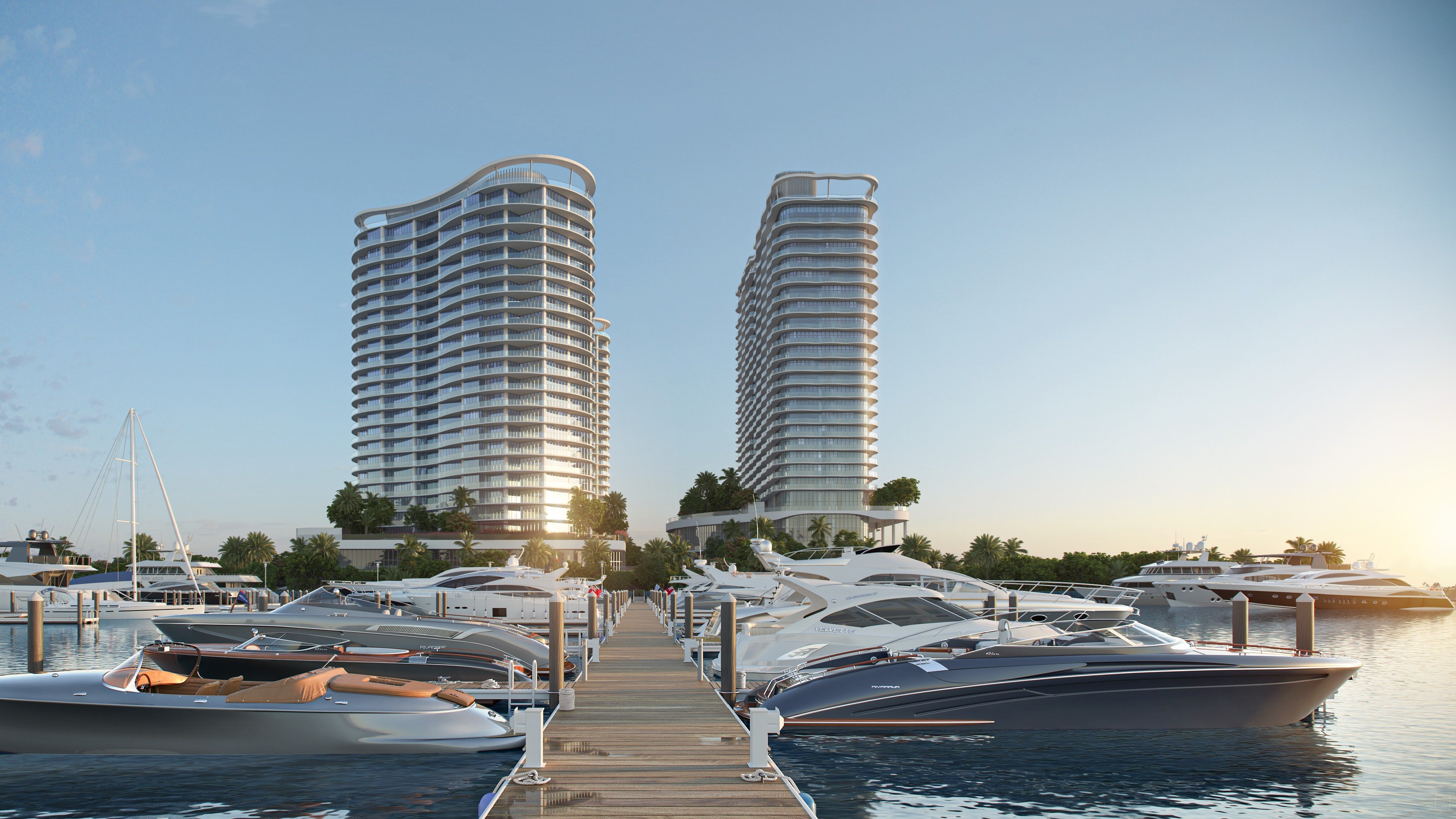
For a yacht owner, the most consequential feature of a South Florida residence may lie beyond the terrace. A beautiful waterfront setting does not establish whether a particular vessel can berth there, whether dockage will be available at closing, or whether the right to use it survives a future sale.
Treat the residence, the slip entitlement, and the navigation route as three separate decisions. They should align before a buyer assigns value to the convenience of keeping a yacht close to home. That distinction is especially important when terms such as private marina, priority access, or deep water appear in a property presentation.
The strongest purchase is not simply a home near dockage. It is a home whose boating arrangements have been documented with the same care as the residence itself.
Start by identifying what is actually being offered: ownership of a slip, a right attached to the residence, a lease, membership access, rental priority, or permission subject to availability. These are distinct arrangements to verify through documents, not interchangeable descriptions of an amenity.
Have counsel review the applicable title documents, condominium and marina declarations, slip agreement, rules, and estoppel. Request written clarification of the berth involved, the arrangement's duration, who may use it, and which approvals are required. Ask whether the arrangement transfers with the residence and what happens if the buyer changes vessels.
A buyer considering Una Residences Brickell should keep the residential evaluation separate from any proposed dockage agreement. A Brickell address alone should never substitute for confirmation of the precise right being purchased or granted.
Apply the same discipline to costs. Request the applicable charges and obligations in writing rather than assuming residential ownership includes dockage. Resolve any discrepancy between the purchase contract and marina paperwork before relying on a slip as part of the transaction.
Miami's municipal system offers a useful comparison, but its rules should not be projected onto private marinas. The city owns and operates more than 1,300 wet slips, dry racks, and mooring buoys combined-not 1,300 wet slips alone.
Permanent spaces are assigned by boat size on a first-come, first-served basis. A place in line therefore does not establish when a suitable berth will become available. The relevant question is not merely how many applicants are ahead, but whether an opening will accommodate the vessel under consideration.
For a private marina, request its own allocation rules. Ask whether priority depends on application date, vessel dimensions, residential ownership, or another stated criterion. Obtain written confirmation of whether proposed access is immediate or contingent. Do not translate a verbal expectation into a move-in timetable.
Short-term dockage is a separate inquiry. At Miami's municipal marinas, transient dockage does not require joining the permanent-dockage waitlist; arrangements are made directly with the selected marina. Temporary availability should not be mistaken for a permanent berth commitment.
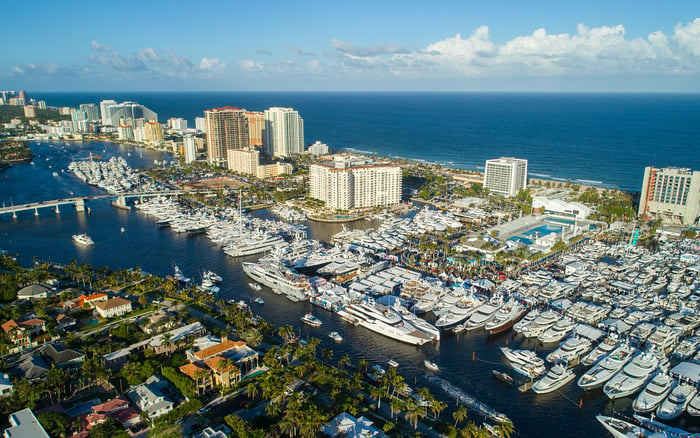
Two Fort Lauderdale facilities illustrate why exact specifications deserve more attention than a broad descriptor. Pier Sixty-Six Marina, on the Intracoastal Waterway near the 17th Street Causeway, has 164 deep-water slips and approximately 5,000 linear feet of dockage. Its vessel-length specification ranges from 40 to 400 feet, with a maximum draft specification of 30 feet.
Those figures describe facility capabilities. They do not guarantee that every vessel within those dimensions can use every berth or navigate the entire approach. Buyers evaluating St. Regis® Residences Bahia Mar Fort Lauderdale should likewise establish any intended berthing arrangement independently, without treating another marina's specifications as evidence of suitability.
At Safe Harbor Lauderdale Marine Center, wet-slip specifications accommodate vessels from 90 to 200 feet in length overall, with a maximum wet-slip beam of 42 feet and maximum wet-slip draft of 12 feet. These dimensions underscore the essential point: length, beam, and draft must be considered together.
Neither set of specifications establishes residential slip rights, current availability, or acceptance of a particular yacht. A marina's overall capacity is a starting point for inquiry, not a vessel-specific reservation.
A berth can appear suitable on paper while leaving the approach unresolved. Request written confirmation of berth dimensions, controlling approach depth, the tide reference used for depth statements, bridge clearance, and vessel acceptance. The review should cover the intended route, not just the water immediately alongside the dock.
An advertised maximum draft is a facility specification, not guaranteed clearance from open water to the assigned slip. Have the captain review the route against the yacht's actual dimensions and operating requirements before the property decision depends on it.
For a buyer comparing Bay Harbor Islands residences such as Onda Bay Harbor, the useful question is specific: can this vessel reach and occupy the proposed berth under the confirmed conditions? Neither a waterfront outlook nor a project name answers that question.
Keep written vessel acceptance with the berth agreement. If a different yacht is contemplated, seek fresh confirmation rather than assuming the original approval extends to it.
Reconcile the purchase and dockage calendars early. Before committing, establish whether the intended berth is available, which approvals remain outstanding, and whether any temporary arrangement is confirmed. A waitlist position should not be treated as a closing deliverable.
For a Coconut Grove search that includes Vita at Grove Isle, apply the same discipline: assess the home on its residential merits, then test any proposed boating arrangement against the documents and the vessel. This avoids treating an amenity as certain before its terms are established.
Before closing, bring the key confirmations together: the legal basis for slip use, allocation and transfer terms, applicable costs, berth dimensions, route conditions, and written vessel acceptance. Any unresolved item should remain an open decision, not disappear beneath the appeal of the address.
For the discerning buyer, convenience is not merely proximity to water. It is knowing that the intended yacht, the available berth, and the residential agreement work together on clearly established terms.
Explore South Florida residences with a more considered waterfront perspective at MILLION.
If branded residences are on your mind — as a home or as an allocation — we would be glad to share what we are seeing, privately.
Begin a quiet conversationDo not assume it does. Review the title documents, declarations, slip agreement, rules, and estoppel to establish exactly what dockage rights accompany the purchase.
Ask whether the proposed arrangement involves ownership, a right attached to the residence, a lease, membership access, rental priority, or permission subject to availability.
Transferability must be established from the applicable documents. Request written clarification of transfer terms and required approvals before relying on continued access.
Available permanent spaces are assigned by boat size on a first-come, first-served basis. Waitlist position alone does not establish when a suitable berth will open.
The figure covers more than 1,300 wet slips, dry racks, and mooring buoys combined. It is not a wet-slip-only count.
They should not be assumed to apply. Request the private marina's allocation rules and written confirmation of whether access is immediate or contingent.
No. Short-term or transient dockage inquiries go directly to the selected municipal marina, separately from the permanent-dockage waitlist.
The facility has 164 deep-water slips, approximately 5,000 linear feet of dockage, and a stated vessel-length range of 40 to 400 feet. Its maximum draft specification is 30 feet, not a guarantee of clearance along a vessel's entire route.
Its listed wet-slip accommodation covers vessels from 90 to 200 feet in length overall, with maximum beam of 42 feet and maximum draft of 12 feet.
Obtain written confirmation of berth dimensions, controlling approach depth, tide reference, bridge clearance, and vessel acceptance. Review the full intended route rather than relying on the berth's advertised draft alone.