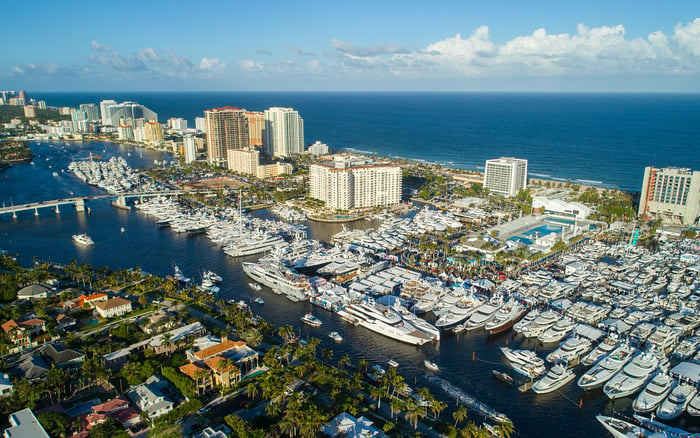
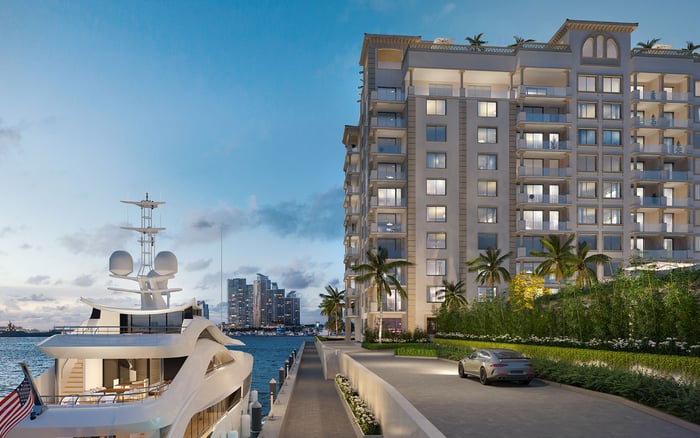
For buyers balancing flights with time aboard, the stronger address depends on actual itineraries, verified vessel access, and the journey between home, berth, and terminal. Compare Fort Lauderdale and Miami at the property level rather than relying on airport size or waterfront reputation.
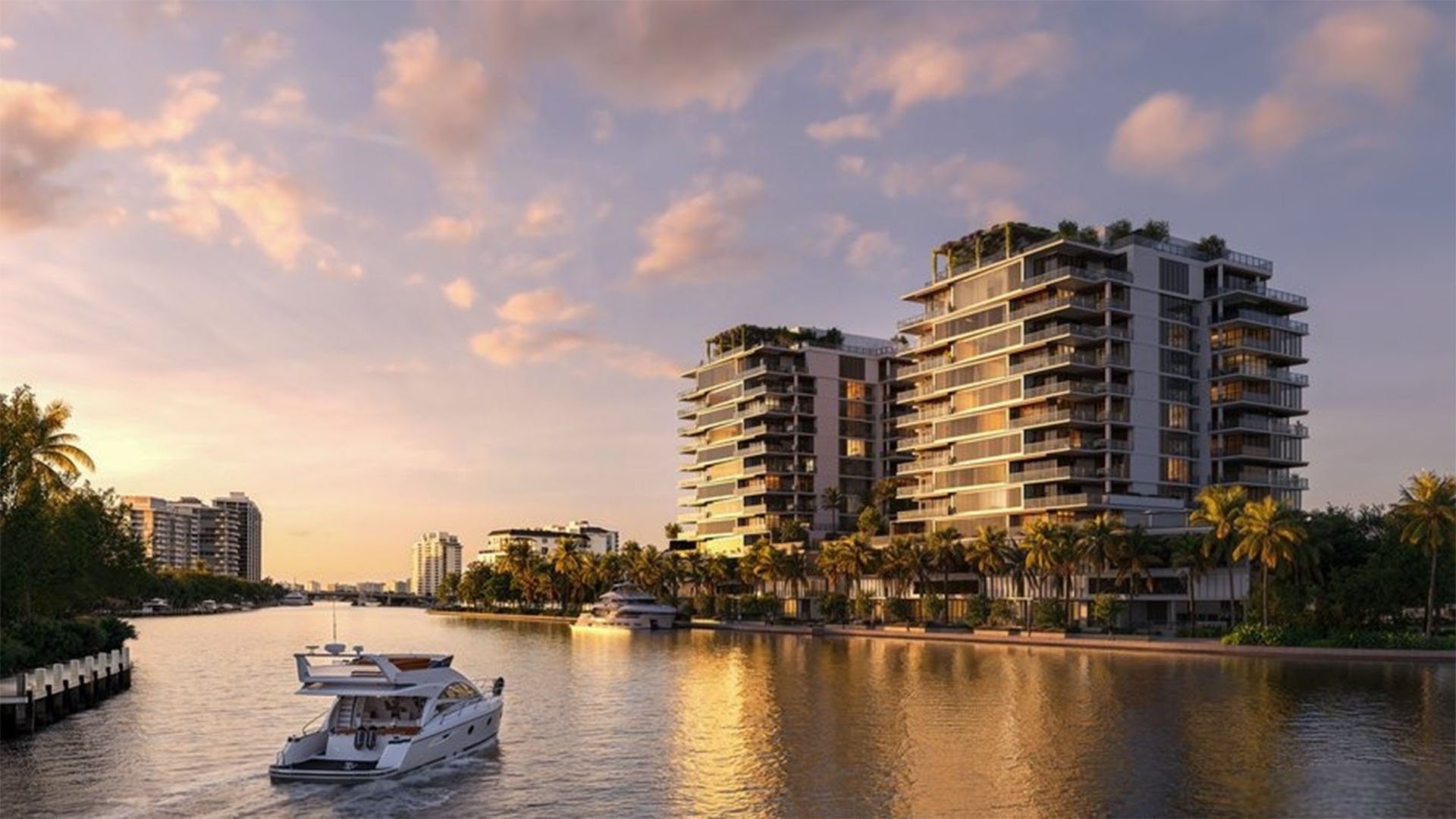
For a buyer dividing time between a residence, a boat, and an airport lounge, the Fort Lauderdale versus Miami question is less about civic personality than the rhythm of an ordinary week. A beautiful arrival matters. So does an address that supports the journeys you actually make.
Begin the aviation comparison with Miami International Airport and Fort Lauderdale-Hollywood International Airport, but judge each against your actual itinerary. Airport scale alone cannot establish which option better serves your destinations, departure times, or preferred cabin.
Boating calls for an equally individual verdict. The decisive questions concern the vessel, the berth, the route to open water, and the rights attached to a purchase. Neither a waterfront outlook nor a city's reputation answers them. The better choice is the residence that passes both your travel test and your boating test.
For buyers whose calendars regularly cross borders, the useful comparison starts with current international schedules. Check whether MIA or FLL offers a suitable nonstop, an acceptable connection, and a return schedule that works with your commitments. Apply the same test to domestic journeys rather than assuming one airport will suit every trip.
Passenger counts alone do not establish whether an airport offers your preferred flight, the right departure time, or an acceptable return schedule. A larger airport is not necessarily the better airport for a particular itinerary.
Build the comparison around your most frequent journeys. Check current schedules, cabin availability, connection requirements, and the consequences of a missed departure. Then test the ground journey from each prospective residence at the hours you would actually travel. Airport-wide statistics cannot establish an address-specific transfer time.
Keep a separate assessment for departures and arrivals. The arrangement that works for an early outbound flight may not be the one you prefer after a late return. Evaluate the complete trip rather than treating proximity alone as a verdict.
A boating-led purchase should begin with a written vessel brief: length, beam, draft, air draft, power requirements, and intended use. Give the same brief to everyone evaluating the property and berth. An attractive setting should not substitute for operational suitability.
Ask whether dockage is included, separately purchased, leased, assigned, or subject to availability. Confirm transferability, renewal provisions, permitted vessel dimensions, guest access, insurance requirements, and applicable charges. Resolve these questions in current documentation rather than inferring benefits from marketing language.
The water journey deserves equal scrutiny. Arrange professional confirmation of depth, clearances, tidal constraints, and any operating restrictions along the intended route. Evaluate boarding arrangements and the practical movement of provisions, luggage, and guests. An inspection should test the boating experience, not simply the view.
There is no useful citywide winner if the chosen berth cannot accommodate your boat or your ownership plans. Equally, a residence without an attached berth may remain viable if a separately secured arrangement meets your needs. Keep residential ownership and dockage rights distinct until the documents establish their relationship.
For a Fort Lauderdale shortlist, resist assigning the same airport or boating experience to every residence. A buyer considering Andare Residences Fort Lauderdale should evaluate the actual home-to-terminal journey and any proposed boating arrangement independently. The project name alone establishes neither dockage rights nor travel convenience.
Apply the same discipline to St. Regis® Residences Bahia Mar Fort Lauderdale. Request current residential documents and any separate berth agreements before factoring boating access into the purchase decision. Distinguish an appealing maritime setting from an enforceable entitlement to keep a particular vessel.
Fort Lauderdale becomes the stronger personal choice when the residence, verified boating arrangement, and available flights align with your routine. Assess whether FLL's current services meet your calendar without imposing compromises you will repeatedly notice, and test any alternative airport arrangement from the specific property.
A Miami search should not treat its residential choices as interchangeable. A Brickell search and a Coconut Grove search each need their own ground-transport and boating assessment.
For someone considering Una Residences Brickell, the useful exercise is to map a real departure day: leaving the residence, reaching the terminal, and allowing the buffer your itinerary requires. Separately, establish where the boat would be kept and on what terms. Do not let the aviation case answer the boating question by default.
A buyer evaluating Four Seasons Residences Coconut Grove should run the same exercise from that specific address. Compare everyday access, guest arrangements, and the practical journey to any proposed berth. These are purchase criteria to verify, not assumed project amenities.
Miami is the stronger candidate when its actual flight options serve your destinations and a suitable boating arrangement can be secured. Route suitability can support the initial shortlist; property-level diligence must support the final decision.
Second-home buyers should evaluate what happens between visits as carefully as what happens on arrival. Ask who can access the residence and vessel, what authorizations are required, and which responsibilities remain with the owner. Confirm arrangements for maintenance, deliveries, and changing travel plans rather than assuming residential services extend to a boat.
For either city, compare the full recurring commitment: residential carrying costs, any separate dockage charges, vessel-related obligations, and transport arrangements. Obtain current figures for the specific purchase. A comparison built around the complete routine is more useful than one built around a headline price.
Neither city earns an automatic verdict for frequent flyers. Favor the address whose practical airport access and available flight options suit the journeys you make most often. Recheck schedules before committing rather than treating today's itinerary as a permanent benefit of ownership.
For boating, decide at the vessel-and-berth level rather than awarding either city a blanket advantage. The best address is the one where documented access, practical travel, and the pleasure of being home reinforce one another.
Explore residences aligned with your boating and travel priorities with MILLION.
If branded residences are on your mind — as a home or as an allocation — we would be glad to share what we are seeing, privately.
Begin a quiet conversationThe better choice depends on your destinations, current flight schedules, cabin preferences, and the journey from the specific residence. Compare MIA and FLL against your actual travel calendar.
Check current nonstop options, connection requirements, and return schedules for your regular destinations. Do not substitute overall airport size for route-specific suitability.
No. Airport size alone does not establish suitable departure times, cabin availability, or convenient access from a particular home.
Yes. Test both the outbound journey and the return at the hours you expect to travel, including the buffer your itinerary requires.
Compare residential carrying costs, separate dockage charges, vessel-related obligations, and transport arrangements. Obtain current figures for the specific purchase.
A citywide preference should not replace vessel-specific diligence. Confirm berth rights, vessel compatibility, navigational access, and operating requirements for each proposed arrangement.
Do not assume it does. Confirm whether dockage is included, separately purchased, leased, assigned, or subject to availability, and review its transfer and renewal terms.
Start with length, beam, draft, air draft, power requirements, and intended use. Have the proposed berth and water route professionally checked against those requirements.
Test the journey from each specific address at the hours you expect to travel. Include the departure buffer your itinerary requires rather than relying on airport passenger counts.
Confirm arrangements for residence and vessel access, maintenance, deliveries, and owner responsibilities between visits. Do not assume residential services also cover the boat.