A buyer-focused examination of private-elevator living at Turnberry Ocean Club, from the choreography of arriving home to the questions that can shape long-term resale positioning.
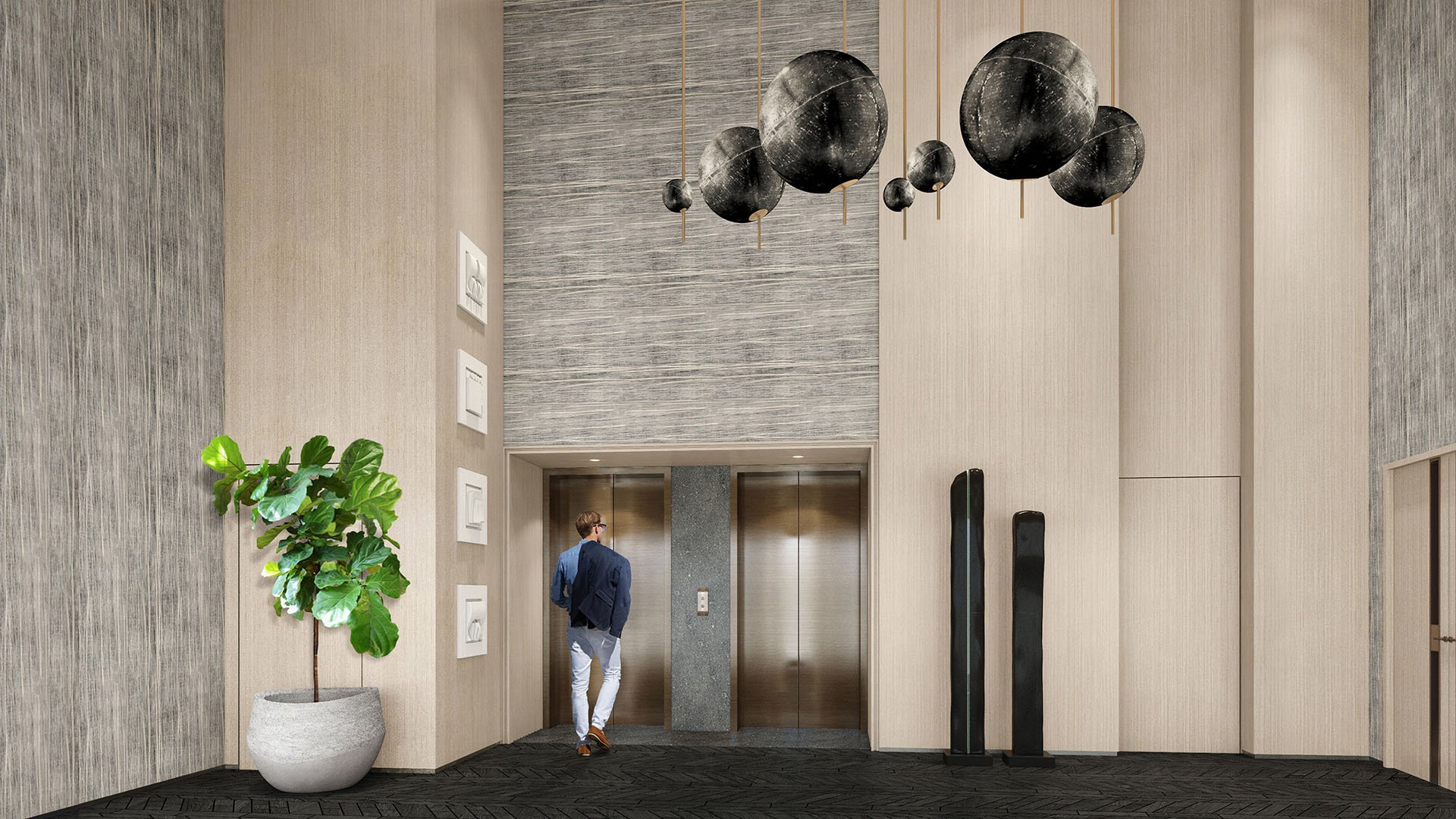
Turnberry Ocean Club is a luxury condominium development in Sunny Isles Beach featuring private-elevator living. That defining characteristic makes Turnberry Ocean Club Sunny Isles a useful case study in a subtle dimension of luxury: the choreography between entering a building and crossing the threshold of home.
For many buyers, privacy is not merely the absence of interruption. It is the ability to move through a residence with control, discretion, and minimal friction. A private-elevator experience can make arrival feel less like passage through a shared condominium and more like entry into a private home. That distinction may be especially meaningful after a flight, during a family gathering, or when coordinating household staff and deliveries.
Yet the phrase alone does not answer every practical question. Buyers should understand the entire route from vehicle arrival to residence entry, including where shared spaces begin and end. The most refined experience is defined not by one component, but by how every component works together.
The strongest case for private-elevator living is often experiential rather than numerical. Reduced exposure to shared residential corridors may create a calmer transition home. It can also shape how owners receive guests, manage luggage, and separate social occasions from the building’s broader circulation.
This is where lifestyle preferences become decisive. Some owners value an intimate arrival over a highly animated lobby. Others enjoy visible social energy and regard common spaces as part of condominium life. Neither preference is inherently superior. The better choice is the one that reflects how the residence will actually be used.
A primary resident may encounter the feature several times each day. For a second-home owner, it may establish an immediate sense of sanctuary upon arrival. Oceanfront buyers should therefore consider frequency, household routines, and guest patterns rather than treating privacy as an abstract luxury descriptor.
A private elevator does not, by itself, explain access control, elevator allocation, service circulation, guest authorization, backup procedures, or maintenance response. Those details determine whether privacy remains elegant under both ordinary and unusual conditions.
Buyers should ask what “private” means in operational terms. Does the elevator open directly into the residence or into a private vestibule? How are guests admitted? What happens during servicing? How are deliveries handled? What alternatives exist if an elevator is temporarily unavailable? Those particulars are not established here, so they belong on the diligence list rather than in the assumptions column.
The same discipline applies when comparing nearby options such as Jade Signature Sunny Isles Beach, Muse Residences Sunny Isles Beach, and The Ritz-Carlton Residences® Sunny Isles. Project names and marketing language are merely starting points. The meaningful comparison is the complete sequence of movement, access, waiting, and entry.
Resale conversations often reduce a nuanced feature to a simple claim of added value. That claim is too broad. Private-elevator living may strengthen a residence’s appeal among buyers who prioritize discretion, but a measurable premium cannot be established without relevant transaction data and careful comparisons.
The more defensible view is that arrival privacy can contribute to market positioning. It may distinguish a residence when prospective buyers compare similar locations, views, layouts, condition, carrying costs, and service levels. Its influence, however, is likely to be contextual. A beautifully resolved arrival may reinforce the overall proposition, while an inconvenient or poorly understood system could dilute it.
Investment analysis should therefore separate desirability from provable price impact. Desirability is qualitative and buyer-specific. Price impact requires evidence from comparable transactions, accounting for differences in floor, exposure, size, renovation, timing, and building economics. The feature merits attention, but not an unsupported premium assigned in advance.
Private-elevator access is best evaluated in person. Walk the complete arrival sequence at a realistic pace. Note every point of interaction, from entry and authorization to elevator waiting and the final threshold. Then repeat the exercise as though arriving with guests, children, luggage, household staff, or a large delivery.
Review governing documents and operating guidance covering access, service procedures, maintenance responsibilities, emergency conditions, and guest management. Request demonstrations rather than general descriptions. Confirm what is appurtenant to the residence, what is shared, and which procedures may change through building operations.
Finally, consider how the feature fits the property’s broader value story. The most useful lens is never privacy in isolation, but privacy alongside layout, light, views, service, financial obligations, and the quality of daily movement. The ideal result is quiet confidence: an arrival that feels natural every day and remains legible to a future purchaser.
Does Turnberry Ocean Club offer private-elevator living? Yes. Turnberry Ocean Club is a luxury condominium development in Sunny Isles Beach featuring private-elevator living.
Does private-elevator access guarantee complete privacy? No. Actual privacy depends on the wider access, circulation, guest, service, and operating arrangements.
Is a private elevator the same as a private vestibule? Not necessarily. Buyers should verify exactly where the elevator opens and which spaces are exclusive to the residence.
Can private-elevator living improve daily convenience? It may streamline arrival and reduce exposure to shared corridors, depending on the building’s configuration and operations.
How should buyers test the arrival experience? Walk the entire route and consider ordinary scenarios involving guests, luggage, deliveries, children, and staff.
What operational questions are most important? Ask about authorization, guest entry, service access, maintenance, backup procedures, and temporary outages.
Does private-elevator access command a resale premium? A measurable premium cannot be assumed. Establishing one requires suitable transaction data and closely matched comparisons.
Can arrival privacy help marketability? It may differentiate a residence for privacy-oriented buyers when the overall experience is intuitive and well maintained.
Should second-home buyers weigh this feature differently? They should consider how arrival feels after an absence and how guests, staff, and property management will gain access.
What should a buyer compare across Sunny Isles projects? Compare the full arrival sequence, operating rules, residence layout, service model, costs, and documentation rather than labels alone.
For a confidential assessment and a building-by-building shortlist, connect with MILLION.
If branded residences are on your mind — as a home or as an allocation — we would be glad to share what we are seeing, privately.
Begin a quiet conversation