A buyer-oriented review of historical developer disputes at The Ritz-Carlton Residences® Sunny Isles, with a disciplined framework for evaluating current litigation disclosures, insurance renewals and financing readiness.

For an owner or prospective purchaser at The Ritz-Carlton Residences® Sunny Isles, an operations review begins with a precise distinction: litigation involving a project's developers is not automatically litigation against its operating condominium association. Nor does an allegation establish liability. These distinctions matter when evaluating disclosures, ownership costs and financing readiness.
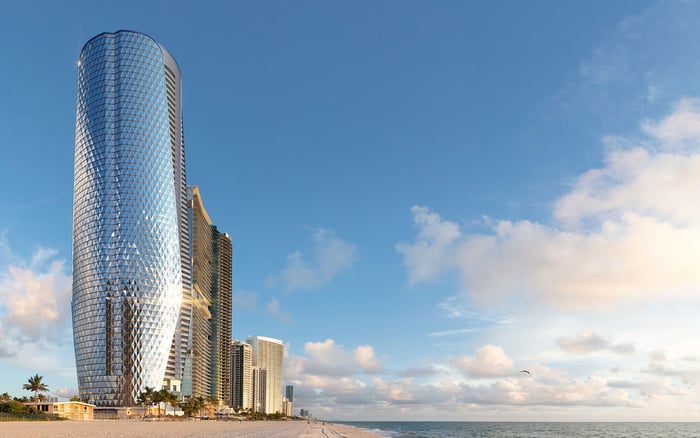
The site at 15701 Collins Avenue in Sunny Isles Beach was developed through a partnership between Fortune International Group and Chateau Group. Its legal history includes disputes involving the neighboring Tropicana condominium and a separate property-tax assessment challenge. These historical matters establish neither litigation-free status nor current association liability.
The appropriate response is neither reassurance by brand nor concern by headline. It is a request for current, property-specific documents connecting any unresolved matter to the entity, obligation and transaction under review.
In 2015, Tropicana's condominium association brought a $120 million lawsuit alleging that Fortune, Chateau and other defendants fraudulently blocked the neighboring building's sale for redevelopment. The alleged purpose was to preserve ocean views at the planned Ritz-Carlton tower, then described as a 52-story residential project.
This was a neighboring association's dispute, not a suit brought by Ritz-Carlton unit owners. In August 2015, Miami-Dade Circuit Judge Rosa I. Rodriguez granted summary judgment for the developers. In November 2016, Florida's Third District Court of Appeal largely sided with the developers in a ruling addressing the reach of state condominium-termination law.
By October 2019, litigation concerning a failed $115 million Tropicana sale had settled seven months earlier. Keep the figures separate: $120 million described the earlier lawsuit; $115 million described the failed transaction. Neither figure represents a settlement payment or a present-day owner obligation.
For disclosure review, ask counsel to distinguish the complaint, court rulings and settlement documentation. Compressing this sequence into a single litigation label obscures what a buyer needs most: who was involved, what was decided and whether any obligation remains relevant today.
In October 2019, Tropicana's association sued the developers again, alleging that construction debris damaged its pool, Jacuzzi and exterior and created safety hazards. The complaint also sought injunctive relief to secure the construction site and prevent further hazards.
The allegations included failure to honor a 2017 agreement to cover verified damages and approximately $225,000 in exterior repairs, alongside pool and Jacuzzi repairs. That amount was not an adjudicated damages award. The developers disputed the complaint's merits and intended to defend against it.
A current review should assume neither that this case remains pending nor that it concluded on particular terms. Obtain its disposition and ask counsel whether any surviving obligation affects the operating association. Do not assign the alleged damage to a particular insurance policy without the relevant coverage and claim documents.
A separate 2016 action involved Miami-Dade Property Appraiser Pedro Garcia and Sunny Isles Property Ventures LLC, the development entity identified with the site. The appraiser challenged a Value Adjustment Board reduction of the property's 2014 assessed market value from $17.6 million to $6.8 million, alleging that the lower figure fell below just value.
Those figures concern a historical site assessment-not current residence pricing, association reserves or an insurance valuation. The action should not be merged with Tropicana's allegations simply because the development appears in both histories.
Before attributing any present financial consequence to the tax case, request its final disposition and an explanation of any continuing obligation. Historical amounts alone cannot establish a current assessment payable by unit owners.
The historical disputes do not establish current insurance premiums, carriers, deductibles, renewal negotiations or claim allocations. An insurance-renewal assessment should rest on actual policy terms, not presumed consequences of the Tropicana litigation.
Request the current policies and a dated renewal summary. Ask the association's insurance adviser to identify changes in premiums, limits, deductibles and exclusions, and to distinguish proposed terms from bound coverage. If litigation arises in that review, request an explanation of which entity and policy are implicated, if any.
Then compare the renewal terms with the association budget. The practical question is whether any change has been incorporated into the owner's expected contribution-not whether an old lawsuit sounds substantial. Have counsel and the insurance adviser clarify any disputed allocation rather than treating it as settled.
For a purchaser also considering Jade Signature Sunny Isles Beach, the same document standard offers a useful basis for comparison. It does not imply that the buildings share litigation histories, coverage terms or renewal outcomes.
These historical disputes establish no named lender approval, rejection, pricing change or underwriting response. A developer lawsuit alone is not evidence that financing has been refused; a prestigious address is not evidence of lender acceptance.
Before relying on financing, ask the intended lender to review a dated association questionnaire, association-counsel litigation letter, budget, reserve information and insurance documents. Request written clarification of outstanding conditions, and distinguish a preliminary conversation from a transaction-specific lending decision.
If a lender raises a concern, ask it to identify the relevant document and issue. Does the question concern a defendant's identity, a potential financial obligation or a coverage provision? This approach supports a targeted response without inventing a building-wide lending restriction.
For buyers comparing this address with Turnberry Ocean Club Sunny Isles, use equivalent document dates and review standards. This is a recommendation about diligence, not a judgment about either property's operational position.
The owner's closing file should bring together five elements: a dated counsel letter, a current association questionnaire, budget and reserves, insurance policies, and a renewal summary. Ask counsel to reconcile discrepancies and identify which historical matters, if any, create current association exposure.
Luxury branding alone does not establish strong reserves, favorable insurance treatment or lender confidence. A disciplined purchase decision pairs the residence's appeal with a clear understanding of the obligations attached to ownership.
For a discreet conversation about your South Florida property search, connect with MILLION.
If branded residences are on your mind — as a home or as an allocation — we would be glad to share what we are seeing, privately.
Begin a quiet conversationThe site is at 15701 Collins Avenue in Sunny Isles Beach. The developers were a partnership between Fortune International Group and Chateau Group.
No. Tropicana's neighboring condominium association brought the lawsuit against the developers and other defendants.
Tropicana alleged that the defendants fraudulently blocked its building's sale for redevelopment to preserve ocean views at the neighboring Ritz-Carlton project.
The developers received summary judgment in August 2015. Florida's Third District Court of Appeal largely sided with them in November 2016 on issues involving condominium-termination law.
No. The $120 million figure described the earlier lawsuit, while $115 million described the failed Tropicana sale; neither establishes a settlement payment.
Tropicana alleged construction debris damaged its pool, Jacuzzi and exterior and created safety hazards. Edgardo Defortuna characterized the complaint as without merit.
No. It was an amount alleged for exterior repairs in the construction dispute, alongside pool and Jacuzzi repairs, not an adjudicated damages award.
No. Obtain a dated association-counsel letter and relevant case dispositions before concluding that an obligation affects the operating association.
No building-specific renewal outcome or named lender response is established. Review actual insurance terms and obtain transaction-specific lender feedback.
Request a dated association-counsel litigation letter, current association questionnaire, budget and reserves, insurance policies, and a renewal summary. Have advisers reconcile any discrepancies before drawing transaction-specific conclusions.