At Onda Bay Harbor, private and semi-private elevator arrangements can make circulation a meaningful part of the residence, influencing discretion, daily routines, guest reception, service coordination, and resale positioning.

At Onda Bay Harbor, elevator access is an important part of evaluating how a residence feels and functions. An entry arrangement with less shared circulation can create a quieter, more controlled transition from the building’s common areas into the home.
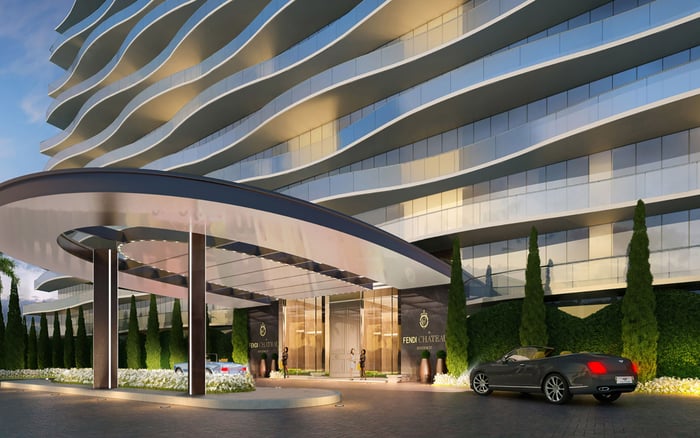
For buyers comparing South Florida condominiums, the arrival sequence deserves the same attention as the interior plan. Privacy is not only about the front door; it also depends on what happens between vehicle arrival, the lobby, the elevator, and the residential threshold.
In a conventional condominium, the journey home may involve a shared lobby, multiple elevator stops, and a common hallway. A private or semi-private arrangement can limit unplanned encounters near the residence, but the experience depends on the precise configuration.
Direct access and semi-private access should not be treated as interchangeable. A direct entry may establish a more exclusive threshold, while a semi-private arrangement may retain some shared circulation. Buyers should confirm how the elevator serves the specific residence rather than rely on a general project description.
This distinction is also useful when comparing nearby options such as Alana Bay Harbor Islands and La Maré Bay Harbor Islands. A project name or neighborhood does not by itself explain how an owner, guest, or service provider reaches the home.
The value of arrival privacy becomes clearer through repeated use. Returning home, receiving family, admitting a designer, or coordinating household services all depend on circulation. Less exposure to common hallways may make those movements feel more discreet, particularly for owners who value a firm boundary between shared and private space.
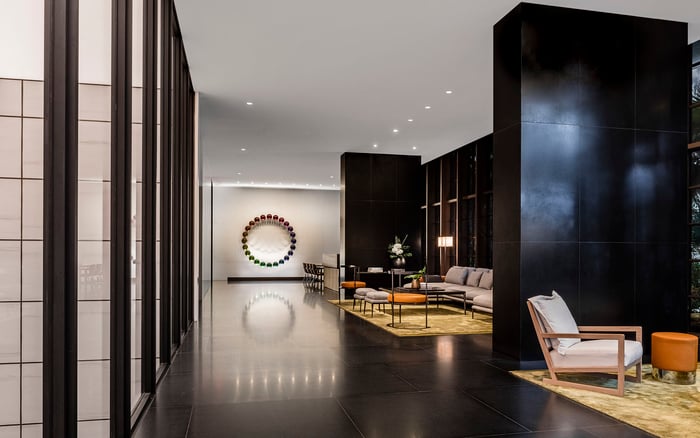
Guest reception can also feel more residential when the elevator threshold serves as an intentional prelude to the interior. Buyers should consider lighting, finishes, sightlines, access controls, and the relationship between the elevator door and the principal living areas.
Service logistics require separate scrutiny. A private arrival does not automatically answer questions about deliveries, contractors, household staff, move-ins, or emergency access. The strongest arrangement balances discretion with practical operations.
A private-elevator concept works best when architecture, interiors, security, and building management operate as one system. The threshold should feel coherent with the residence while still supporting safe and convenient access.
Buyers considering other Bay Harbor Islands residences, including The Well Bay Harbor Islands, can use arrival planning as a distinct comparison point. The relevant question is not whether a project is positioned as private, but how privacy is delivered during ordinary daily use.
Private-elevator living can strengthen a listing narrative because buyers readily understand the appeal of discretion and reduced traffic near the home. It may also help a residence feel more house-like at the point of entry. These are qualitative advantages rather than evidence of a guaranteed price premium.
A careful resale analysis should separate the arrival experience from other value drivers. Comparisons should account for residence size, floor, view, condition, finishes, parking, building density, and the exact elevator arrangement. A direct-entry residence should not be compared casually with a semi-private plan that differs in several other respects.
The same discipline applies when looking beyond Bay Harbor Islands to projects such as The Delmore Surfside. Privacy may improve differentiation and buyer recall, but resale positioning still depends on the complete property and the quality of the comparable set.
During a showing, experience the full route from arrival to the residence rather than inspecting the interior alone. Note where access credentials are required, where the elevator opens, whether any vestibule is shared, and how simultaneous guest arrivals would be handled.
Ask how visitors, deliveries, household staff, contractors, move-ins, service calls, and emergencies are managed. Confirm who maintains any elevator-adjacent vestibule, how that area is secured when the owner is away, and whether building procedures align with the floor plan. Private-elevator value depends on design and operations working together.
Does every Onda residence have the same elevator arrangement? Buyers should verify the exact configuration for the residence under consideration rather than assume all floor plans provide an identical experience.
What is the practical benefit of direct elevator access? It can reduce exposure to shared corridors and create a more controlled transition into the home.
Is semi-private access the same as private access? No. Semi-private access may include some shared circulation, so the privacy experience can differ.
Why does the full arrival route matter? Privacy depends on the complete sequence through common areas, access points, elevator circulation, and the residential threshold.
How can elevator access affect guest reception? A well-planned threshold can make the transition into the residence feel more intentional and discreet.
What should buyers ask about deliveries and household staff? They should confirm authorization procedures, routing, service access, and how the building handles routine entry when the owner is away.
Does a private elevator guarantee a resale premium? No. It may support differentiation, but its value must be assessed with the residence’s other attributes.
Which factors should be controlled in a resale comparison? Consider size, floor, view, condition, finishes, parking, building density, and the precise elevator configuration.
What should buyers inspect near the elevator threshold? Review sightlines, lighting, finishes, access controls, vestibule ownership or maintenance, and proximity to the main living areas.
Why should building procedures be reviewed with the floor plan? The plan shows the physical arrangement, while operating procedures explain how guests, services, security, and emergencies are handled in practice.
To compare the best-fit options with clarity, connect with MILLION.
If branded residences are on your mind — as a home or as an allocation — we would be glad to share what we are seeing, privately.
Begin a quiet conversation