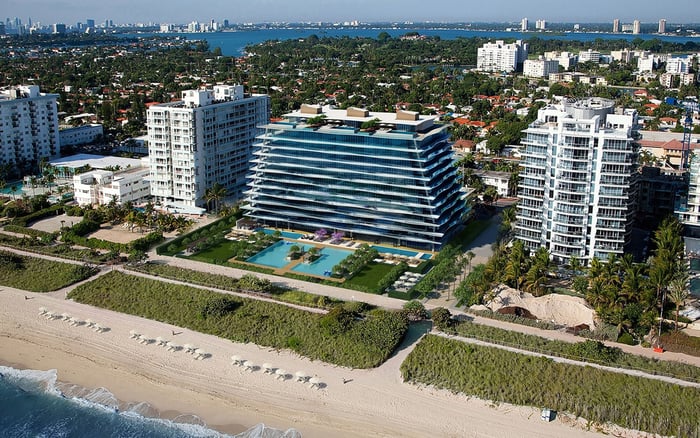
A five-building Bal Harbour diligence shortlist for buyers planning a Florida base, with a disciplined approach to reserves, insurance and assessment disclosure. The order is a starting point for document review, not a verified financial-health ranking.
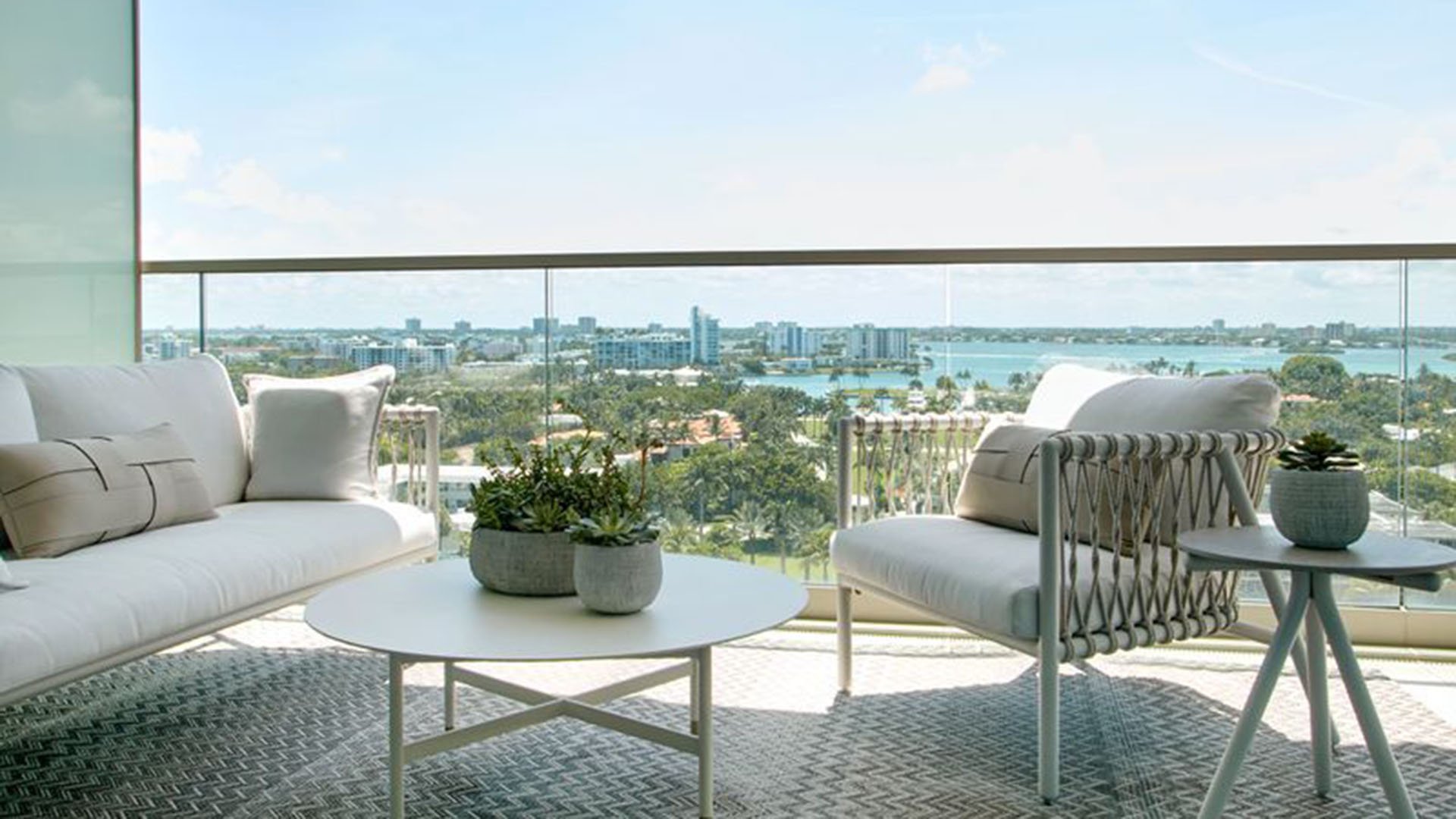
For a buyer planning a Florida base, a residence should offer more than an exceptional setting. The ownership decision also requires a clear view of capital obligations, insurance exposure and work that may interrupt daily life. Predictability, rather than a low advertised maintenance figure, is the more useful goal.
The five-building shortlist below focuses on Bal Harbour. Treat the order as a sequence for document review, not a verified ranking of reserve strength or protection from assessments. Confirm current unit availability separately. Surfside belongs in the broader search, but any residence there requires its own financial and engineering review.
Even when Oceana Bal Harbour is on a buyer’s shortlist, the decisive questions concern the association’s actual records. References to reserve studies or insurance information do not establish adequate funding or coverage. Florida domicile planning should remain a separate conversation with legal and tax advisers; this guide addresses condominium diligence, not domicile eligibility.
1. Oceana Bal Harbour: 10203 Collins Avenue
Oceana is the first document-review candidate because references to structural integrity reserve study, or SIRS, information and insurance-policy information offer two useful starting points. Neither establishes the reserve balance, coverage adequacy, inspection findings or outstanding assessment exposure.
Request the current study, reserve schedule and budget together, then obtain the actual insurance documents. The buying decision should turn on whether the funding plan addresses projected work and the coverage terms are acceptable-not simply on whether those references exist.
2. Harbour House: 10275 Collins Avenue
Harbour House offers an insurance-focused starting point: the association certificate should identify contacts for every association insurance policy. Those contacts can help direct document requests, but they do not establish policy limits, deductibles or premium stability.
Move from the certificate to declarations, renewal terms and the replacement-cost appraisal. Keep the reserve review separate and equally rigorous. Access to insurance information is useful; it is no substitute for understanding capital obligations.
3. Bal Harbour 101: 10185 Collins Avenue
For Bal Harbour 101, references to active and prior insurance policies and claims records make insurance history a sensible priority. Those references should not be mistaken for verified loss-history figures or a reserve funding percentage.
Request the underlying policies and claims records, including open claims, and review them alongside current renewal terms. Board minutes can add context on insurance discussions and planned capital work. No comparative financial-health conclusion should precede that review.
4. Bal Harbour North/South: Bal Harbour
Bal Harbour North/South is a candidate for compliance verification. General SIRS and inspection guidance does not establish that this association has completed the applicable studies, implemented recommendations or adequately funded future work.
Prioritize association-specific documentation: completed studies, inspection findings, required repairs and implementation timetables. Establish what remains unresolved and how the budget addresses it. Generic compliance language cannot establish freedom from pending assessments.
5. The Tiffany of Bal Harbour: 10175 Collins Avenue
Tiffany belongs here strictly as an assessment-disclosure case study, not a low-risk recommendation. Disclosed buyer-assumed special-assessment obligations for one residence totaled approximately $277,720, with roughly $2,206 in monthly interest-only payments through March 2028. These figures are listing-specific, not building-wide obligations, and require current confirmation.
Disclosed conditions also included pool and spa closures alongside façade and balcony work. Before negotiating, obtain the assessment notice, remaining balance, payment schedule and work timetable. A disclosed assessment is not harmless simply because it is documented; documentation allows the obligation to be evaluated in the purchase terms.
Monthly maintenance is a starting figure, not a financial-health verdict. Compare the current budget and reserve schedule with the SIRS’s projected repair and replacement costs. The practical question is whether the funding plan addresses the identified work and its expected timing.
Read milestone-inspection findings for required repairs, additional engineering review and unresolved recommendations. Then examine the association’s implementation timetable. A study identifies needs; the budget and execution plan show how the association proposes to address them.
For a buyer intending regular occupancy, timing matters alongside cost. Factor capital work and amenity closures into the decision before purchase, rather than confronting an unwelcome adjustment after arrival. Seek written clarification of unresolved items instead of relying on verbal reassurance.
A certificate or policy contact is only the beginning of insurance diligence. Request declarations, coverage limits, wind and hurricane deductibles, flood coverage, exclusions, open claims, renewal terms and the latest replacement-cost appraisal. Review the documents together rather than considering the premium in isolation.
Apply the same discipline to a Surfside comparison. If Arte Surfside enters the search, make the same document requests without assuming anything about its reserves or insurance. A project’s identity should not change the evidence required to assess ownership exposure.
Board minutes also deserve attention. They may reveal renewal problems, engineering disputes, litigation, water intrusion or planned capital work absent from listing remarks. These are matters to investigate, not conditions to presume at any particular building.
The absence of an assessment from listing remarks is not proof that none exists. Obtain a current estoppel certificate and written disclosure of approved or pending assessments before waiving relevant purchase contingencies. Review board minutes for anticipated obligations that warrant further questions.
For any disclosed assessment, establish the scope, budget, remaining balance and payment schedule before incorporating it into negotiations. Tiffany illustrates why the distinction matters: an identifiable obligation can be priced into a decision, while interest-only payment language warrants careful review of the underlying terms.
If your comparison extends to Fendi Château Residences Surfside, retain this framework rather than transferring conclusions from a Bal Harbour association. Each property requires its own review; inclusion in a broader search says nothing about financial strength or current availability.
The strongest purchase decision is not necessarily the one with the lowest monthly charge or the quietest listing description. It is the one supported by a coherent reserve plan, understandable insurance terms and clearly documented capital obligations.
Keep residence selection and domicile advice coordinated but distinct. Choose the home around your intended life, evaluate association obligations through their records, and obtain professional guidance on legal and tax questions. The objective is a residence whose ownership commitments are as carefully considered as its setting.
For a considered approach to your South Florida residence search, connect with MILLION.
If branded residences are on your mind — as a home or as an allocation — we would be glad to share what we are seeing, privately.
Begin a quiet conversationNo. The order is a document-review shortlist, not a verified comparison of reserves, insurance quality or assessment risk.
No. Current unit availability must be confirmed separately before making purchase plans.
All five shortlisted buildings are in Bal Harbour. Surfside properties are broader comparison options requiring their own financial and engineering diligence.
Request the current budget, reserve schedule and structural integrity reserve study. Compare the funding plan with projected repair and replacement costs.
Review required repairs, additional engineering review, unresolved recommendations and the association’s implementation timetable.
Review declarations, limits, wind and hurricane deductibles, flood coverage, exclusions, open claims, renewal terms and the latest replacement-cost appraisal.
No. The approximately $277,720 obligation and roughly $2,206 monthly interest-only payments through March 2028 concern a reported listing and require current confirmation.
No. Obtain a current estoppel certificate and written disclosure of approved or pending assessments, and review board minutes for anticipated obligations.
Yes. Its scope, budget, remaining balance and payment schedule should be documented before incorporating the obligation into purchase terms.
No. It addresses condominium diligence, while domicile eligibility and related legal or tax questions require separate professional advice.