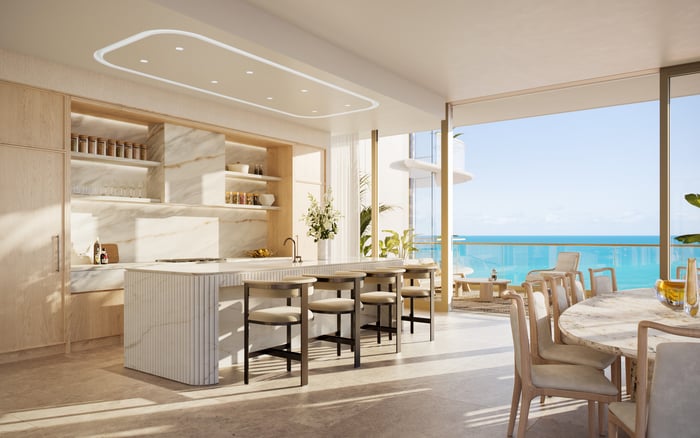
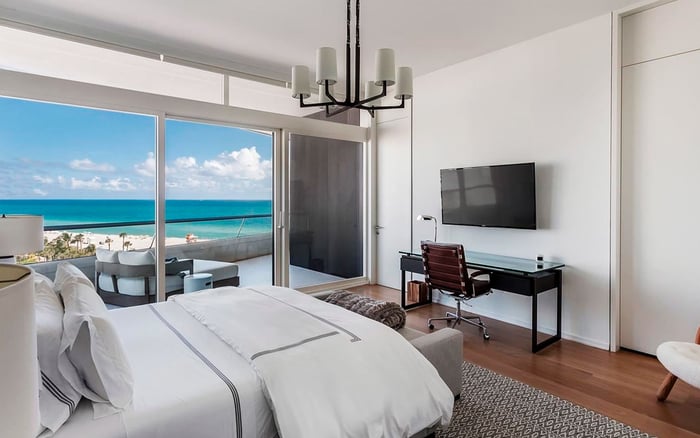
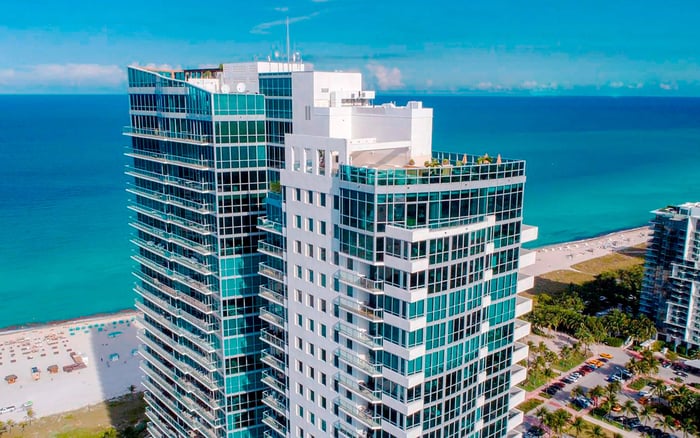
A considered approach to preparing a Faena House residence starts with terrace drainage, written furnishing permissions, and a practical storm-removal plan. Distinguish architectural features from association rules before commissioning an outdoor setting.
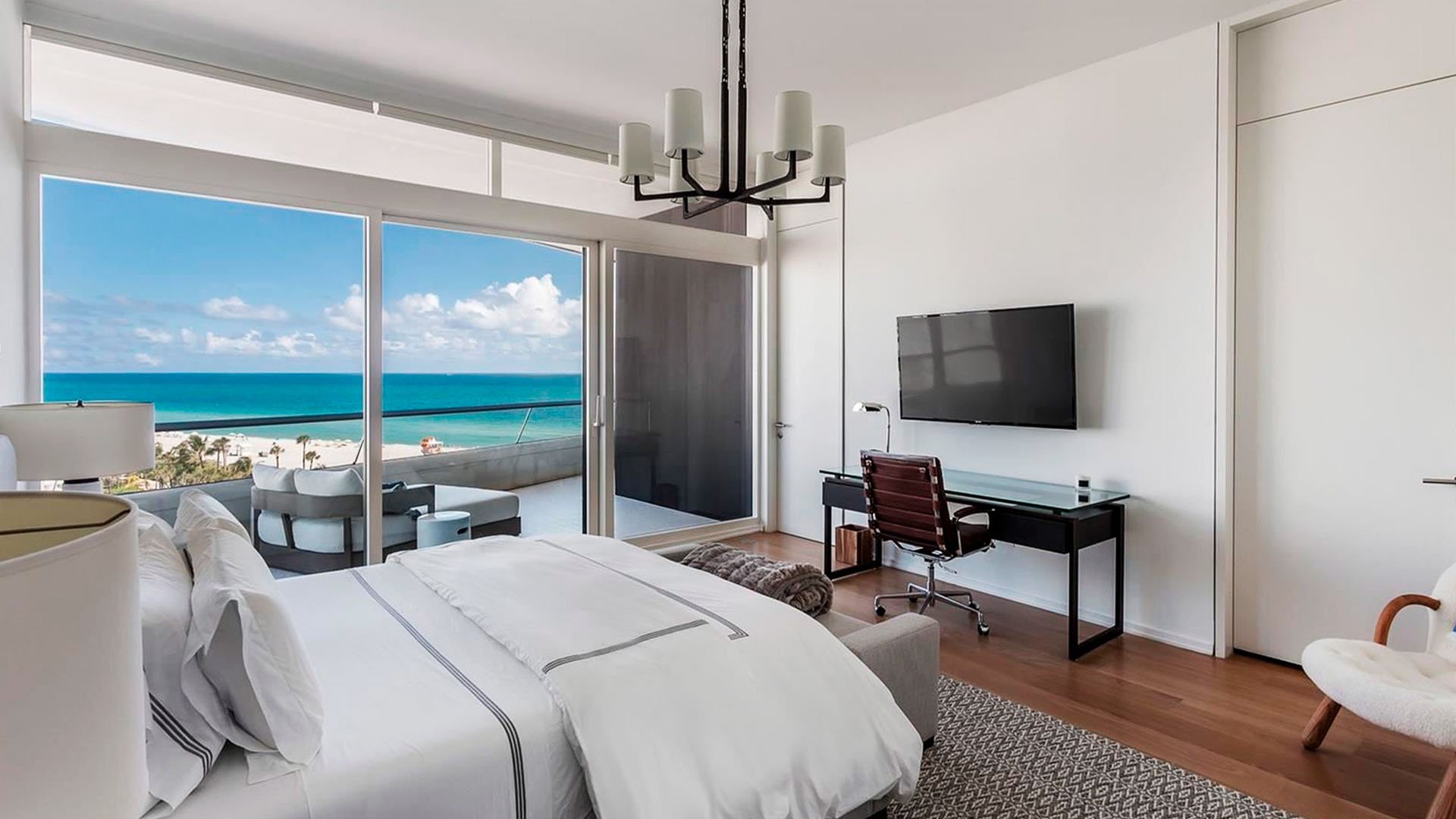
At Faena House Miami Beach, terrace depths of up to 37 feet and sliding-glass door openings up to 12 feet 6 inches wide create an expansive connection between interior rooms and outdoor living. These are maximum dimensions, not a promise of the same configuration in every residence. For a buyer commissioning a carefully furnished home, the actual terrace layout should guide design and preparation.
The central distinction is between architectural possibility and permission. A generous footprint does not establish an approved planter weight, authorize an umbrella, or determine who maintains a drainage component. Nor does a substantial balustrade eliminate the need to remove loose objects before a storm. The most refined outdoor setting can be maintained, inspected, and cleared without improvisation.
Begin with three parallel tasks: establish responsibility for terrace components, obtain written furnishing and alteration requirements, and develop a workable storm-removal plan. All three should inform purchasing decisions before furniture or landscaping is ordered.
Florida condominium law makes the declaration essential to understanding maintenance, repair, and replacement responsibilities. For terrace components, ownership, exclusive use, and maintenance obligations are not necessarily identical. Request the declaration and ask management to identify the provisions governing the terrace surface, drainage components, glazing, and balustrade.
Also request current association rules, alteration requirements, the terrace policy, hurricane-protection specifications, and the building's hurricane checklist. Seek written clarification wherever the documents leave a practical question unresolved. A designer's proposed layout is useful, but it cannot replace approval when approval is required.
For buyers also considering 57 Ocean Miami Beach, ask the same document-first questions separately. Do not carry assumed permissions from one address to another. Confirm Faena House's current furniture schedule, planter-weight limits, umbrella policy, grilling restrictions, and approved storm-securement hardware directly rather than inferring them from another condominium's practices.
Treat drainage access as a design constraint, not an issue to resolve after installation. As a practical precaution, keep existing drains and overflows accessible, and avoid furnishings or decorative elements that conceal them. These recommendations are not documented Faena House requirements; they are a prudent starting point for discussion with management and qualified professionals.
Before adding decking, artificial turf, large planters, or permanent fixtures, obtain professional review of the proposed arrangement. Ask whether it could interfere with runoff, inspection, or access to underlying components. Do not assume a removable product is automatically acceptable or an outdoor-rated finish is compatible with the terrace's existing construction.
If water ponds, photograph the condition and report it to management rather than attempting an improvised repair. Ask who is responsible for assessment and corrective work under the declaration. A maintenance record should distinguish an observed condition from a diagnosed defect, allowing an owner to communicate clearly without assigning responsibility before the terrace has been evaluated.
Outdoor procurement should follow a review of written permissions. Ask specifically about furniture types, planter placement and weight, umbrellas, cooking equipment, and any proposed attachment to the building. Architectural details do not establish permission for these items, and a seller's existing arrangement is not proof of approval.
Florida law generally restricts material alterations or substantial additions to common elements and association property unless the applicable authorization procedures are followed. It also prohibits owner activities that adversely affect the safety or soundness of condominium or association property. Determining whether a proposed installation falls within these provisions requires review of the work and governing documents, not a judgment based solely on appearance.
A useful design brief should include furniture dimensions, proposed locations, attachment details, and a removal strategy. Favor pieces that can pass through the residence's actual openings and be stored without blocking circulation. This is a purchasing recommendation, not a verified building rule. It brings visual elegance and operational practicality into the same decision.
An enclosure is not simply another furnishing choice. In Miami Beach, balcony enclosure is discouraged because balconies were not originally designed as interior space, and enclosure can cause serious structural or water damage. Relevant design review calls for roof and water-runoff details; multifamily applications also call for association or building-owner approval.
Condominium and apartment projects fall under Miami Beach's commercial permit checklists rather than its single-family residential category. Ask a qualified professional to establish the applicable review and permit path before commissioning changes. Association approval and municipal approval answer different questions; obtaining one does not satisfy the other.
A buyer comparing Faena House with The Perigon Miami Beach should apply the same discipline to each property's proposed alterations. An attractive concept is only the beginning. The decisive questions concern authorization, runoff, structural implications, and whether the proposed work is appropriate for that particular residence.
In Miami Beach, hurricane preparation includes bringing indoors or removing loose and unsecured outdoor objects, including balcony contents. The removal categories include tables, garbage cans, plants, furniture, umbrellas, and signs. Securing windows and doors can also help minimize damage to apartment and condominium units.
Plan an indoor destination for movable terrace contents before severe weather approaches. A practical inventory should identify each item, who will move it, and where it will go. For larger pieces, test the route through the actual residence rather than relying on the building's maximum advertised door-opening width. Keep storage arrangements compatible with safe circulation and the building's instructions.
Do not improvise tie-downs to glass, railings, or other building components. An approved Faena House securement method is not established here. Obtain management's written instructions before selecting hardware or relying on restraints. Residential condominium boards must adopt code-compliant hurricane-protection specifications, which may address color, style, and installation factors.
The balustrades combine glass-fiber-reinforced concrete with frameless, curved translucent glass. The term “hurricane-proof” associated with that glass should not be read as an absolute storm-safety guarantee for the terrace, glazing, or outdoor contents.
For an intermittently occupied residence, preparation should not depend on the owner being present. Consider appointing a responsible local contact and documenting access arrangements, the terrace inventory, approved instructions, and the indoor storage plan. Confirm the building's procedures before delegating work.
Keep a concise residence file with permissions, maintenance correspondence, and photographs of the normal terrace arrangement. Review it when furnishings change, and revisit the removal plan before storm season. The objective is not to strip outdoor living of its pleasure, but to make its stewardship as considered as its design.
For a discreet perspective on selecting and preparing a South Florida residence, explore MILLION.
If branded residences are on your mind — as a home or as an allocation — we would be glad to share what we are seeing, privately.
Begin a quiet conversationTerrace depths reach up to 37 feet. That maximum should not be assumed to apply to every residence.
Openings reach up to 12 feet 6 inches wide. Measure the actual residence before planning furniture delivery or storm storage.
The condominium declaration is essential to determining responsibility for terrace components. Ask management to identify the applicable provisions rather than assuming all drainage work belongs to the owner or association.
As a practical precaution, photograph the condition and report it to management. Obtain an assessment before attempting repairs or assigning responsibility.
Do not assume either is permitted. Obtain professional review and confirm applicable association approvals before changing the terrace surface.
Their current permitted use and any weight limits must be confirmed with management. The architectural features alone do not establish permission.
Miami Beach hurricane preparation includes bringing indoors or removing loose and unsecured balcony objects. Relevant categories include furniture, tables, plants, umbrellas, garbage cans, and signs.
Do not improvise attachments to glass, railings, or building components. Obtain written building instructions because an approved Faena House tie-down method is not established here.
No. That description should not be interpreted as a guarantee that glazing, the terrace, or outdoor contents cannot sustain storm damage.
Association approval should not be treated as a substitute for applicable municipal review or permits. Miami Beach discourages balcony enclosure because it can cause structural or water damage.