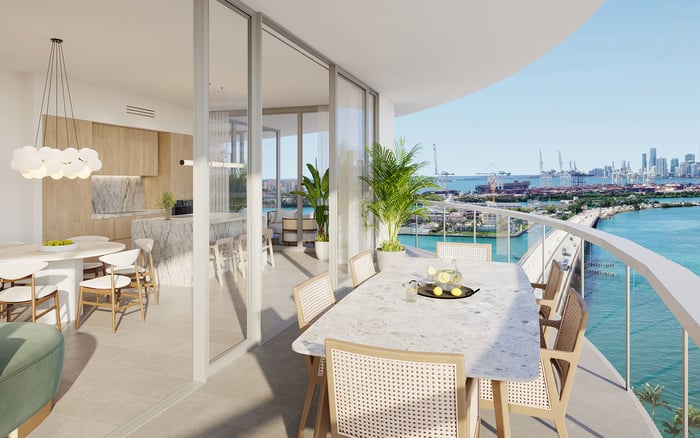
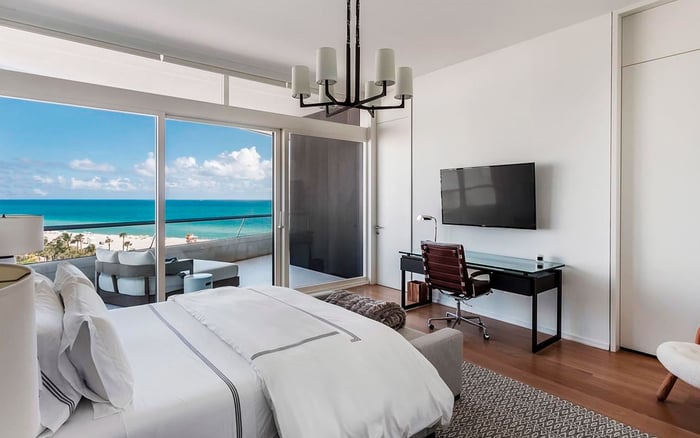
The right home for a family collection is the one with demonstrable environmental stability, dependable oversight and appropriate insurance, not simply the more compelling address. Here is how to compare Aspen and Miami Beach residence by residence.

For a family dividing its time between Aspen and Miami Beach, deciding where the principal art collection belongs is both intimate and operational. The works may define the rooms where everyone gathers, yet their placement should depend on more than where the family entertains most beautifully. The decisive question is which residence can sustain appropriate conditions and dependable oversight while its owners are elsewhere.
Neither destination merits an automatic preference. Aspen's appeal does not eliminate water failures, strong ultraviolet exposure or the complications of seasonal vacancy. A Miami Beach address does not, by itself, establish collection-ready environmental control or comprehensive insurance. Preservation suitability and operating convenience are separate judgments. Decide first on the strength of the building and its management, then consider the pleasure of living with the art.
Before comparing properties, ask a conservator to identify the needs of the works intended for permanent display. Works on paper, textiles and sensitive finishes warrant particular attention to light: Colorado's stronger light and ultraviolet exposure can fade pigments, discolor textiles and damage vulnerable surfaces. A compelling wall is not necessarily the right wall.
Create a room-by-room placement plan rather than issuing a single verdict on the entire house. Ask which works need greater protection, where environmental conditions will be measured and whether each proposed display location can meet the collection's requirements. Avoid imposing one unverified temperature or humidity target on every material.
For a buyer considering Faena House Miami Beach, the useful inquiry is not whether the residence looks suited to collecting. It is whether the particular apartment, proposed installation and operating arrangements satisfy the conservator's brief. Apply the same standard to the Aspen home.
A claim of climate control is a starting point, not a conclusion. Assess how temperature and humidity are controlled, recorded and reviewed. Ask who receives an alert when readings drift, who investigates an equipment failure and what happens if the first contact is unavailable.
Request recorded readings for the proposed display areas where available. If none exist, consider monitoring before committing the main collection. A collector should be able to distinguish an attractive room from a reliably managed environment.
The same diligence applies when evaluating The Perigon Miami Beach. Request property-specific information rather than assuming residential services include collection management. Establish what the owner must arrange independently, including monitoring, review and emergency access. No project name substitutes for those answers.
Second-home ownership makes the response plan especially important. In an unoccupied Aspen residence, a frozen pipe can cause prolonged water damage if the failure is not discovered promptly. The relevant comparison is not simply mountain versus coast, but unattended time versus effective detection and intervention.
Aspen insurance underwriting may consider seasonal occupancy, monitoring systems, water-shutoff devices and regular property checks. Treat these as practical management questions as well as insurance questions. Who checks the residence? Who can enter? Who can authorize action without waiting for a family member overseas?
Document those responsibilities for both properties. A monitoring system should have an identified alert recipient, and that person should have a defined next step. The better home for the main collection may be the less frequently occupied residence, but only if its oversight is demonstrably stronger. Occupancy alone is not a preservation strategy.
Fine-art protection deserves its own review. Scheduled fine-art coverage is available in the Miami Beach high-value-home market, alongside distinct coverage for jewelry and wine. Availability does not confirm that a particular household policy protects every work on the intended terms.
Layered private and excess flood protection, extended replacement-cost coverage and high-limit liability products are also offered in that market. Their inclusion in an insurance offering does not establish how a collection claim would be handled. Ask the adviser to explain where home coverage ends, where collection coverage begins and which exclusions or conditions apply.
For an apartment under consideration at Five Park Miami Beach, review the proposed collection arrangements with the insurer before installation. Repeat the exercise for Aspen. Specifically check mountain transport, temporary storage, installation and relocation during renovations rather than assuming coverage follows every movement unchanged.
Professional art storage and specialist logistics are options to consider in the Aspen decision. Announced expansion of local storage capacity points to additional options, but an announcement is neither a reservation nor proof of present suitability. Confirm availability and evaluate the actual facility before relying on it.
Ask a prospective storage provider the same environmental questions asked of the residences: how conditions are controlled, whether readings are recorded, who reviews them and what triggers intervention. Security should combine controlled access, surveillance, alarm monitoring and procedures governing who may handle individual works.
For each residence, establish a handling plan covering arrival, temporary holding and installation. Evaluate operating convenience through actual access arrangements and professional support, not a presumed infrastructure advantage for either destination. Specialist logistics can support the decision, but they do not replace property-level diligence.
Renovation introduces dust, vibration, contractor access, temporary storage and changes to security systems. Even a carefully managed residence needs a fresh collection plan when work begins. Decide in advance which pieces should leave, where they will go and who will oversee their return.
Revisit insurance before the first relocation, not after the installation schedule changes. Confirm the intended handling and storage arrangements, and clarify responsibilities among the household, contractors and art specialists. Treat renovation as a separate operating period, not an interruption covered by the usual household routine.
Compare the two residences across five headings: environmental stability, vacancy oversight, security, handling access and policy terms. Record the evidence and unresolved questions for each. Do not let a beautiful installation opportunity outweigh an unanswered preservation concern.
If Aspen offers stronger documented controls and dependable year-round oversight, it may be the appropriate home for the principal collection. If the Miami Beach residence performs better on those measures, it may deserve that role. If neither meets the brief, consider professional storage while improvements are made. The aim is not to crown a destination, but to give the family's most meaningful works a home worthy of their care.
Explore residences through MILLION with the collection's requirements firmly in view.
If branded residences are on your mind — as a home or as an allocation — we would be glad to share what we are seeing, privately.
Begin a quiet conversationNo. Its suitability depends on the residence's environmental controls, light protection, water monitoring and dependable year-round oversight.
Compare environmental stability, vacancy management, security, handling access and actual insurance terms. Keep those preservation considerations separate from lifestyle preferences.
Colorado's stronger light and ultraviolet exposure can fade pigments, discolor textiles and damage sensitive finishes. Evaluate each proposed display location with the collection's needs in mind.
No. Ask how temperature and humidity are controlled, recorded and reviewed, and who responds when conditions drift or equipment fails.
A frozen pipe can cause prolonged water damage if nobody discovers the failure promptly. Monitoring, water-shutoff devices and regular property checks deserve attention.
Do not assume it does. Scheduled fine-art coverage is available, but the actual policy wording must be reviewed for the collection and its intended locations.
The availability of flood protection does not establish how a collection claim would be handled. Review the relationship between home, flood and fine-art coverage with the insurance adviser.
Check mountain transport, temporary storage, installation and relocation during renovations. Do not assume coverage remains unchanged through every stage.
Look for controlled access, surveillance, alarm monitoring and procedures restricting who handles individual works. Apply that review to both residences and storage facilities.
Make a separate plan before work begins because dust, vibration, contractor access and security changes introduce risks. Decide which works should leave and confirm handling, storage and insurance arrangements.