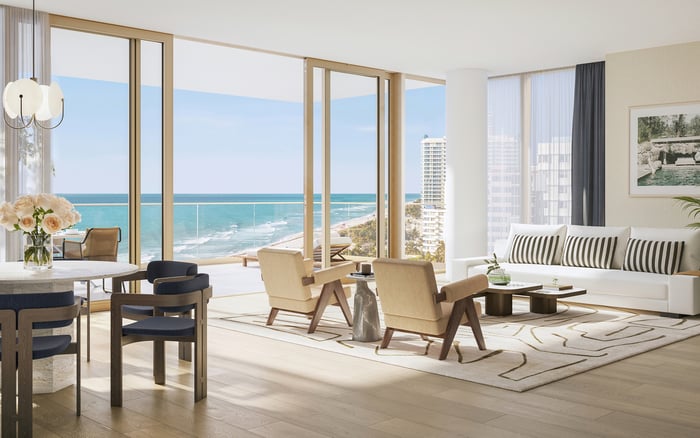
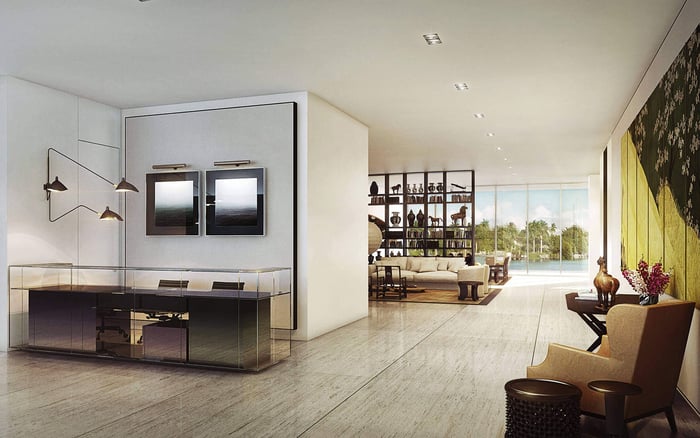
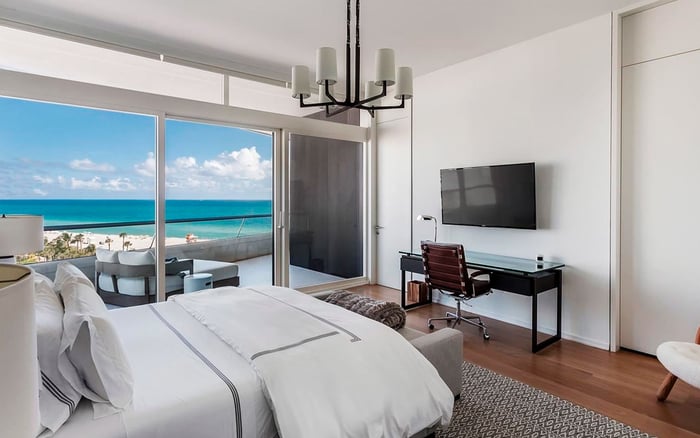
Five Park’s luminous architecture invites a more exacting conversation about comfort and collecting. Serious buyers should evaluate residence-specific sun exposure, glazing, shade permissions, and environmental performance before treating a beautiful interior as a suitable home for important art.
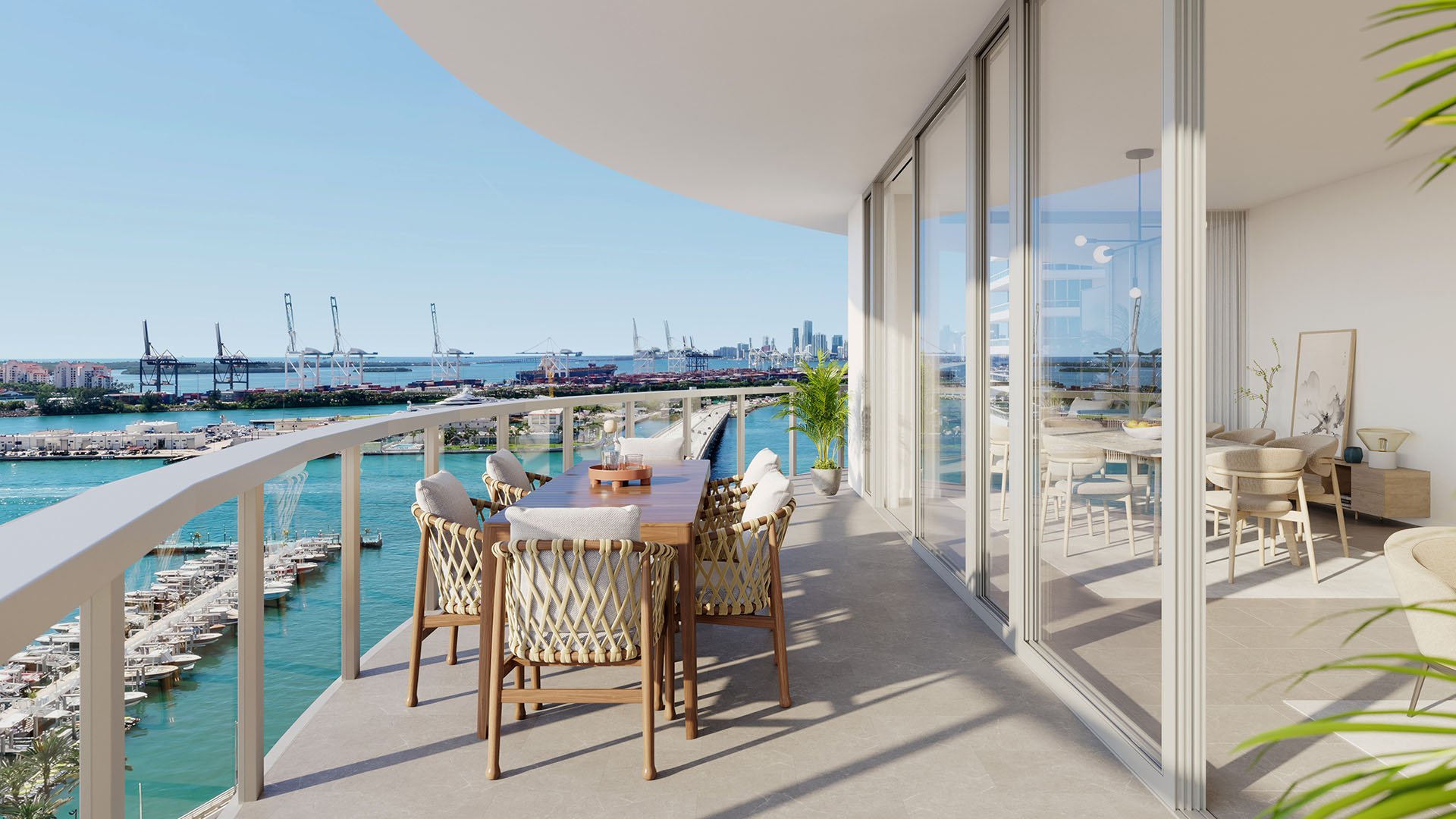
At Five Park Miami Beach, daylight is central to the architecture. The 48-story Arquitectonica tower at 500 Alton Road pairs an elliptical form with expansive glazing and views of city, water, and park. For a buyer envisioning both an elegant home and a serious collection, that openness raises a more exacting question: how will light behave inside the particular residence?
A luminous room, a comfortable room, and a suitable setting for important art are not interchangeable. Each deserves its own assessment. The goal is not to diminish the pleasure of a bright Miami Beach home, but to understand which aspects of that experience can be controlled.
Begin with the floor plan, the intended furniture arrangement, and the proposed artwork locations. A viewing should test the residence you intend to inhabit, not simply confirm the appeal of its outlook.
Five Park’s elliptical geometry is more than a silhouette. Its curved layout creates substantial apartment frontage around the elevator core. The design supports a broad range of outlooks, but the building’s 360-degree views should not be read as a promise of panoramic exposure in every residence.
Ask which directions the specific residence faces and how those exposures affect its principal rooms. Request seasonal direct-sun information or a unit-specific daylight and glare study, if available. Identify the proposed art walls on the same plan rather than discussing exposure in the abstract.
Ask to return at a different time of day. One appointment cannot establish year-round conditions. If a purchase depends on a particular wall remaining suitable for display, ask a specialist what further observation or measurement is needed before relying on it.
The residences emphasize abundant natural light and open plans that maximize Miami sunlight. Those are architectural benefits, not substitutes for a glazing specification. Before choosing a display location, request the window and sliding-door schedule for the residence under consideration.
The documentation should include visible-light transmission, solar heat gain coefficient, U-factor, UV transmission, coatings, glass construction, and impact rating. Have the architect or relevant specialist explain what each specification means for the buyer’s intended use. No single performance measure answers every comfort or conservation question.
For buyers also considering Faena House Miami Beach, apply the same document-based approach to each residence. Compare evidence rather than assume either property offers a particular conservation standard. The meaningful distinction is between a documented specification and a quality that remains to be established.
Address glare control before finalizing the decorative scheme. Ask which shade systems are permitted, whether motorization and prewiring are provided, and what remote operation would require. Confirm whether window film is allowed and which changes need association approval.
These are questions, not statements about included features or restrictions at Five Park. Seek written answers for the residence and proposed installation. Distinguish an existing system from a permitted upgrade-and both from an idea awaiting approval.
Then review how the proposed shades would work in daily life. Could the buyer preserve an open view while controlling light at a planned display wall? Would an adjustment require a different furniture layout? Ask the designer and conservator to review the same plan so that visual comfort and collection needs are evaluated together.
The residences feature 10-foot-wide sliding-door openings connecting living rooms and terraces, alongside expansive glazing and finished outdoor spaces. That connection is central to the home’s appeal. It also warrants a close examination of the relationship between the living area, the threshold, and intended artwork.
Ask the design team to review proposed display positions with the doors and shades in the configurations the owner expects to use. The question is not simply whether the room photographs beautifully, but whether its intended arrangement remains workable under those conditions.
When comparing a candidate residence at The Perigon Miami Beach, carry forward the same room-by-room questions rather than transferring conclusions from Five Park. A view-oriented search becomes more useful when each apartment is assessed through its own orientation, documents, and proposed interior plan.
Five Park’s design identity includes art by Daniel Buren, with Gabellini Sheppard Associates and Anda Andrei Design among its design partners. That creative context contributes to the experience of the property. It does not establish museum-grade conditions within a private residence.
Nor does a fully finished interior establish conservation-grade lighting or environmental controls. Ask a conservator to define the requirements for the actual collection, then determine whether the residence can meet them. Avoid adopting a universal light or humidity target without collection-specific advice.
Request HVAC grille locations and documented temperature and relative-humidity performance, including during unoccupied periods. Ask whether temporary light, temperature, and humidity monitoring is permitted and whether a conservator can inspect before closing. These requests do not imply a deficiency. They establish suitability before the collection arrives.
For an owner who will not be continuously in residence, diligence must extend beyond a successful viewing. Ask how the proposed shades and climate settings would be managed during absences, what remote operation is possible, and who would respond if monitoring identified a concern. Confirm capabilities rather than assuming them.
Before committing, assemble a concise decision file: the residence’s orientation, glazing schedule, shade permissions, proposed artwork plan, environmental documentation, and specialist recommendations. Keep unresolved questions visible. If suitability depends on an alteration, establish its approval pathway and feasibility before treating it as part of the home.
The strongest purchase decision preserves both ambitions: the pleasure of Five Park’s daylight and a documented plan for the collection. Neither architectural distinction nor an exceptional outlook can substitute for residence-specific answers.
For a discreet conversation about evaluating Five Park and other South Florida residences, connect with MILLION.
If branded residences are on your mind — as a home or as an allocation — we would be glad to share what we are seeing, privately.
Begin a quiet conversationFive Park is located at 500 Alton Road, Miami Beach, FL 33139.
Arquitectonica designed the 48-story tower, whose elliptical form is a defining architectural feature.
The 360-degree description concerns the building’s design, not a confirmed panoramic exposure for every residence. Buyers should verify the exact apartment’s orientation and outlook.
Request the residence’s orientation, seasonal direct-sun information, and a unit-specific daylight and glare study if available. Review proposed artwork locations alongside the floor plan.
Request visible-light transmission, solar heat gain coefficient, U-factor, UV transmission, coatings, glass construction, and impact rating for the windows and sliding doors.
They should not be assumed. Buyers should confirm permitted systems, motorization, prewiring, window-film rules, and association approval requirements in writing.
The residence specifications describe 10-foot-wide sliding-door openings connecting living rooms with terraces, along with expansive glazing and finished terraces.
No. A fully finished designation does not establish conservation-grade lighting or museum-grade environmental controls.
Ask for HVAC grille locations and documented temperature and relative-humidity performance, including during unoccupied periods. A conservator should assess the requirements of the specific collection.
Buyers should ask whether a pre-closing conservator inspection and temporary light, temperature, and humidity monitoring are permitted. Neither permission should be assumed.