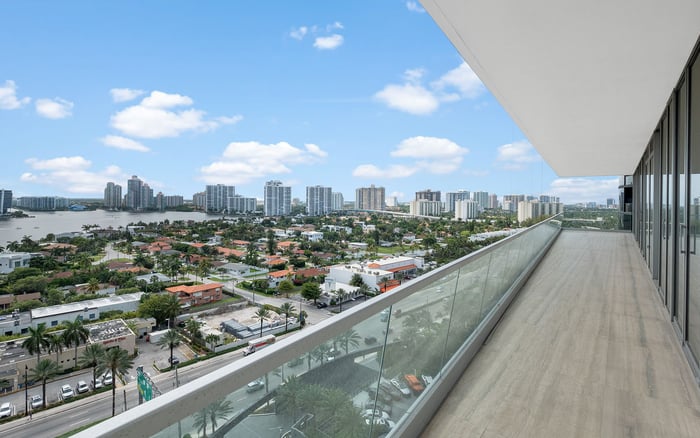
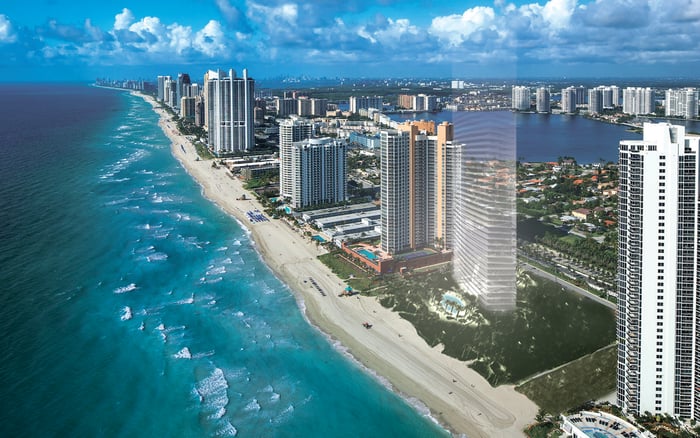
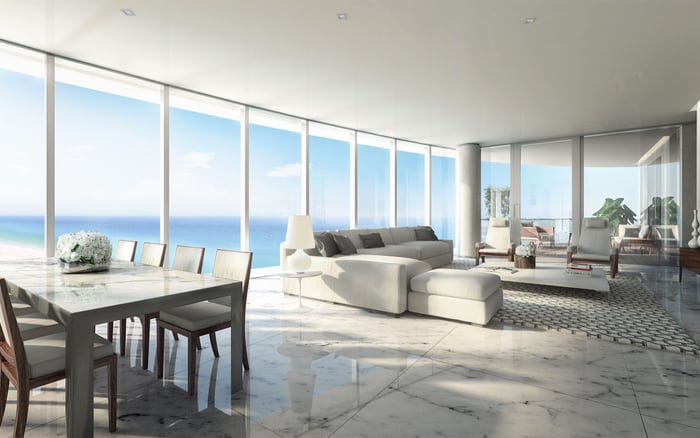
At Muse Residences, the beach is both an amenity and managed coastal infrastructure. Buyers should weigh recurring nourishment, temporary disruption, parcel-specific access, association records, and building-level coastal diligence before assigning a lasting premium to direct ocean frontage.
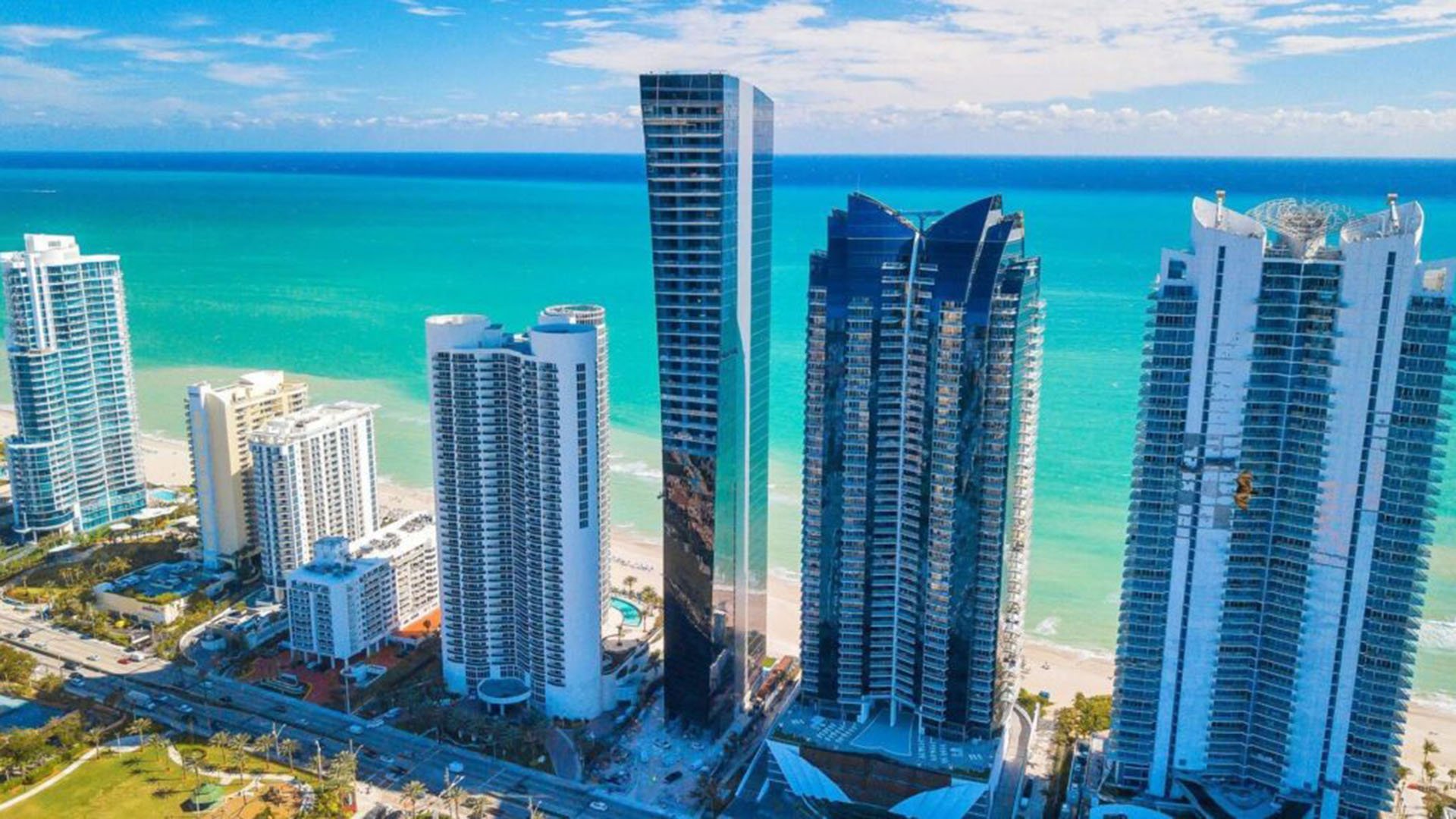
At Muse Residences Sunny Isles Beach, the Atlantic is more than a view. The 49-story condominium at 17141 Collins Avenue stands directly beside a shoreline maintained through a long-running public protection program. For buyers, that distinction matters: the beach is at once a prized amenity, a storm buffer and managed infrastructure.
Sunny Isles Beach has been part of the federal Miami-Dade shore-protection framework since 1985. Federal authority provides for a protective beach along roughly 2.5 miles north of Haulover and permits periodic nourishment. The practical implication is not that the sand will remain static, but that erosion is addressed through a recurring cycle of monitoring, planning and engineered replacement.
That cycle can help preserve beachfront utility over time. It can also bring temporary noise, equipment, altered views and constrained access. A disciplined purchase analysis should account for both sides of the equation rather than treat direct frontage as a permanently unchanged condition.
Beach nourishment places beach-quality sand along eroded reaches to restore width and reinforce the shoreline’s protective profile. Storms and currents continue to move that material, so maintenance recurs periodically rather than ending with a single project.
The scale has been substantial. A 2017 Sunny Isles project carried a contract of approximately $8.6 million and called for about 140,000 cubic yards of sand across more than 4,400 feet. It included 20,000 cubic yards on each side of Newport Pier, illustrating how treatment can focus on specific erosion hot spots. Another contract, valued at approximately $14.04 million, followed in 2021 under the broader beach-erosion and hurricane-protection program.
Funding has historically been shared: approximately 62.7% federal, 19.3% Miami-Dade County and 18% State of Florida. That public framework matters to owners because large-scale shoreline maintenance is not necessarily borne by a single condominium association. It does not, however, rule out private contributions, access repairs, dune work or other property-level costs.
A useful nearby example involved The Estates at Acqualina Sunny Isles. Its developer paid about $1.8 million in 2020 to place 80,000 cubic yards of sand along roughly three-quarters of a mile. Weekday operations and multi-month restrictions demonstrated how beneficial shoreline work can feel construction-like while underway.
Oceanfront value rests partly on immediacy: an open vista, convenient access to the sand and the sensory experience of living beside the water. A wider, maintained beach can support each of those attributes while providing a measure of storm buffering. In that sense, recurring nourishment may protect both lifestyle utility and buyer confidence.
The counterweight is timing. A residence marketed during active work may contend with compromised outlooks, machinery noise or a less seamless route to the beach. Those conditions usually differ from permanent impairment, but they can shape showing impressions, rental appeal and negotiating leverage while work is underway.
For that reason, comparisons with The Ritz-Carlton Residences® Sunny Isles or Bentley Residences Sunny Isles should not rest on a citywide assumption about the sand. Each property’s frontage, access route, dune profile and relationship to the applicable project reach can differ. For investment and resale decisions, parcel-level evidence is more useful than a broad Sunny Isles narrative.
Begin by mapping Muse’s parcel to the latest shoreline reach and monument plans. A condition observed near Newport Pier or at a northern Collins Avenue address does not automatically describe the frontage at 17141 Collins Avenue. In 2026, access issues documented at 19575 and 18401 Collins Avenue underscored the need to verify present conditions rather than transfer them southward to Muse.
Next, review condominium materials for costs and operational effects that may fall outside the principal public nourishment contract. Association minutes, budgets and reserve studies may reveal beach-access repairs, drainage work, dune maintenance or private shoreline contributions. Ask whether any future project has been discussed, scheduled or financially anticipated-and whether staging could affect specific amenities.
The physical review should extend beyond the visible width of the beach. Confirm lobby and amenity-deck elevations, drainage conditions, dune continuity, flood-insurance history, wave-runup information and any shoreline-hardening structures. Request Muse-specific geotechnical and subsidence records as well. Subsidence was identified between 2016 and 2023 among many analyzed condominiums and hotels in North and Central Sunny Isles Beach, but that area-wide finding does not establish that Muse is sinking or structurally unsafe.
Finally, inspect at different tides and ask how residents reach the sand during routine maintenance or major work. Waterfront ownership is experienced through the access sequence as much as through the view. Oceanfront premiums are most defensible when the legal, physical and operational details all support the lifestyle being purchased.
For a long-horizon buyer, recurring nourishment is best understood as coastal stewardship accompanied by periodic inconvenience. The public program provides an established mechanism for replacing lost sand and maintaining a protective beach. Its history also confirms that erosion is persistent and future intervention foreseeable.
The strongest valuation approach distinguishes temporary disruption from durable impairment. Construction noise over a defined period may justify tactical negotiation. Repeated access failure, unresolved drainage concerns or unplanned association obligations would warrant a more structural adjustment. At Muse, the essential question is not whether Sunny Isles experiences erosion, but how effectively this particular property anticipates, documents and manages its interface with the shoreline.
Is Muse Residences directly oceanfront? Yes. Muse is a 49-story condominium at 17141 Collins Avenue beside the managed Atlantic shoreline.
Is beach nourishment a one-time project in Sunny Isles Beach? No. It is part of a recurring shore-protection cycle that permits periodic sand placement.
Does nourishment guarantee a permanently wide beach? No. Storms and currents continue to move sand, so beach width can change between maintenance cycles.
Who generally funds major Sunny Isles nourishment? Funding has historically been approximately 62.7% federal, 19.3% county and 18% state.
Could Muse owners still face shoreline-related costs? Yes. Association-level access, drainage, dune or repair work may fall outside a larger public contract.
Can nourishment interrupt beach access? Yes. Equipment, weekday operations and staged work can temporarily restrict access or alter normal routes.
Should nearby erosion be assumed to affect Muse equally? No. Buyers should map Muse to the correct project reach and inspect its specific frontage and access.
What association records deserve review? Examine minutes, budgets and reserve studies for access repairs, drainage, dune work and private contributions.
Does area-wide subsidence research prove a problem at Muse? No. Regional findings do not establish building-level movement or structural unsafety at Muse.
How should nourishment affect an offer price? Distinguish temporary work disruption from durable access, drainage or funding concerns before adjusting value.
When you're ready to tour or underwrite the options, connect with MILLION.
If branded residences are on your mind — as a home or as an allocation — we would be glad to share what we are seeing, privately.
Begin a quiet conversation