Rosewood leads for disclosing estimated maintenance both with and without reserves, while 1200 Hillsboro Mile offers an established association with a reserve study on file. Buyers should still test every headline fee against budgets, reserve schedules, inspection records and component-level obligations.

On Hillsboro Mile, an exceptional residence is only one part of the acquisition. Equally important is the condominium’s financial architecture: what the association collects, how much it directs to reserves, which capital components are covered and whether future obligations are visible before closing.
That scrutiny is particularly relevant in a coastal setting, where insurance, structural work and major building systems can materially influence ownership costs. A polished amenity program is no substitute for an intelligible budget. For sophisticated buyers, transparent HOA economics means tracing a recurring charge from its headline figure through operating expenses and reserve contributions to the building’s longer-term funding schedule.
The strongest choices in Hillsboro Beach serve different purposes. One provides unusually specific preconstruction estimates. The other offers an established association with a Structural Integrity Reserve Study, or SIRS, on file. Neither eliminates the need for diligence, but both provide a more substantive starting point than a monthly fee presented without context.
The most useful HOA number is not the lowest one, but the one a buyer can reconcile.
1. Rosewood Residences Hillsboro Beach - 1180 Hillsboro Mile
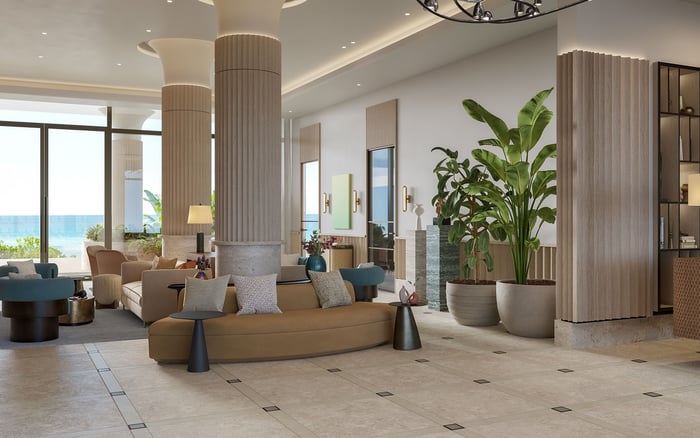
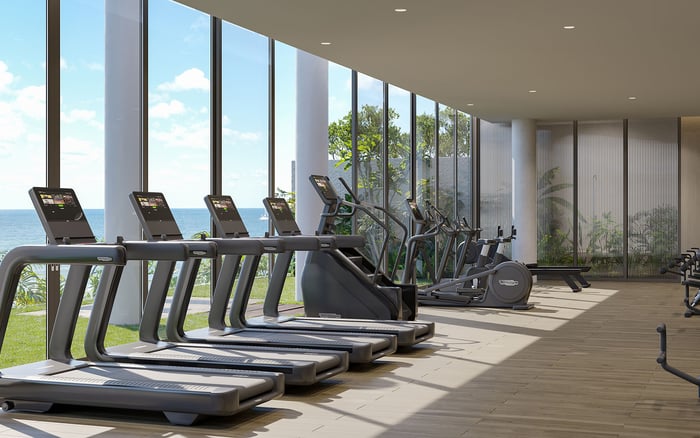
The 92-residence oceanfront development by Related Group and Dezer Development ranks first for projected HOA transparency. Estimated maintenance is approximately $1.74 per square foot with reserves and $1.56 per square foot without reserves. The difference-approximately $0.18 per square foot-gives buyers a quantifiable indication of the reserve contribution contemplated within the higher estimate.
This remains a preconstruction projection, not an owner-controlled association budget or proof of future reserve adequacy. Buyers should compare the estimate with the final adopted budget, reserve schedule and actual obligations when those documents become available. The development secured $307 million in construction financing and town approval under updated coastal regulations in December 2024, adding meaningful execution context without diminishing the need for financial review.
2. 1200 Hillsboro Mile / 1200 The Ocean - 1200 Hillsboro Mile
This 29-unit condominium is the strongest established, newer-generation choice in the ranking because a SIRS is on file. Its structure requires careful interpretation. The original plan paired an 11-unit Intracoastal building with 18 oceanfront residences. The Intracoastal component was complete when the oceanfront residences were released in 2010, and construction of the oceanfront component was underway by October 2014.
That history makes allocation a central question. Buyers should determine which reserves and expenses are shared, which belong to an individual building and how each component contributes. The monthly HOA fee for Unit 1305 was recently $1,926, covering common areas, insurance, maintenance, pest control, sewer and trash. Only the adopted budget can reveal how much of that charge funds reserves.
The spread between $1.74 and $1.56 per square foot is valuable because it makes the reserve assumption visible. For a buyer, however, the calculation should begin rather than end there. Multiply the applicable rate by the residence’s chargeable area, confirm how that area is defined and identify any expenses outside regular maintenance.
The next step is to reconcile the projected reserve component with the eventual schedule of capital items. A reserve line can be present yet still require analysis of useful-life assumptions, replacement costs, inflation and timing. At Rosewood Residences Hillsboro Beach, the distinction between estimates with and without reserves provides a clear framework for asking those questions before owner control.
For new-construction buyers, the discipline is straightforward: treat an estimate as a planning input, not a guarantee. Once available, the final budget and reserve schedule should govern the underwriting.
A SIRS on file confirms that a study exists. It does not, by itself, establish that the association holds sufficient cash, follows the recommended funding schedule or has no pending work. The full study should be read alongside current reserve balances, recent financial statements, the adopted budget and any milestone-inspection summary.
At 1200 Hillsboro Mile, buyers should also request schedules detailing shared and building-specific obligations. The association’s oceanfront and Intracoastal components may create distinctions that a single monthly figure cannot explain. Questions should address allocation percentages, responsibility for structural components and whether a project in one component can affect owners in the other.
A nearby association at 1161 Hillsboro Mile provides an association-specific comparison, not evidence about either ranked property. It had completed its reserve study and 30-year inspection, with full structural and nonstructural reserves, no special assessment anticipated and a new roof installed in 2025. The useful lesson is the level of disclosure a buyer can request-not a conclusion that another building has equivalent funding.
Florida’s reserve framework has raised the standard for condominium diligence. Owner-controlled associations with qualifying buildings of at least three stories that existed by July 1, 2022, had to complete a SIRS by December 31, 2025. Budgets adopted on or after December 31, 2024, may not underfund structural reserve items identified by the study.
A serious review should therefore include the current association budget, recent financial statements, the latest SIRS or confirmation that none exists, and the milestone-inspection summary. Buyers should also seek reserve account balances, the funding schedule, notices of planned capital work and records explaining any special assessment under consideration.
The essential reconciliation is simple: compare annual assessments with operations, insurance and reserve funding, then match reserve balances against scheduled projects. In Broward, this is a more useful measure of financial discipline than comparing monthly fees in isolation.
The framework travels well across South Florida’s premium coastal market. Buyers extending their search north or south can apply the same document test when considering Armani Casa Residences Pompano Beach, Auberge Beach Residences & Spa Fort Lauderdale or Glass House Boca Raton. The objective is not to force unlike properties into a fee comparison, but to ask each association or development the same precise questions about operations, reserves and future capital obligations.
For an oceanfront purchase, disciplined underwriting protects more than cash flow. It supports confidence that the building’s physical ambitions and financial plan are aligned. Rosewood offers the clearest projected reserve signal in Hillsboro Beach, while 1200 Hillsboro Mile offers a more mature record that demands component-level interpretation.
For a discreet review of Hillsboro Beach opportunities and their ownership economics, connect with MILLION.
If branded residences are on your mind — as a home or as an allocation — we would be glad to share what we are seeing, privately.
Begin a quiet conversationRosewood Residences Hillsboro Beach ranks first because its fact sheet estimates maintenance both with and without reserves.
The estimates are approximately $1.74 per square foot with reserves and $1.56 per square foot without reserves.
It provides a quantifiable indication of the projected reserve contribution embedded in the higher maintenance estimate.
No. They are developer estimates that should be compared with the final adopted budget and reserve schedule.
It is an established 29-unit condominium with a Structural Integrity Reserve Study on file, offering a substantive basis for further review.
No. Buyers still need the full study, funding schedule, current balances and adopted budget to assess adequacy.
Its oceanfront and Intracoastal components may have shared and building-specific obligations that a single HOA figure does not explain.
A recent listing showed a monthly HOA fee of $1,926, but the association budget is needed to identify the reserve portion.
Request the association budget, financial statements, milestone-inspection summary and latest SIRS, or confirmation that no SIRS exists.
Separate operating costs, insurance and reserve contributions, then compare reserve balances with the timing and cost of planned capital work.