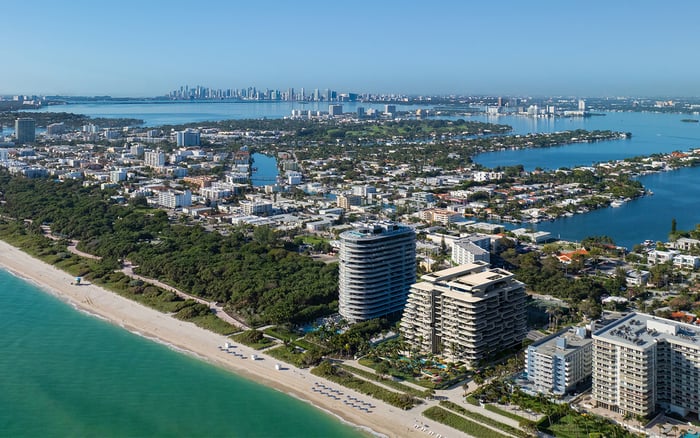
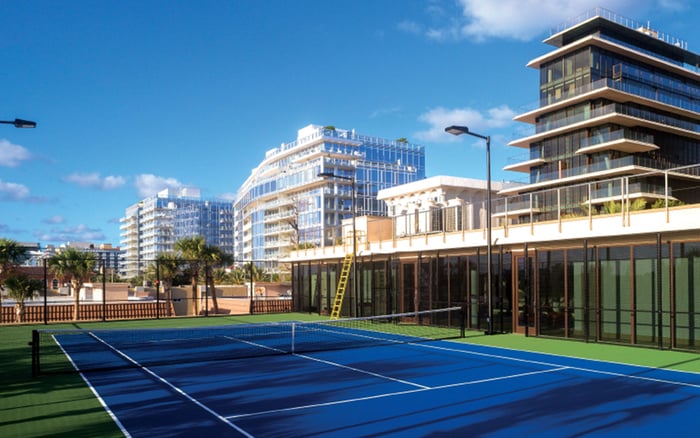
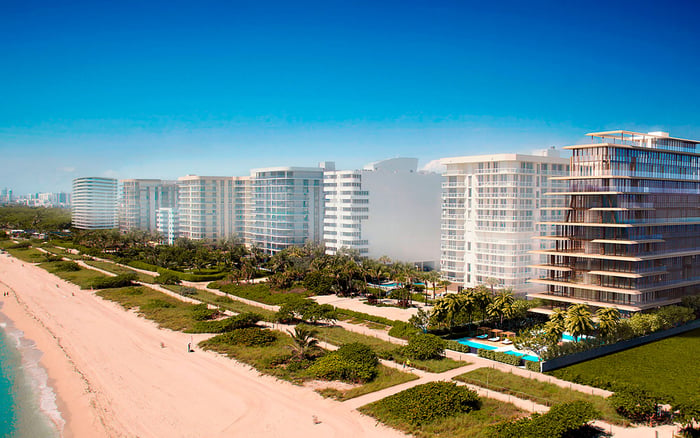
In Surfside, the quiet operational details of condominium life can be as consequential as architecture or views. Pet restrictions, elevator protocols, and guest-parking rules can alter annual costs, daily convenience, privacy, and the ease of hosting.

In Surfside, a residence can satisfy every architectural preference yet remain mismatched to its owner’s rhythms. The decisive details often appear not in a rendering or view corridor, but in association rules, fee schedules, parking procedures, and elevator protocols.
This is especially relevant across the oceanfront market, where buyers may compare established properties with newer options such as Arte Surfside and The Delmore Surfside. Each residence warrants an operational review on its own terms. A pet-friendly label, for example, reveals little about weight limits, elevator access, registration, or recurring charges.
These considerations have become more consequential as post-Surfside regulations and sharply higher insurance premiums place additional pressure on condominium owners. Small operational expenses may not define an acquisition, but they belong in a complete carrying-cost model.
Pet rules illustrate why concise marketing language should never replace governing documents. Azure Condos at 9401 Collins Avenue is pet-friendly for owners and renters, yet permits no more than one pet per residence and caps its weight at 25 pounds. Owners must submit vaccination records before move-in. The association charges no pet fee, limiting the policy’s direct effect on carrying costs-but not its effect on suitability.
The Oasis at Surfside presents a different expense profile. Its terms allow as many as two pets per home, subject to breed restrictions. The one-time, nonrefundable charge is $450 for one pet or $600 for two, while monthly pet rent is $25 per pet. First-year pet charges therefore total $750 for one pet and $1,200 for two.
Makaha Surfside permits one four-legged pet per unit and limits an adult dog or cat to 25 pounds. Its $50 registration fee is refundable only after the pet leaves, the tag is returned, and any outstanding fines are paid. Pets are generally prohibited from common areas except while being taken toward an exit, and they must be carried or leashed in permitted areas.
For buyers whose pets are integral to daily life, number and weight limits are threshold questions, not minor administrative details.
Elevator language can reveal how a building balances resident convenience with controlled circulation. Makaha Surfside does not allow pets in elevators unless residents hold them. For an owner with a 25-pound dog, that requirement can affect every walk, arrival, and departure.
A buyer should also establish whether pets, deliveries, domestic staff, contractors, and move-ins use a service elevator or share passenger elevators. The answer can influence lobby discretion, waiting times, delivery coordination, and the separation of private and operational movement. If a service elevator is available only during defined periods, those windows may shape household staffing and vendor schedules.
This inquiry applies whether evaluating a boutique setting such as Ocean House Surfside or a larger, hospitality-oriented ownership environment such as The Surf Club Four Seasons Surfside. Current elevator procedures should be confirmed directly with the applicable association or management team.
Guest parking rarely commands the attention given to private garages or resident valet service, yet it can determine how gracefully a home accommodates dinners, family visits, household staff, and extended stays. Buyers should confirm the number and type of guest spaces, whether reservations are required, and whether time limits, validation rules, or charges apply.
The financial effect may be direct when guest parking carries a fee. It may also be indirect when visitors must use valet service or arrange parking elsewhere. For a primary resident who entertains frequently, that friction can become a recurring lifestyle issue. For a second-home owner, it may emerge during holidays and concentrated periods of occupancy.
Privacy matters as well. Ask where guests enter, how they are announced, whether vehicles queue near the residential arrival, and which elevators visitors use. These procedures shape the transition from public arrival to private residence.
Before contract deadlines expire, request the current declaration, rules, budget, fee schedule, parking plan, move-in requirements, and pet registration materials. Then obtain written clarification on any points that remain ambiguous.
Model one-time charges separately from recurring expenses. Pet registration, nonrefundable fees, monthly pet rent, guest parking, and potential elevator-related move procedures should not be blended into a single estimate. For an investment purchase, confirm whether rules differ for owners, tenants, and their guests. Azure extends pet-friendly status to owners and renters, but its one-pet and 25-pound limits still apply at the residence level.
Operational rules can also affect future resale. A home may appeal to a narrower audience if it cannot accommodate multiple pets, a larger dog, frequent visitors, or a household requiring flexible service access. The objective is not to find the least restrictive building, but to identify the one whose controls support the owner’s preferred balance of order, discretion, cost, and ease.
Does pet-friendly mean every pet is permitted? No. Number, weight, breed, registration, common-area, and elevator restrictions may still apply.
What is Azure’s pet limit? Azure permits one pet per residence, with a maximum weight of 25 pounds.
Does Azure charge an association pet fee? It does not, although owners must provide vaccination records before move-in.
What are The Oasis at Surfside’s first-year pet charges? Charges total $750 for one pet or $1,200 for two pets in the first year.
Is Makaha Surfside’s registration fee refundable? Yes, subject to the pet leaving, return of its tag, and payment of outstanding fines.
Why should buyers review pet elevator rules? Carrying requirements and designated routes can materially affect the convenience of daily walks.
What should buyers ask about service elevators? Confirm permitted users, operating hours, reservation procedures, and rules for pets, staff, deliveries, and moves.
How can guest parking affect carrying costs? Guest-space charges, valet fees, or alternative parking arrangements can create recurring hosting expenses.
How does guest circulation influence privacy? Entry, announcement, vehicle-queue, and elevator procedures determine how clearly visitor movement is separated from private residential life.
When should association rules be reviewed? Review current documents and obtain written clarifications before applicable contract deadlines expire.
For a tailored shortlist and next-step guidance, connect with MILLION.
If branded residences are on your mind — as a home or as an allocation — we would be glad to share what we are seeing, privately.
Begin a quiet conversation