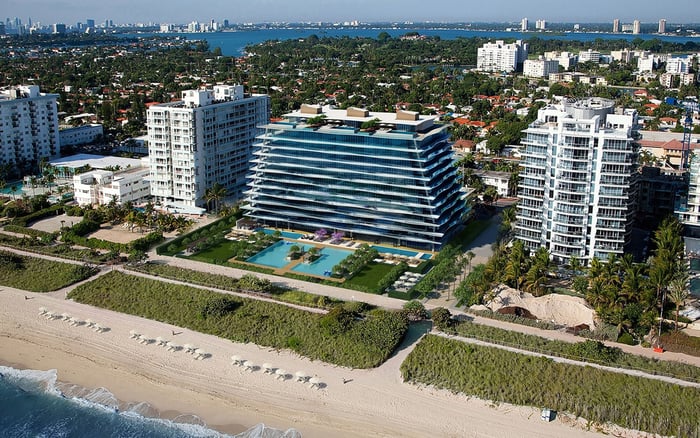
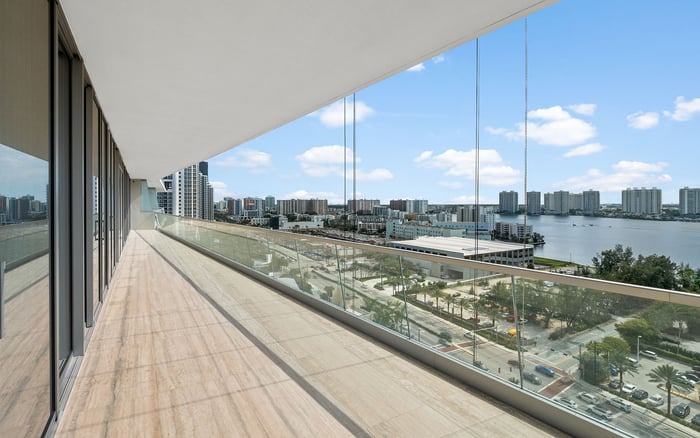
For an Atherton buyer considering Sunny Isles Beach, the essential comparison extends beyond price and monthly dues. A disciplined ownership budget separates operating expenses, service charges, gratuities and structural reserves, then tests the timing of future obligations.

Moving from Atherton to Sunny Isles Beach invites a different definition of residential ease. The property decision should account not only for the residence itself, but also for how services, maintenance and future building work are organized and funded. The meaningful comparison is annual ownership cost, with irregular cash demands considered separately.
For a buyer considering Jade Signature Sunny Isles Beach, the financial review should be as deliberate as the floor-plan review. Establish what the specific residence obligates its owner to pay, what the association funds collectively and which conveniences remain optional. Monthly dues alone cannot answer all three questions.
The aim is not necessarily the lowest annual expense. It is an ownership structure whose costs, service commitments and capital obligations fit the household’s expectations without relying on optimistic assumptions.
Begin with the actual Atherton household ledger: property taxes, insurance, maintenance, household services and money earmarked for future repairs. Separate recurring expenses from exceptional projects. A year with a major renovation can distort the comparison as readily as one with unusually little maintenance.
An approximate 1.16% Atherton property-tax benchmark for tax year 2025 yields an illustrative $116,000 on $10 million of assessed value. This is not a parcel-specific tax estimate, and purchase price should not be used casually in place of assessed value. Atherton’s municipal reliance on property-tax revenue likewise says nothing definitive about an individual household’s liability.
For the Sunny Isles purchase, obtain a property-specific tax estimate rather than carrying the California percentage into the Florida calculation. Have the buyer’s tax adviser distinguish the proposed ownership scenario from the seller’s existing bill. Keep any broader relocation tax analysis separate from the residence’s carrying-cost comparison.
Use the same categories for every candidate residence. At Armani Casa Sunny Isles Beach or another shortlisted address, request the applicable budget and written charges before calculating an annual total.
The ledger should distinguish:
Property taxes estimated for the contemplated purchase.
Association operating charges and identifiable reserve contributions.
Owner-paid insurance, utilities and maintenance outside the association budget.
Special assessments and association debt repayments attributable to ownership.
Mandatory service charges, elective services and discretionary gratuities.
Annualize recurring charges, then add scheduled nonmonthly payments. If reserves are already included in regular dues, identify that portion for analysis without adding it again. Apply the same discipline to insurance and staffing: distinguish association-funded expenses from the owner’s additional obligations rather than treating every category as an incremental bill.
Keep acquisition costs, move-in expenditure and personal mortgage payments visibly separate from the property’s underlying annual burden. They matter to household liquidity, but combining them indiscriminately obscures the comparison between residences.
Luxury service has value when its scope matches the way an owner actually lives. Ask management to identify what is included, what is charged by use and what creates a recurring obligation regardless of occupancy. Do not assume valet arrangements, club access or other services are bundled simply because they feature prominently in a presentation.
When evaluating Turnberry Ocean Club Sunny Isles, apply the same written-fee review rather than inferring charges from the project’s positioning. Request any applicable service schedule, membership terms and policies governing guest or additional-use charges. These are questions to resolve, not assertions that a particular fee exists.
Gratuities belong on a separate line. Ask whether any staff fund is voluntary, whether a service bill already includes a charge and how management describes additional tipping. Do not apply a presumed tipping percentage or assume a holiday contribution is compulsory. Budget discretionary generosity according to intended use, and record documented mandatory charges among contractual expenses.
Reserve growth is the accumulation of association funds for future building work. It is not personal investment growth and does not guarantee a higher resale value. What matters is whether the funding plan addresses identified needs on a workable timetable.
Under Florida’s 2025 statute and reforms, Structural Integrity Reserve Study requirements apply to qualifying residential condominium buildings with three or more habitable stories. Qualifying associations must complete a SIRS at least every 10 years. The study combines visual inspection with estimates of remaining useful life and repair or replacement costs for covered common-area components.
Those components include roofs, structural systems, fire-protection systems, plumbing, electrical systems, and waterproofing or exterior painting. Required SIRS reserves generally cannot be waived or reduced by an owner vote, subject to statutory exceptions and relief provisions.
The 2025 reforms require a baseline funding plan designed to prevent projected reserve cash balances from falling below zero. Buyers should examine both the current balance and the projected sequence of contributions and expenditures. A growing balance alone does not establish that future obligations are adequately funded.
The 2025 reforms moved the initial SIRS deadline for affected existing associations from December 31, 2024, to December 31, 2025. Limited provisions permit eligible associations to coordinate the initial study with a milestone inspection, with completion no later than December 31, 2026. This is not a blanket extension. Have condominium counsel confirm applicable law, compliance status and any claimed relief for the association under consideration.
For Regalia Sunny Isles Beach, as for any candidate, request the latest applicable SIRS, adopted budget, reserve funding plan and details of assessments or association borrowing. Reconcile earlier study recommendations with the adopted plan rather than reading either document in isolation.
The 2025 framework permits special assessments, loans and lines of credit to fund SIRS reserves, subject to statutory requirements. Financing does not remove the need to base funding on the latest study. It can shift part of the burden to future repayments, so examine payment timing and outstanding obligations alongside current dues. Inadequate or delayed reserve funding can expose owners to large special assessments.
Finish with a base-case annual budget and a separate liquidity schedule for documented assessments, debt repayments and planned capital demands. Then test household affordability under clearly labeled assumptions for higher costs or accelerated expenditure. Do not present those assumptions as building forecasts.
The stronger property decision is the one whose service value and financial obligations remain persuasive after that review. Low advertised dues are not enough; understandable obligations and a credible funding plan deserve equal attention.
For a discreet conversation about aligning your Sunny Isles Beach search with your ownership priorities, connect with MILLION.
If branded residences are on your mind — as a home or as an allocation — we would be glad to share what we are seeing, privately.
Begin a quiet conversationSeparate property taxes, association operating charges, reserves, owner-paid insurance and maintenance, assessments or debt repayments, service charges and discretionary gratuities. Keep one-time purchase and move-in expenses distinct.
No. The approximate 2025 benchmark illustrates $116,000 on $10 million of assessed value, but it is not a parcel-specific estimate or a Florida tax rate.
No. Current dues alone do not show whether reserves are adequately funded or whether assessments and association debt create additional obligations.
Identify the reserve portion already included in regular association dues. Separate it for analysis without adding it again to the annual total.
No. Obtain written schedules identifying included services, mandatory charges and optional or usage-based expenses for the specific residence.
Do not assume they are mandatory or voluntary without checking the building’s written policies. Record discretionary gratuities separately from documented mandatory service charges.
The 2025 framework applies to qualifying residential condominium buildings with three or more habitable stories. Qualifying associations must complete a SIRS at least every 10 years.
Under the 2025 framework, required SIRS reserves generally cannot be waived or reduced by owner vote, subject to statutory exceptions and relief provisions. Counsel should confirm the rules applicable to the association.
No. The 2025 reforms established December 31, 2025, for affected existing associations, with limited coordination provisions allowing eligible associations to complete the initial study no later than December 31, 2026.
Reserve growth funds future building expenditure rather than personal investment gains. It does not guarantee higher property values, and its adequacy must be assessed against projected work and funding needs.