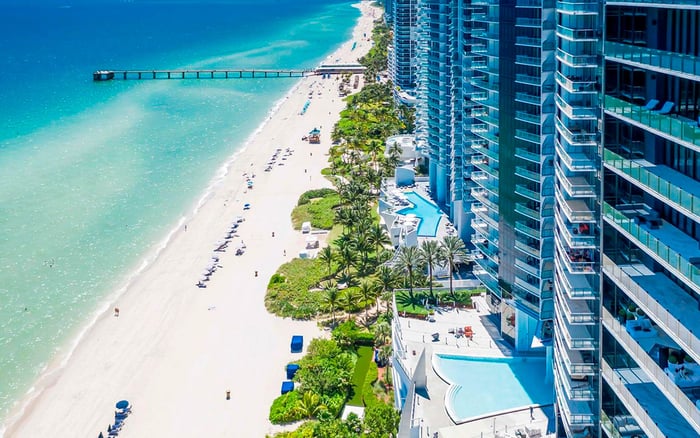
Sunny Isles Beach has a lower municipal-tax charge at equal taxable values under the 2025 adopted rates. For luxury buyers, the more complete decision pairs that comparison with homestead eligibility, portability and a residence-specific annual ownership budget.
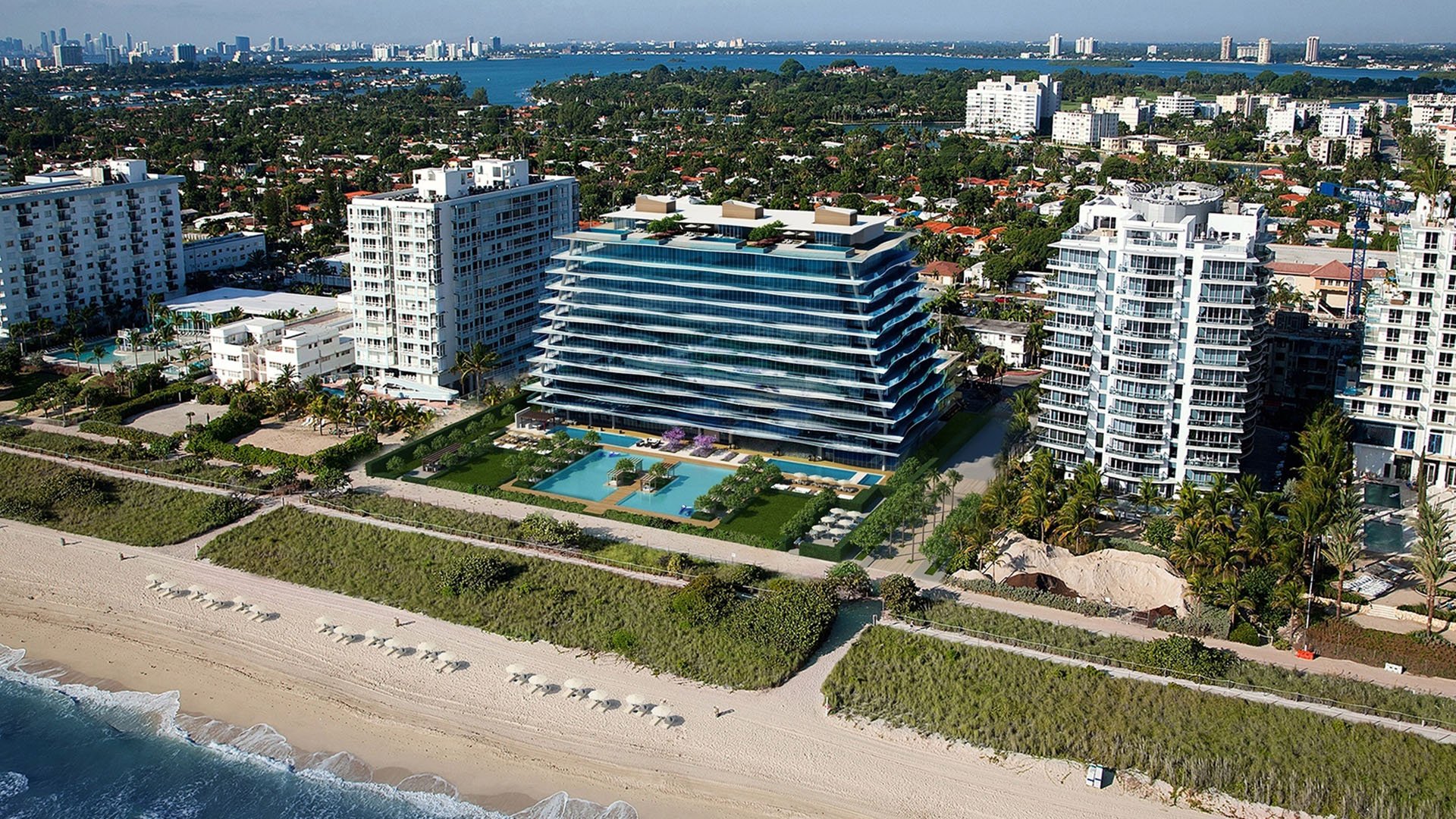
For a luxury buyer weighing Surfside against Sunny Isles Beach, property taxes deserve a separate line in the acquisition analysis. They should not, however, stand in for the full cost of ownership. That distinction matters when comparing equally compelling residences with different assessed values and operating budgets.
Under the 2025 adopted municipal rates, Sunny Isles Beach has the lower city-tax charge at equal municipal taxable values. Both municipalities share Miami-Dade County's countywide and school levies, but their municipal millage differs materially. The result is a measurable tax distinction-not a demonstrated advantage in total annual carry.
For a shortlist spanning Arte Surfside and Jade Signature Sunny Isles Beach, a disciplined comparison separates three questions: what taxable value applies to the buyer, which homestead benefits the buyer qualifies for, and what the individual residence costs to hold.
The 2025 adopted municipal rate is 3.8830 mills in Surfside and 1.7000 mills in Sunny Isles Beach. One mill equals $1 of tax for every $1,000 of taxable value. To calculate the city-tax charge, multiply municipal taxable value by municipal millage, then divide by 1,000.
The difference is 2.1830 mills, or $2,183 annually for each $1 million of equal municipal taxable value, before payment discounts.
At $5 million of municipal taxable value, the city portion alone is:
Surfside: $19,415 annually.
Sunny Isles Beach: $8,500 annually.
Difference: $10,915 annually. These are calculations, not tax quotes for a $5 million purchase. They exclude county, school and other levies, as well as non-ad valorem charges. A residence's taxable value is its assessed value less applicable exemptions-not simply its contract price.
Both municipalities reduced their adopted municipal rates between 2024 and 2025. Surfside moved from 4.0000 to 3.8830 mills; Sunny Isles Beach moved from 1.8000 to 1.7000 mills. Surfside's municipal rate remained more than twice that of Sunny Isles Beach, but that does not mean its entire property-tax bill is twice as large. These comparisons apply to the stated tax years; they are not a promise about future rates.
Choosing Surfside over Sunny Isles Beach does not change Florida's underlying homestead framework. Eligibility turns on qualifying permanent residency. A residence held solely as a second home or investment does not qualify, regardless of its purchase price or the owner's preference for favorable tax treatment.
For buyers evaluating Fendi Château Residences Surfside, the essential question is not whether the building confers a tax advantage. It is whether the buyer's intended use and circumstances support a qualifying permanent residence.
The first $25,000 of homestead exemption applies to all property-tax levies. The additional homestead exemption applies only to non-school levies, so school and municipal taxable values need not match. Confirm the exemption amount for the relevant tax year rather than applying a single undated allowance to every component of the bill.
The standard homestead application deadline is March 1 for the applicable exemption year. Closing does not automatically establish eligibility or grant the exemption. Before committing to a purchase, confirm the residency requirements and filing timetable with an appropriate adviser.
For qualifying homesteaded property, Save Our Homes generally limits annual assessment increases to 3% or the applicable CPI change, whichever is lower. It protects against assessment growth; it does not guarantee that the total tax bill will rise by no more than that percentage.
The homestead assessment limitation begins in the second year, after the initial assessment. Buyers should distinguish the initial buyer-specific estimate from the longer-term scenario, rather than assume the cap immediately protects the seller's existing assessment.
Eligible owners moving between Florida homesteads may also transfer up to $500,000 of accumulated Save Our Homes assessment benefit, subject to qualification requirements. Portability is an assessment benefit-not a $500,000 tax credit or an automatic exemption available to every purchaser.
For an owner considering Turnberry Ocean Club Sunny Isles after selling another Florida homestead, portability belongs in the individual tax model. It should not be assumed from the property's location or the seller's bill.
Neither homestead nor portability erases the municipal spread. At equal municipal taxable values after applicable benefits, Surfside still produces the higher city-tax charge under the 2025 adopted rates. Actual residences, however, may not have equal taxable values.
An existing tax bill can be a poor guide to a new owner's recurring obligation. A purchase after January 1 may retain the previous owner's homestead exemption and assessment limitation for that year. That temporary treatment should not be mistaken for the buyer's long-term position.
Request separate estimates for the acquisition year and the subsequent buyer-specific assessment. Then consider the longer-term homestead scenario, if eligible, including any qualifying portability benefit. Keep the tax year consistent across the properties being compared.
Use a folio-based review and the county's buyer tax estimator to examine each residence separately. The objective is to establish the relevant assessed value, exemptions and taxable values-not extrapolate from an attractive historical bill. Where eligibility or timing is uncertain, budget without the unconfirmed benefit until it is established.
Municipal tax is one component of ownership. A meaningful annual budget also requires property-specific insurance, association fees, maintenance and special-assessment exposure. None can be reliably inferred from the municipal millage comparison.
Before choosing between two residences, assemble a side-by-side ownership schedule. Separate recurring charges from potential or scheduled assessments, and identify what remains uncertain. Review each property's underlying documents rather than substituting neighborhood-wide assumptions for its actual obligations.
The decision can then remain precise. Sunny Isles Beach offers the lower municipal-tax burden at equal taxable values under the 2025 adopted rates. Surfside may still be the preferred purchase, but the city-tax difference should remain visible in that budget. Homestead strategy deserves equal attention in either location. Any conclusion about total annual carry must wait for residence-specific numbers.
For a considered comparison of residences in Surfside and Sunny Isles Beach, explore MILLION.
If branded residences are on your mind — as a home or as an allocation — we would be glad to share what we are seeing, privately.
Begin a quiet conversationSunny Isles Beach has the lower rate at 1.7000 mills, compared with Surfside's 3.8830 mills. That means a lower municipal-tax charge at equal municipal taxable values, not necessarily lower total ownership costs.
The 2025 city portion calculates to $19,415 in Surfside and $8,500 in Sunny Isles Beach, a $10,915 annual difference before payment discounts. This excludes county, school and other levies and non-ad valorem charges.
No. The calculation uses taxable value, which is assessed value minus applicable exemptions, and municipal millage covers only the city portion of the bill.
Both municipalities use the same Florida homestead framework. Eligibility depends on qualifying permanent residency, not the choice between these two locations.
No. A residence held solely as a second home or investment does not qualify for the primary-residence homestead exemption.
The standard deadline is March 1 for the applicable exemption year. Closing alone does not establish eligibility or automatically grant the exemption.
The first $25,000 applies to all property-tax levies, while the additional homestead exemption applies only to non-school levies. Confirm the applicable tax-year amount before estimating the bill.
It generally caps annual increases in qualifying homesteaded assessments at 3% or the applicable CPI change, whichever is lower, beginning in the second year. It does not impose the same cap on the total tax bill.
Eligible owners moving between Florida homesteads may transfer up to $500,000 of accumulated assessment benefit, subject to qualification requirements. This is not a tax credit.
A purchase after January 1 may temporarily retain the seller's homestead exemption and assessment limitation for that year. The buyer's subsequent assessment and benefits can differ, so a separate buyer-specific estimate is essential.