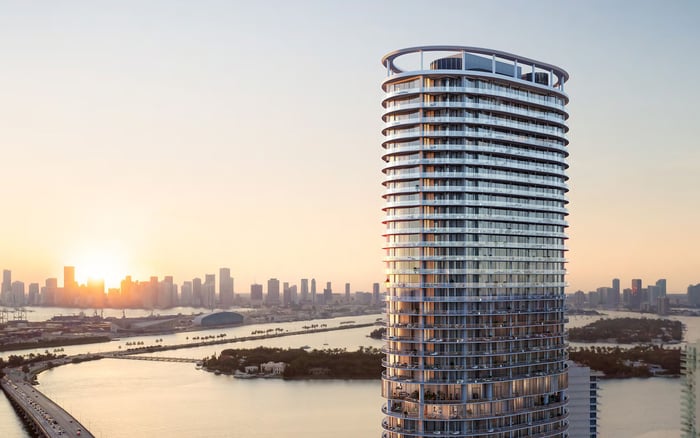
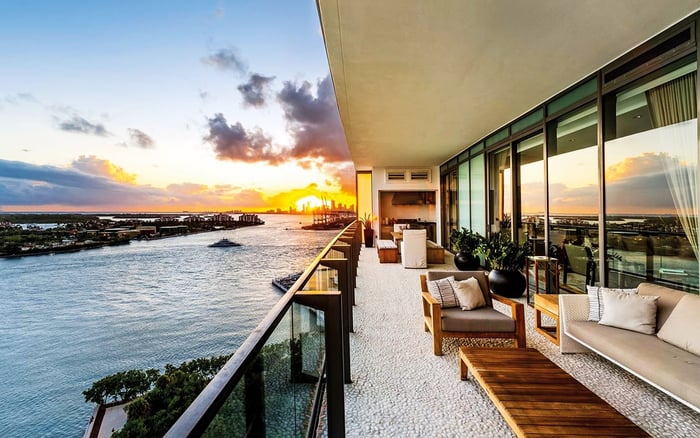
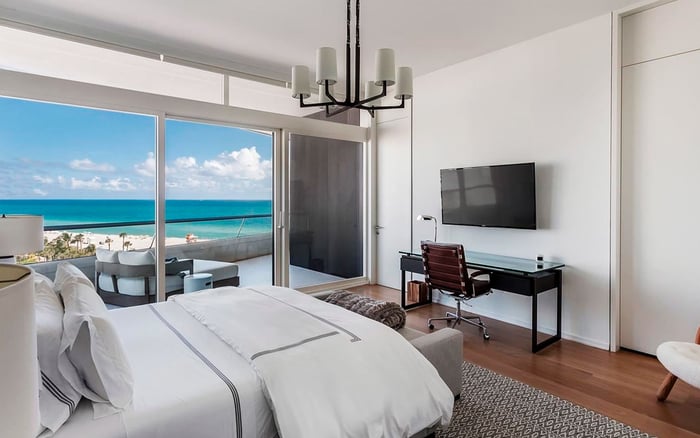
Low-density luxury is about more than residence count. Ocean 580 and The Ritz-Carlton Residences® Pompano Beach offer distinct propositions for buyers seeking privacy, controlled access, and a calmer coastal rhythm.
In South Florida, scale can be seductive. Expansive amenity programs, dramatic towers, and prominent hospitality names all have their place. Yet buyers accustomed to private homes, boutique buildings, or carefully managed enclaves often assess luxury through a quieter lens: how many people share the arrival experience, elevators, corridors, and everyday residential spaces.
That distinction places Ocean 580 Pompano Beach and The Ritz-Carlton Residences® Pompano Beach in the same conversation, despite their distinct identities. One foregrounds an intimate coastal condominium format. The other pairs a recognizable hospitality brand with a comparatively private residential experience.
For privacy-minded purchasers, low density is neither a marketing phrase nor an architectural silhouette. It is a practical condition that can shape the rhythm of arriving, leaving, hosting, relaxing, and using shared amenities.
Ocean 580 is positioned for buyers who want luxury condominium living without the atmosphere of a large, high-traffic tower. Its proposition centers on fewer neighbors than residents would typically encounter in a much larger condominium, fostering a more residential sense of place.
That distinction can be especially relevant for purchasers transitioning from a single-family home. The convenience of coastal condominium ownership may be compelling, but a sudden move into heavily shared circulation and crowded common areas can feel like a compromise. Ocean 580 makes the case that the lock-and-leave advantages of a condominium can coexist with a more intimate daily experience.
Privacy is central to that equation. Fewer resident interactions may contribute to a quieter-feeling routine, though buyers should view this as a potential benefit rather than a guaranteed outcome. Household schedules, guest policies, building operations, and occupancy patterns all shape how density is experienced in practice.
Ocean 580 Pompano Beach belongs in both the boutique and new-construction discussions. Its relevance lies not merely in coastal luxury, but in its framing of discretion and residential calm as essential components of that luxury.
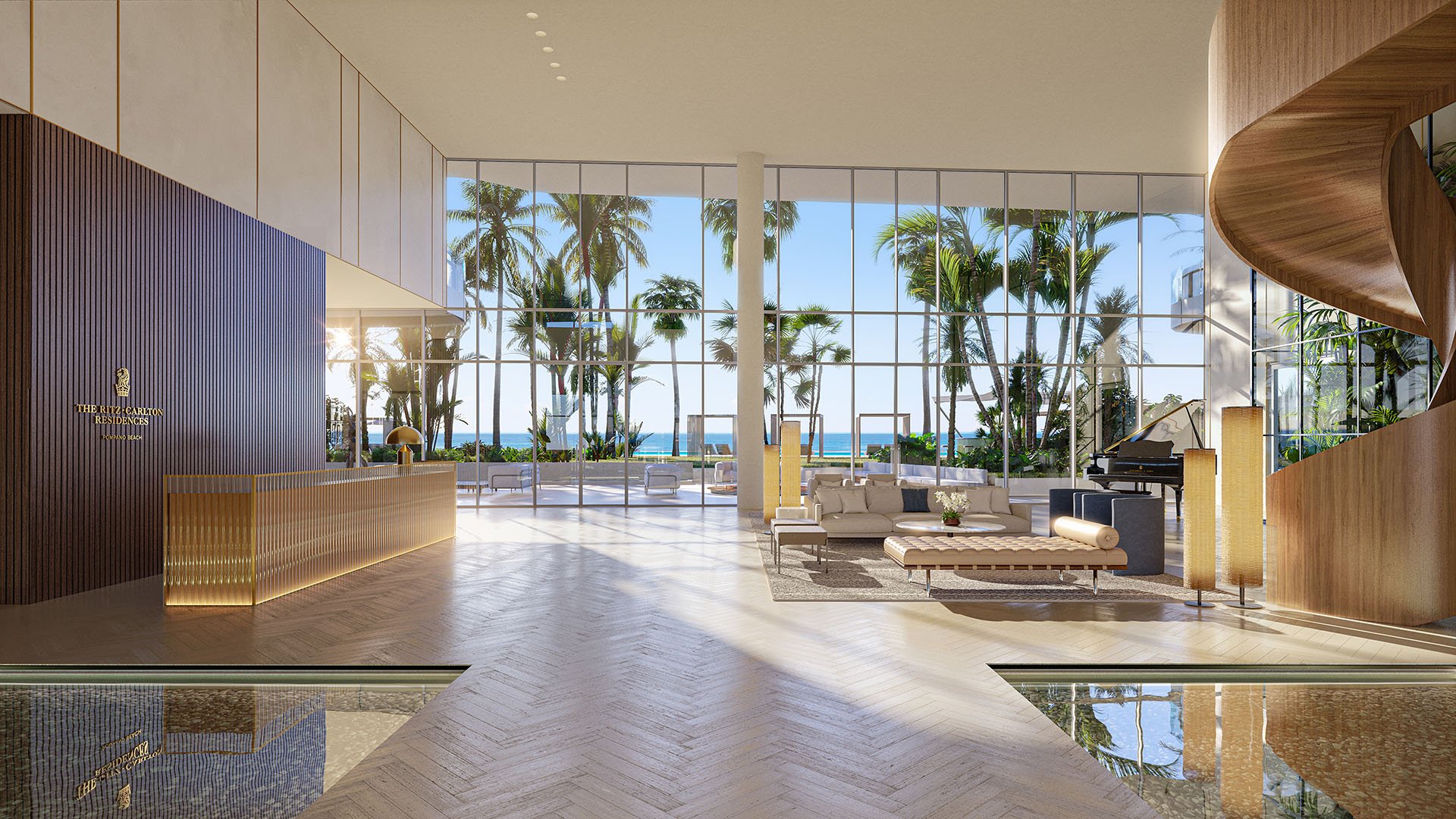
The Ritz-Carlton Residences® Pompano Beach presents a different proposition. It pairs branded services and amenities with an emphasis on exclusivity, privacy, and controlled access rather than the character of a conventional mass-market tower.
This matters because branded residences are often evaluated primarily through service standards, name recognition, and amenity breadth. A low-density buyer should look further. The more revealing questions concern how many households share each circulation route, the frequency of elevator stops, the separation of residential and guest movement, and the capacity of amenity areas during peak periods.
The concept shows how hospitality-informed living and a more intimate residential environment can be considered together. For buyers who value attentive service but do not want constant activity at the front door or throughout common spaces, that balance may be the defining consideration.
Pompano Beach itself strengthens the conversation. For purchasers comparing South Florida’s denser urban districts with a calmer coastal environment, the location offers another way to prioritize pace, privacy, and proximity to the water without treating density as an afterthought.
The most useful comparison begins with the desired style of ownership. Ocean 580 may resonate with buyers who place intimacy and a distinctly residential atmosphere at the center of the decision. The Ritz-Carlton Residences® Pompano Beach may suit those seeking comparable discretion alongside branded service and a hospitality-oriented lifestyle. Buyers may also review The Ritz-Carlton Residences® Miami Beach when comparing another South Florida residential setting associated with the brand.
Other Pompano Beach options can help clarify those preferences. A purchaser might consider Armani Casa Residences Pompano Beach when weighing another branded residential identity, or review W Pompano Beach Hotel & Residences when considering a hotel-and-residences concept. These comparisons should not become contests of labels. Their value lies in the different questions each concept raises about access, shared spaces, services, and the preferred degree of social energy.
The essential principle is simple: compare the lived experience promised by each property, not merely the visual impact of its presentation.
Before reserving or purchasing, buyers should request current answers to several concrete questions. Total residence count is a starting point, but residences per floor may be more revealing. Elevator allocation matters, as does whether service personnel, delivery staff, guests, hotel users, and residents share particular circulation paths.
Amenity scale should also be assessed against the number of households entitled to use it. A large pool deck is not automatically private, just as a compact amenity area is not necessarily crowded. Access protocols, reservation practices, guest allowances, and management policies can materially shape the experience.
Restrictions on short-term occupancy deserve equal attention, as turnover patterns may affect the consistency of the residential atmosphere. Buyers should also review governing documents, projected operating structures, and the practical separation of public, service, and private zones. These details are more instructive than assumptions about noise, crowding, or future resale performance-none of which should be treated as a guaranteed consequence of low density.
Ocean 580 and The Ritz-Carlton Residences® merit attention because each addresses a sophisticated concern: luxury should feel composed in daily use, not merely impressive on arrival. Ocean 580 advances that idea through a low-density, residentially oriented coastal format. The Ritz-Carlton advances it through exclusivity, controlled access, and branded service within a comparatively private setting.
The right choice depends on which form of discretion the buyer values most. For some, it is the simplicity of fewer neighbors and a quieter residential identity. For others, it is the union of privacy and a structured service culture. In either case, the strongest decision follows from verifying how the building will function at the scale of an ordinary day.
What does low-density condominium living mean? It generally refers to fewer residences and less sharing of circulation or amenity spaces, but buyers should verify the building’s specific operating plan.
Why is Ocean 580 relevant to privacy-focused buyers? It is positioned as an intimate luxury condominium with fewer neighbors than a typical large tower and a more residential atmosphere.
Is Ocean 580 suitable for someone leaving a single-family home? It may appeal to buyers seeking coastal condominium convenience without an overtly crowded environment.
Why does The Ritz-Carlton Residences® belong in this conversation? Its concept combines branded services and amenities with privacy, controlled access, and an emphasis on exclusivity.
Does a luxury brand guarantee low-density living? No. Buyers should assess residence count, shared circulation, amenity access, and operating policies independently of branding.
What should buyers ask about elevators? Ask how many residences share each elevator and whether residents share circulation with guests, staff, deliveries, or hotel users.
How should amenity density be evaluated? Compare amenity capacity with the number of eligible households, guest rules, reservation practices, and likely peak-use periods.
Can low density guarantee less noise or crowding? No. It may support a quieter experience, but occupancy patterns, management, construction, and resident behavior also matter.
Why consider Pompano Beach for this lifestyle? Pompano Beach offers an alternative for buyers who prefer a calmer coastal setting to South Florida’s denser urban districts.
What documents deserve review before purchasing? Review governing documents, access and occupancy rules, projected operations, guest policies, and the separation of residential and service areas.
If you'd like a private walkthrough and a curated shortlist, connect with MILLION.
If branded residences are on your mind — as a home or as an allocation — we would be glad to share what we are seeing, privately.
Begin a quiet conversation