A buyer-focused framework for examining terrace ownership, roof interfaces, wind exposure, maintenance obligations, reserves, and technical records before acquiring a penthouse at The Estates at Acqualina.
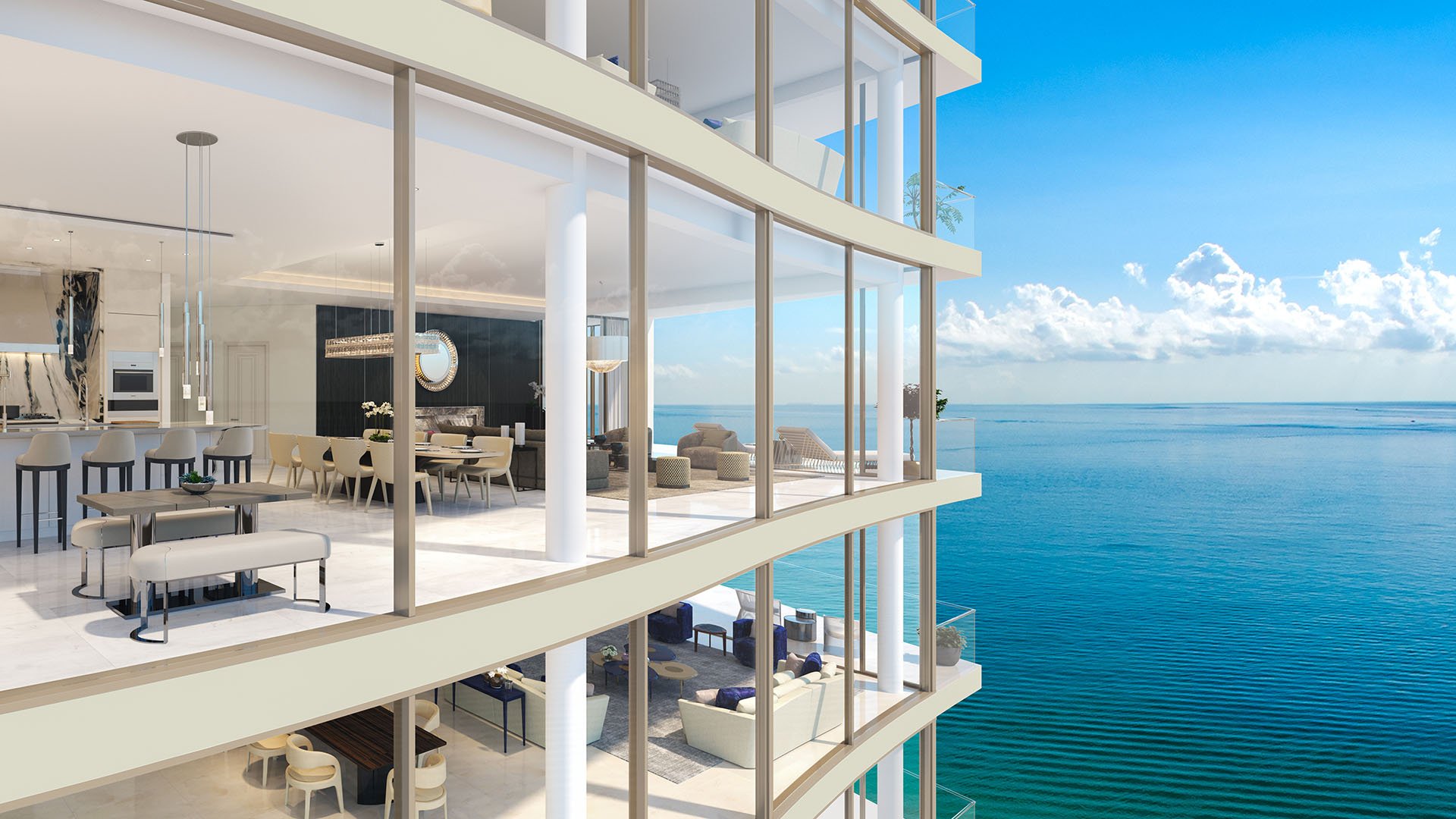
At The Estates at Acqualina Sunny Isles, the defining proposition is an oceanfront residential experience shaped by expansive views, large private terraces, resort-style amenities, and hotel-style services. The two-tower development places indoor-outdoor living at the center of its identity. For a penthouse buyer, the exterior envelope is therefore as consequential as the interior finishes.
The first task is to identify every component represented as part of the residence. Compare the contract, unit plan, specifications, condominium declaration, amendments, and any penthouse-specific exhibits. A terrace may feel private even when its slab, finish surface, railing, drain, or waterproofing membrane has a different legal classification. Each element should be identified as part of the unit, a limited common element, or a common element-and matched to the corresponding maintenance and replacement obligations.
This edition of MILLION Buyer's Guides treats the penthouse not simply as a larger residence, but as a collection of interfaces between private space and shared building systems.
A terrace should be evaluated in layers. Request records covering waterproofing, drainage, surface coatings, railings, exterior doors, thresholds, sealants, and prior repairs. The objective is to understand how water is intended to move, where it is collected, and which party is responsible when a component requires service.
Inspect each transition carefully, including door sills, wall-to-deck joints, penetrations, drains, planters, and changes in elevation. Ask whether previous terrace work was approved, documented, and completed in a manner consistent with applicable building requirements. If finishes were replaced, establish whether the work affected drainage slopes or access to membranes and drains.
Any private pool, spa, outdoor kitchen, or rooftop feature shown for the particular residence requires separate verification. Confirm that it appears in the governing documents and approved plans, then determine who maintains its equipment, utility connections, waterproofing interfaces, and surrounding surfaces. Marketing imagery should never substitute for residence-specific documentation.
Top-floor ownership can place a residence near roof assemblies, façade transitions, drainage infrastructure, and mechanical equipment. These systems may sit outside the unit boundary while still influencing comfort, noise, access, and future repair activity.
A qualified building-envelope or structural engineer should inspect accessible conditions and review relevant roof and terrace details. The review should address the roof assembly above or beside the residence, drainage routes, penetrations, repair history, warranties, inspection access, and the protocol for investigating moisture. Buyers should also determine whether association personnel or contractors may need to cross private areas to reach shared systems.
Nearby mechanical equipment warrants focused review. Identify what serves the unit and what serves the building, who maintains each component, and how vibration, sound, condensate, exhaust, and service access are managed. The objective is not to infer a defect, but to map responsibility before ownership transfers.
An oceanfront penthouse in Sunny Isles Beach has substantial exterior exposure. Due diligence should therefore connect visible components to technical documentation rather than rely on broad assurances. Request available product approvals, specifications, permits, warranties, and maintenance records for exterior doors, glazing, railings, shutters or other protective systems, and rooftop installations relevant to the residence.
Ask a qualified professional to review attachment points, sealants, corrosion-prone hardware, railing conditions, and penetrations. Any proposed shade, screen, planter, sculpture, furnishing, or outdoor kitchen should be checked against association rules and approval procedures. A large terrace does not necessarily imply unrestricted use, particularly where wind, drainage, façade appearance, or access could be affected.
Buyers comparing high-floor living at Bentley Residences Sunny Isles, The Ritz-Carlton Residences® Sunny Isles, or Turnberry Ocean Club Sunny Isles can apply the same discipline: examine the documents and systems attached to the specific residence, not merely the broader tower concept.
The service model and extensive amenity program warrant close review of recurring assessments, reserve obligations, and the allocation of operating expenses among owners. Examine the current budget, reserve study, recent board minutes, insurance information, assessment history, pending projects, and contracts relevant to exterior maintenance.
Counsel should reconcile the declaration's maintenance provisions with the physical components identified during inspection. If the owner maintains the terrace finish while the association maintains the structural slab or membrane, the procedure for diagnosing and repairing a leak becomes critical. Establish who initiates testing, who selects contractors, who restores finishes, and how costs are allocated.
Warranties also require precision. Confirm the covered component, beneficiary, term, transfer conditions, exclusions, and claim procedure. Maintenance logs can show whether required inspections or servicing occurred, but they should be reviewed alongside physical observations and governing documents.
The strongest review is multidisciplinary. Florida condominium counsel can interpret ownership boundaries, use restrictions, access rights, and expense allocations. A structural or building-envelope engineer can assess roof, façade, railing, drainage, and waterproofing interfaces. Mechanical, pool, or other specialists may be appropriate when the residence includes specialized exterior features.
Before the contingency period ends, organize the declaration and amendments, unit and penthouse plans, terrace and roof details, product approvals, permits, warranties, maintenance logs, insurance materials, reserve study, budget, board minutes, and written responses from the association. Convert unresolved issues into specific documentary requests, inspection recommendations, or contractual protections.
The luxury of a penthouse is not diminished by scrutiny. It is protected by knowing where the residence ends, where the building begins, and how the two will be maintained over time.
Why is the unit boundary important for a penthouse purchase? It determines whether the owner or association is responsible for maintaining and replacing particular exterior components.
Who may be responsible for terrace waterproofing? Responsibility depends on the declaration, amendments, and component classification, so it must be verified rather than assumed.
Should a private pool or spa receive separate review? Yes. Confirm its approved plans, equipment, utility connections, waterproofing interfaces, maintenance duties, and access requirements.
What terrace records should a buyer request? Request available waterproofing, drainage, coating, railing, exterior-door, repair, permit, warranty, and maintenance documentation.
Why inspect the roof if it is a common element? Its drainage, penetrations, access, or repair activity can still affect the penthouse and its private exterior areas.
What wind-related documents matter? Ask for applicable product approvals, specifications, permits, warranties, and maintenance records for exterior systems serving the residence.
Can terrace furniture and planters be restricted? Yes. Association rules may regulate installation, attachment, appearance, weight, drainage, placement, or storage.
What financial materials deserve review? Examine budgets, reserves, insurance information, assessment history, recent board minutes, and planned exterior projects.
Which professionals should participate? Consider Florida condominium counsel, a building-envelope or structural engineer, and specialists for mechanical or pool systems.
What should be resolved before closing? Confirm component ownership, maintenance allocation, access rights, restrictions, warranties, open repairs, and any anticipated costs.
For a confidential assessment and a building-by-building shortlist, connect with MILLION.
If branded residences are on your mind — as a home or as an allocation — we would be glad to share what we are seeing, privately.
Begin a quiet conversation