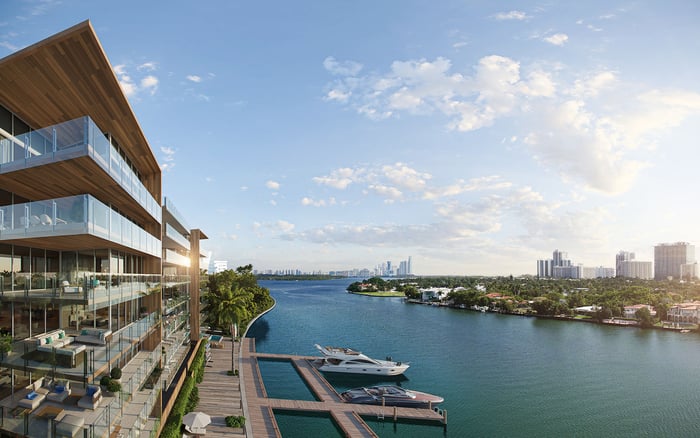
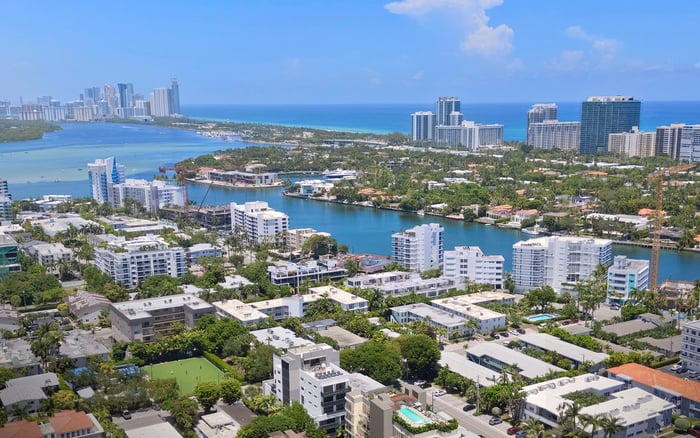
A buyer-focused examination of parking rights, valet performance, vehicle fit, EV charging, guest arrivals and coastal garage safeguards at La Maré.

At La Maré Bay Harbor Islands, a practical question should be settled before finishes and views dominate the conversation: How will the building accommodate the buyer’s actual fleet?
For a multi-car household, parking shapes every departure, guest arrival, and seasonal return. A nominal space count does not reveal who controls each position, whether residents can retrieve vehicles independently, or how several cars are handled at once.
The available details do not include standardized figures for parking allocation, retrieval performance, garage dimensions, or charging capacity. Buyers should seek written answers tied to the specific residence, then reconcile them with the purchase agreement, condominium declaration, parking exhibits, proposed budget, and applicable building plans.
Begin with a vehicle-by-vehicle schedule. For each residence under consideration, identify how many spaces are deeded, assigned, licensed, or valet-controlled. These arrangements are materially different. The governing documents should define the rights attached to the unit, the association’s authority to reassign positions, and any operational limits imposed by the valet system.
Next, ask whether an additional space may be purchased, leased, or licensed. If so, determine the term, renewal conditions, and whether the right transfers when the residence is sold. A household comparing nearby options such as Onda Bay Harbor should apply the same definitions to every property; similar marketing language does not necessarily convey equivalent parking rights.
The essential question is not simply, “How many cars fit?” It is, “What enforceable access does this residence retain over time?” Secure the answer in the controlling documents rather than relying on a verbal explanation.
Determine whether residents may self-park or must surrender all vehicle access to valet. If valet is mandatory, request projected retrieval times for weekday mornings, evening arrivals, weekends, and special events. Ask how the team prioritizes simultaneous requests from a single residence and whether departures can be scheduled in advance.
A realistic test might involve two adults leaving minutes apart, a driver collecting another family member, and a guest arriving at the same time. The inquiry should reflect the complete pattern-not an average retrieval estimate. Buyers also considering La Baia North Bay Harbor Islands can use this scenario-based approach to compare operational fit without assuming that every building manages vehicle circulation identically.
Review proposed staffing levels, service hours, and gratuity policies in the operating budget. Clarify how overnight, early-morning, and holiday requests are handled, and whether parking or valet operations could create separate fees or future assessments.
Provide the project team with the dimensions and specifications of every vehicle likely to use the garage. Confirm limits for height, width, length, weight, turning radius, and ground clearance. Large SUVs may face height or maneuvering constraints, while low-clearance vehicles require careful review of ramps, transitions, and loading points.
Collectible vehicles warrant a separate protocol. Ask whether an owner may prohibit valet operation, retain a key, or arrange a protected, low-contact, or long-term storage position. Request the valet operator’s insurance limits, claims procedure, driver-screening standards, and key-control process. Rules for high-value vehicles should be explicit, including how vehicle condition is documented and who assumes responsibility after handoff.
This level of scrutiny is equally useful when reviewing Alana Bay Harbor Islands or another local condominium. The objective is not to infer which operation is superior, but to determine which documented system best suits the household’s vehicles and tolerance for third-party handling.
For electric vehicles, confirm the number and location of chargers, their power levels, billing method, and reservation rules. Establish whether charging is tied to an assigned position, shared among residents, or managed through valet. Ask how the building handles a completed charging session when another resident is waiting.
Future capacity matters as much as the initial provision. Determine whether every assigned space can eventually support charging or whether the building’s electrical infrastructure limits later installations. The documents should also define approval procedures, equipment standards, installation responsibility, and recurring electricity charges, where applicable.
A mixed fleet introduces added complexity. If one vehicle requires daily charging while another remains stored for weeks, ask whether valet can preserve access to both without unnecessary movement. The operating model should support the household’s use pattern rather than merely provide a charger somewhere in the garage.
Review the driveway and drop-off area during the hours when residents, guests, ride-share vehicles, chauffeurs, and deliveries are most likely to converge. Ask where cars queue when the arrival zone is full and whether waiting vehicles could obstruct the adjoining street. Confirm whether guest parking is on-site, valet-only, time-limited, or separately charged.
South Florida conditions add another layer of diligence. Request details on safeguards for salt air, humidity, flooding, storm preparation, and water intrusion. Seasonal owners should ask how stored vehicles are monitored during extended absences, whether they may remain connected to approved battery equipment, and what occurs if a storm protocol requires relocation.
The final decision should integrate title rights, daily service, and physical compatibility. A polished arrival experience has value only when the underlying system can reliably handle the owner’s fleet, protect specialty vehicles, and accommodate changing propulsion needs.
How many parking spaces come with a La Maré residence? Confirm the allocation for the specific residence in writing, including whether each space is deeded, assigned, licensed, or valet-controlled.
Can an owner acquire an additional parking space? Ask whether spaces may be purchased, leased, or licensed, and whether that right transfers upon resale.
Is self-parking available to residents? Verify whether residents may access vehicles directly or must use valet for every movement.
What valet retrieval time should a buyer expect? Request projected times for mornings, evenings, weekends, and events, then test them against the household’s routine.
Can several vehicles be requested simultaneously? Ask how multiple requests from one residence are prioritized and whether departures can be scheduled.
Will large SUVs and low-clearance vehicles fit? Compare each vehicle with documented limits for height, width, length, weight, turning radius, and ground clearance.
What should EV owners confirm? Verify charger quantity, location, power, billing, and reservation rules, along with electrical capacity for future expansion.
How is guest parking handled? Determine whether it is on-site, exclusively valet-operated, duration-limited, or subject to a separate fee.
What protections apply to collectible vehicles? Review insurance, claims, key control, and driver screening, and ask about protected or low-contact storage.
Which documents should a buyer review? Examine the purchase agreement, declaration, parking exhibits, proposed budget, and applicable building plans.
For a tailored shortlist and next-step guidance, connect with MILLION.
If branded residences are on your mind — as a home or as an allocation — we would be glad to share what we are seeing, privately.
Begin a quiet conversation